iOS app development services
Get a free iOS app consultation — talk to our senior developers today.
What is custom iPhone application development?
Custom iPhone application development means building an iOS app from the ground up to match your specific business requirements, user workflows, and technical environment, rather than adapting a pre-built template or SaaS platform. A custom iOS app uses Apple’s native frameworks including UIKit (the foundational UI framework), SwiftUI, CoreData (Apple’s data persistence framework), and CloudKit (Apple’s iCloud integration framework) to deliver performance, security, and design quality that off-the-shelf solutions cannot replicate.
iOS application development services cover the full delivery lifecycle: strategy and scoping, UI/UX design optimized for Apple’s Human Interface Guidelines (HIG), native Swift or SwiftUI development, App Store submission, and post-launch maintenance. Because custom iOS apps are built specifically for your users, they consistently outperform template alternatives on the metrics that matter most: session length, retention rate, and in-app conversion.
What are the benefits of custom iPhone apps?
iOS users generate 45% higher lifetime value than the average mobile user across e-commerce, SaaS, and media categories, making iOS the highest-priority platform for businesses targeting premium consumer and enterprise audiences (Sensor Tower, 2025). Custom iPhone apps access this audience with a tailored experience that generic apps cannot deliver, because every screen, workflow, and interaction is designed around your specific user’s behavior rather than a compromise between all possible users.
Beyond revenue impact, custom iOS app development delivers four structural advantages: tighter security through Apple’s sandboxed app architecture and Face ID or Touch ID biometric authentication, better performance through native Swift compilation that outperforms cross-platform wrappers in rendering speed and memory efficiency, deeper Apple ecosystem integration through frameworks like HealthKit (Apple’s health data framework), CoreLocation, and Apple Pay, and full control over your product roadmap without dependency on a third-party platform’s feature schedule.
Our iOS app development services
Our software development company delivers iOS app development services across six structured service areas, each scoped to your platform, user requirements, and business objectives.
Native iOS app development
iPhone app development for startups
Enterprise-level iPhone app development
iPhone app development for e-commerce
iPhone app development with AR features
iOS app modernization and maintenance
What technologies are used in custom iPhone app development?
The core iOS development stack uses Swift as the primary programming language, SwiftUI for declarative UI component development, and UIKit for complex custom UI scenarios where SwiftUI’s current limitations require lower-level control. Xcode (Apple’s integrated development environment) is the mandatory build tool for all iOS apps, incorporating the iOS Simulator, Instruments (Apple’s performance profiling tool), and TestFlight (Apple’s beta distribution platform) in a single workflow.
Beyond the core stack, our professional developers use CocoaPods (an iOS dependency manager), Swift Package Manager (SPM, Apple’s native dependency tool), and XCTest (Apple’s unit and UI testing framework) for test automation. Backend connectivity uses URLSession and Combine (Apple’s reactive programming framework) for API integration, CoreData and CloudKit for data persistence, and Push Notification services via APNs (Apple Push Notification service) for user engagement. AI features are delivered through Apple’s CoreML (a machine learning framework for on-device inference) and the Vision framework (Apple’s computer vision API).
What industries benefit from custom iPhone applications?
Custom iPhone app development for businesses delivers the strongest ROI in industries where iOS users represent the primary audience, where Apple’s native frameworks provide a genuine capability advantage, or where security and compliance requirements make the App Store’s review process a trust signal worth having.
- Healthcare: HealthKit-integrated patient monitoring apps, telemedicine platforms with FaceTime API support, EHR (electronic health record) companion apps, and clinical training tools using ARKit for medical imaging overlay. Our healthcare software development experience spans EHR, RPM, and telemedicine platforms across US and European markets.
- E-commerce and retail: Apple Pay-native checkout, AR product visualization, loyalty program apps, and personalized product recommendation engines built on CoreML for on-device inference without latency.
- Enterprise and logistics: MDM-compatible field service apps, warehouse picking applications using iOS barcode scanning, fleet management dashboards, and real-time operational reporting connected to live ERP backends.
- Financial services: banking and fintech apps leveraging iOS's Secure Enclave (Apple's hardware security chip) for biometric authentication, Apple Pay integration, and end-to-end encrypted transaction processing.
- Education and training: interactive learning apps using ARKit for 3D content, CoreML-powered adaptive learning systems, and institutional LMS (learning management system) companion apps for iPhone and iPad deployed through Apple School Manager.
How does custom iPhone app development differ from template apps?
The core iOS development stack uses Swift as the primary programming language, SwiftUI for declarative UI component development, and UIKit for complex custom UI scenarios where SwiftUI’s current limitations require lower-level control. Xcode (Apple’s integrated development environment) is the mandatory build tool for all iOS apps, incorporating the iOS Simulator, Instruments (Apple’s performance profiling tool), and TestFlight (Apple’s beta distribution platform) in a single workflow.
Beyond the core stack, our professional developers use CocoaPods (an iOS dependency manager), Swift Package Manager (SPM, Apple’s native dependency tool), and XCTest (Apple’s unit and UI testing framework) for test automation. Backend connectivity uses URLSession and Combine (Apple’s reactive programming framework) for API integration, CoreData and CloudKit for data persistence, and Push Notification services via APNs (Apple Push Notification service) for user engagement. AI features are delivered through Apple’s CoreML (a machine learning framework for on-device inference) and the Vision framework (Apple’s computer vision API).
What is the process of developing a custom iPhone app?
Our iOS app development process follows four structured stages with documented outputs and sign-off criteria at each stage, ensuring your app is built to the right specification before development begins and deployed to the App Store without rejection surprises.
Strategy and discovery
We run structured discovery workshops with your product team to define user personas, core user journeys, technical requirements, and third-party integration scope. The output is a product specification document covering feature set, information architecture, API requirements, and a phased delivery roadmap. Because iOS apps built without a documented specification are significantly more likely to require expensive mid-build scope changes, this stage is non-negotiable on every engagement.
UI/UX design and prototyping
Our designers produce iOS-native wireframes and high-fidelity prototypes in Figma (a collaborative UI design tool), following Apple’s Human Interface Guidelines for typography, spacing, gesture interaction, and component behavior. Interactive prototypes are tested with representative users from your target audience before development begins, because design decisions that feel intuitive on a flat screen frequently behave differently on a live device in a user’s hand.
Agile development and testing
Development runs in two-week agile sprints using Swift and SwiftUI, with working builds delivered to your team via TestFlight after every sprint for continuous feedback. Our QA process covers unit testing with XCTest, UI automation testing, performance profiling with Instruments, and device-specific testing across a representative matrix of iPhone and iPad models running current and n-1 iOS versions.
App Store deployment and post-launch support
We manage the full App Store submission process: provisioning profiles, code signing, App Store Connect metadata, screenshot production, and compliance with App Store Review Guidelines. Post-launch, our mobile app development services team provides structured maintenance covering iOS version compatibility updates, bug fixes, performance monitoring through Crashlytics (a Firebase crash reporting tool), and feature iteration based on in-app behavioral analytics.
How much does custom iPhone app development cost?
iOS app development cost is driven by feature complexity, backend integration requirements, and design fidelity. Because native iOS development uses a single codebase for one platform, it is typically lower-cost than equivalent cross-platform builds for businesses that only need to serve Apple users.
| App scope | Description | Estimated cost | Timeline |
|---|---|---|---|
| Simple iOS app | Core features, basic UI, no backend integration | $15,000 – $35,000 | 6 – 12 weeks |
| Mid-complexity app | Custom UI, REST API backend, push notifications, analytics | $35,000 – $80,000 | 12 – 20 weeks |
| Complex iOS app | AI/ML features, ARKit, HealthKit, payment integration | $80,000 – $180,000 | 20 – 36 weeks |
| Enterprise iOS platform | MDM, SSO, ERP integration, multi-role architecture | $180,000+ | 32 – 52 weeks |
Ongoing maintenance runs at 15 to 20% of initial build cost annually, covering annual iOS version compatibility updates, App Store compliance patches, and performance optimization as your user base grows. Our software development agency provides a fixed-scope cost estimate after the discovery stage, so your budget is confirmed before development begins.
How to find the right iOS app development company
The first filter when evaluating custom iPhone app development companies is App Store submission history. Ask for the App Store links of apps the provider has shipped to production, not portfolio screenshots or Figma mockups. An iOS app that has passed App Store review and maintained a live rating demonstrates production delivery capability that no prototype can prove. Providers who cannot share live App Store links have not shipped iOS apps at production standard.
Verify in-house Swift and SwiftUI capability, not just general mobile development experience. Cross-platform developers who primarily work in React Native or Flutter take significantly longer to deliver native iOS features and produce code that does not follow Apple’s architectural conventions, creating technical debt that compounds with every iOS version update. Digital Dividend’s iOS developers work exclusively in Swift and SwiftUI for native builds, with project leadership from our experienced teams in Sweden and the USA. Read our blog on native vs hybrid app development and hiring an app developer to understand how to evaluate technical iOS capability before engaging any provider.
Ready to scope your iOS app? Book a free consultation with our senior developers.
iOS App Development: Real Results
Our software development company has delivered mobile, AI-powered, and healthcare platform solutions across transport, education, healthcare, and e-commerce sectors. Explore our full case studies portfolio for detailed delivery evidence from live production deployments.
Limousine app — real-time transport ordering platform
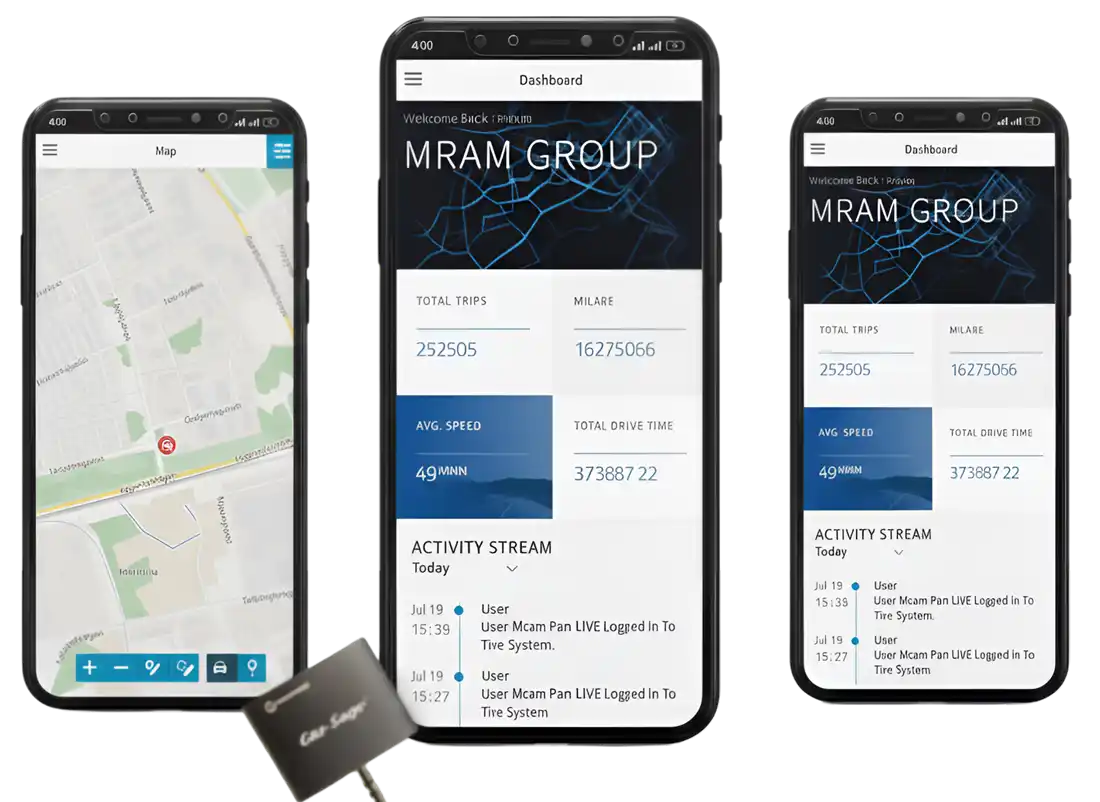
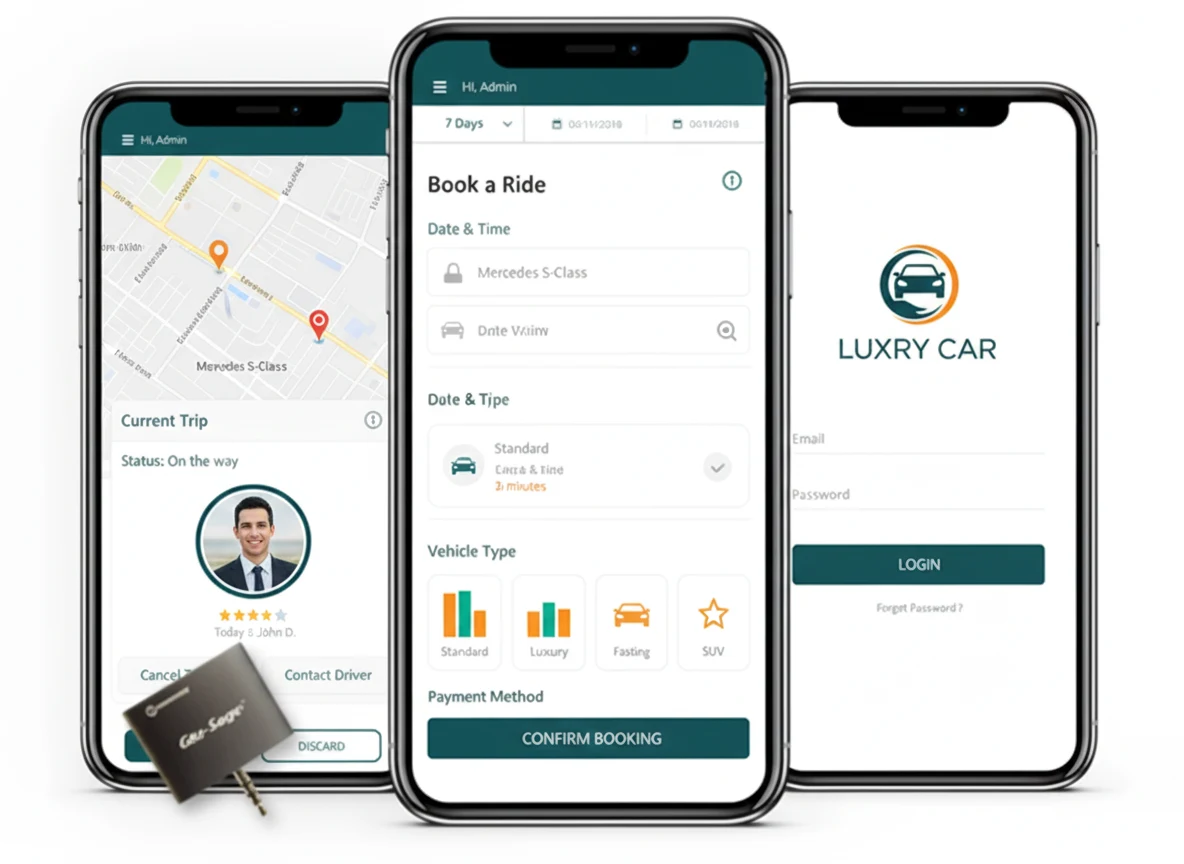
We built a real-time vehicle ordering and dispatch platform for a transport services provider, handling live booking management, GPS tracking, driver dispatch, and payment processing simultaneously across a live user base. The iOS app delivered a consumer-facing experience handling peak concurrent booking loads without degradation, with a structured App Store submission that passed review on first submission.
AI Therapeutic Coaching Agent for women's rights
We built an AI-powered therapeutic coaching application delivering personalized support sessions through a conversational AI interface. The iOS app integrated on-device CoreML models for privacy-preserving inference, ensuring sensitive user data never left the device, while delivering a responsive, empathetic user experience that required careful attention to Apple’s Health and Wellness app guidelines during the App Store submission process.
The Learning App — education platform for digital learning
We built a digital learning platform delivering structured educational content across iPhone and iPad with multi-user support, content management, and progress tracking. The app was built to perform reliably across a wide range of device generations to ensure accessibility for users on older hardware, a specific requirement for educational deployments in school environments where device refresh cycles are slow.
Fitcare — chronic disease management mobile app
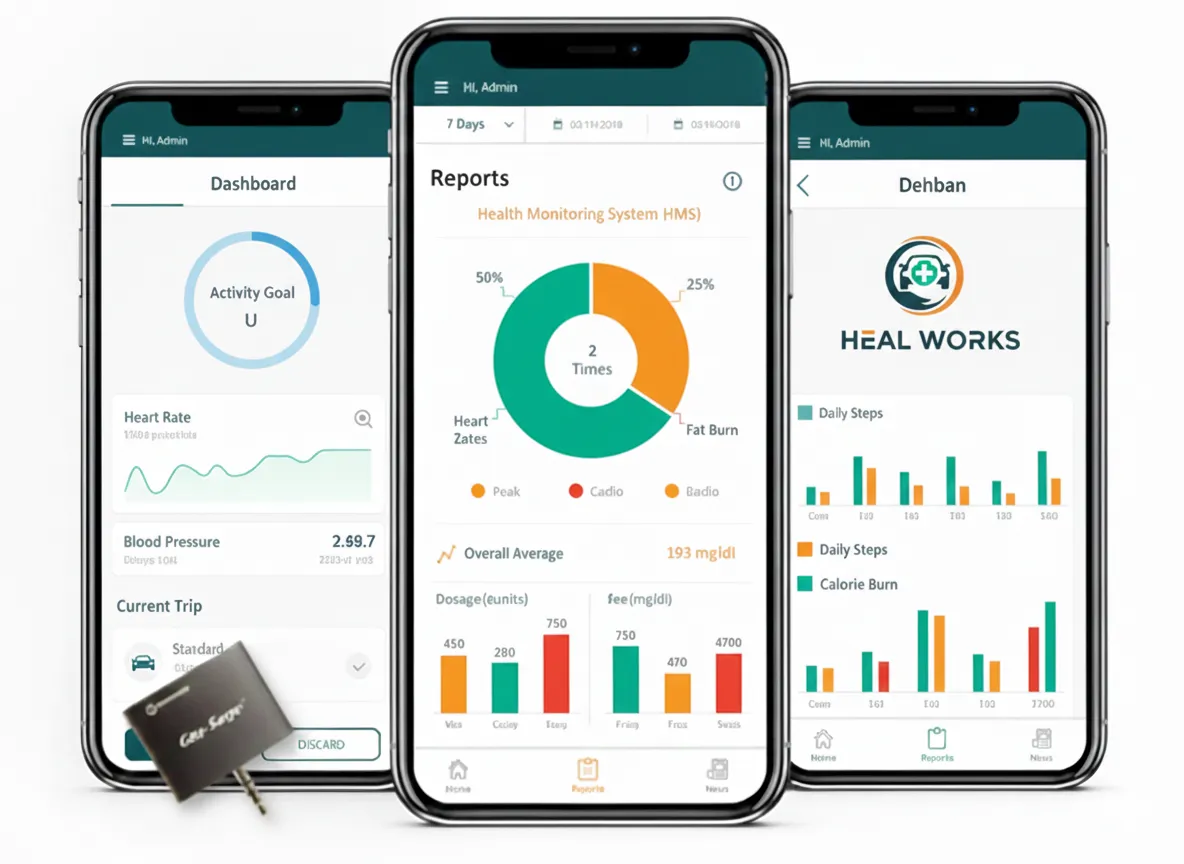
Our experienced developers built Fitcare, a mobile health application for chronic disease management integrating HealthKit for real-time health data sync, CoreData for offline data persistence, and a secure backend API connecting patient records to healthcare provider dashboards. The app was delivered with HIPAA-aligned data handling architecture and passed App Store Health and Fitness category review on first submission.
Our delivery track record
With 15+ years of experience, 300+ projects delivered, and 100+ in-house developers across the US, Europe, and GCC, every iOS app we deliver is built by developers who understand Apple’s platform conventions, App Store requirements, and the performance standards that keep iOS apps competitive in the market long after launch.
Enhance Your Project with Our Related Services
At Digital Dividend, we specialize in software, mobile apps, eCommerce solutions, CMS development, IoT systems, analytics, and healthcare technologies.
Boost your iOS app development with seasoned professionals.
Digital Dividend’s iPhone experts support your team, streamline workflows, and enhance project delivery.
Frequently Asked Questions
How long does it take to develop a custom iPhone app?
A simple iOS app with core features and no backend integration takes 6 to 12 weeks from discovery to App Store submission. A mid-complexity app with custom UI, REST API backend, and push notifications takes 12 to 20 weeks. Complex apps with AI, ARKit, HealthKit, or payment integration take 20 to 36 weeks. Enterprise iOS platforms with MDM, SSO, and ERP integration take 32 to 52 weeks. All timelines include discovery, design, development, QA, and App Store submission, and are confirmed after the discovery stage rather than estimated from an initial brief.

What features can be included in a custom iPhone app?
Custom iOS apps can include any feature Apple’s SDK supports: Face ID and Touch ID biometric authentication, Apple Pay and StoreKit (Apple’s in-app purchase framework) for payments, ARKit and RealityKit for augmented reality, HealthKit for health data integration, CoreML for on-device AI inference, CoreLocation for GPS and geofencing, CallKit for VoIP integration, and push notifications via APNs. The only limitations are Apple’s App Store Review Guidelines, which prohibit specific content categories and require specific privacy disclosures for apps accessing sensitive data.
What platforms do custom iPhone apps support?
A single iOS app codebase built in SwiftUI can run natively on iPhone, iPad, Apple Watch (with watchOS-specific adaptations), Apple TV (tvOS), and Apple Vision Pro (visionOS) with varying levels of UI adaptation required for each form factor. Most iOS app engagements target iPhone as the primary platform, with iPad treated as a secondary layout adaptation. Apple Watch and Vision Pro are typically separate scoped engagements because their interaction models require purpose-built design rather than responsive layout scaling.
Custom iPhone game development services: what is available?
We build custom iPhone games using SpriteKit (Apple’s 2D game framework), SceneKit (Apple’s 3D rendering framework), and RealityKit for AR-enhanced gaming experiences. Game development engagements cover game design consultation, physics and animation implementation, Game Center (Apple’s social gaming platform) integration for leaderboards and achievements, in-app purchase implementation via StoreKit, and App Store submission specifically for the Games category, which has distinct review criteria from standard app categories.
How does iOS app development compare to Android development?
iOS development uses Swift and SwiftUI targeting a single hardware ecosystem manufactured by Apple, which simplifies device compatibility testing significantly compared to Android’s fragmented hardware landscape. iOS apps consistently generate higher revenue per user and have lower crash rates on average, because Apple controls both the hardware and software stack. Android development reaches a broader device base and a larger global user count, making it the right choice for markets where Android penetration is dominant. Our Android development services team delivers native Android builds in parallel with iOS when your audience requires both platforms.
What our clients say
Ready to build your iOS app?
Whether you are a startup validating a product hypothesis on the App Store, an enterprise deploying an internal iOS tool, or a healthcare company building a HealthKit-integrated patient application, Digital Dividend has the in-house Swift and SwiftUI capability to build it to Apple’s standards. Our expert developers handle every stage from discovery and design through App Store submission and post-launch maintenance. Explore our broader mobile app development services or our AI software development capability to see how we combine native iOS development with intelligent features.