Building a blockchain platform or exploring whether blockchain is right for your project?
Our senior developers give honest assessments no sales pressure.
A blockchain app development company is a software development firm that specialises in building applications on distributed ledger networks. This covers everything from individual smart contracts to full-scale Web3 platforms, decentralised exchanges, NFT marketplaces, crypto wallet infrastructure, and enterprise blockchain systems.
What separates a blockchain application development firm from a general software agency is the combination of cryptographic knowledge, protocol-specific expertise, and security discipline that decentralised systems demand. A distributed ledger application development company must understand not just how to write code, but how that code behaves once deployed on an immutable public or private chain, where mistakes cannot simply be patched.
Digital Dividend operates as a full-cycle blockchain solutions provider, handling strategy, architecture, development, security review, deployment, and ongoing maintenance for each engagement.
Most organisations that come to us are not starting from zero. They already have a use case in mind, but they are running into one of these common barriers before committing to development:
Our blockchain consulting and strategy service addresses these directly before any development begins, so the project starts on firm ground.
A blockchain technology development company with genuine production depth covers the full range of decentralised development disciplines, not just one or two. Here is what our blockchain app development services include.
We write, test, and audit smart contracts across Ethereum, Binance Smart Chain, Solana, and other major networks. This includes ERC-20, ERC-721, and ERC-1155 token standards, governance contracts, vesting schedules, staking logic, and custom contract architectures. All smart contracts go through an internal security review before deployment.
DApps combine a blockchain back end with a standard web or mobile front end, giving users access to on-chain functionality without needing to understand the underlying protocol. We build DApps across public and permissioned chains, with wallet connection, transaction signing, and on-chain data retrieval handled cleanly and securely.
From minting contracts and metadata standards to full NFT marketplace platforms with royalty logic and auction mechanisms, we build NFT systems designed for scale and long-term maintainability. Our NFT app development covers both the smart contract layer and the user-facing application.
We develop custodial and non-custodial wallet solutions, multi-signature wallet architecture, and crypto payment gateways that connect blockchain transactions to existing business workflows. Blockchain wallet application development requires careful key management design and security testing at every layer.
Decentralised finance platforms, including lending protocols, liquidity pools, yield aggregators, and staking systems, require precise economic modelling and contract security. We build DeFi applications with clearly defined risk parameters and audit-ready smart contract code.
Web3 development connects decentralised protocols to real-world applications. This includes integrating IPFS for decentralised storage, building on-chain identity systems, developing DAO tooling, and creating cryptocurrency application interfaces that abstract complexity away from end users.
Not every enterprise use case belongs on a public chain. We develop on both public networks, such as Ethereum and Solana, and private permissioned networks, including Hyperledger Fabric and Corda, where data privacy, access control, and transaction throughput are the primary requirements. Private blockchain app development gives organisations the benefits of distributed ledger architecture without exposing sensitive data to public nodes.
For larger organisations, enterprise blockchain development means connecting on-chain infrastructure to existing ERP systems, supply chain platforms, and data warehouses. We build the middleware architecture, API layers, and admin interfaces that make blockchain data accessible and actionable across the business. See our broader software development services for context on how we approach enterprise-scale builds.
Before committing to development, many clients need independent advice on whether blockchain is the right solution, which platform fits their use case, and what the realistic cost and timeline look like. Our IT consulting team provides honest assessments, proof-of-concept designs, and technical roadmaps with no pressure to proceed until the client is confident.
When the use case is right, blockchain delivers tangible operational and commercial advantages. The most significant include:
Records written to a blockchain cannot be altered without consensus across the network. For supply chain provenance, financial audit trails, healthcare record management, and legal documentation, this removes the possibility of undetected tampering.
Smart contracts execute automatically when predefined conditions are met, removing the need for third-party verification in processes like payments, escrow, insurance claims, and trade finance. This reduces cost, processing time, and counterparty risk simultaneously.
Public chains allow any participant to verify transactions independently, while permissioned networks give businesses control over who sees what. This combination of verifiability and access control is difficult to achieve with traditional databases.
Blockchain enables fractional ownership and programmable transfer of assets that were previously illiquid or difficult to trade, including real estate, commodities, carbon credits, and intellectual property.
Distributed consensus mechanisms make blockchain networks significantly more resistant to single points of failure or targeted attack than centralised databases. Combined with proper smart contract auditing, this creates a highly resilient application foundation. For projects that also involve connected hardware or device networks, our IoT application development practice adds layer of secure infrastructure design.
Building a blockchain platform or exploring whether blockchain is right for your project?
Our senior developers give honest assessments no sales pressure.
We follow a structured, stage-gated process that delivers production-ready blockchain applications without the common pitfalls of rushed architecture or undertested contracts.
Blockchain development operates within the same regulatory environment as any other software, with the added complexity of immutable on-chain data and cross-border transaction flows. We design for compliance from the architecture stage, not as a retrofit.
GDPR creates a specific challenge for public blockchains, where immutability conflicts with the right to erasure. We address this through off-chain data storage strategies, on-chain reference hashing, and permissioned network design for applications handling EU personal data.
Healthcare blockchain applications require strict controls over protected health information. We build HIPAA-aligned architectures that keep sensitive patient data off-chain while using the blockchain layer for access logging, consent management, and audit trails.
Crypto payment gateways and DeFi applications that interact with card payment rails must meet PCI DSS requirements. We design payment flows with appropriate data isolation, tokenisation, and access control to maintain compliance.
Cryptocurrency platforms and token issuances typically require AML and KYC frameworks. We integrate third-party identity verification providers, build on-chain KYC whitelisting for restricted token transfers, and design transaction monitoring workflows that satisfy FATF guidelines.
Before any smart contract goes to mainnet, we complete an internal security review covering reentrancy, integer overflow, access control, and logic errors. For higher-stakes applications, we coordinate third-party audits. Our development practices align with ISO/IEC 27001 information security standards, and we support clients whose platforms require SOC 2 Type II compliance documentation.
We select the blockchain platform based on the technical and commercial requirements of each project rather than defaulting to a single chain. Our active platform expertise includes:
| Category | Technologies / Platforms |
|---|---|
| Public Networks | Ethereum, Solana, Polygon, Binance Smart Chain (BNB), Cardano, Hedera, Polkadot, Stellar, TON |
| Permissioned Networks | Hyperledger Fabric, Corda |
| Development Tools | Solidity, Rust, Hardhat, Truffle, OpenZeppelin, ethers.js, Web3.js, IPFS, The Graph |
| Infrastructure | AWS, Microsoft Azure for node hosting and API layer |
For full technical documentation on Ethereum’s developer ecosystem, the Ethereum Foundation’s developer resources provide the official reference. For enterprise permissioned blockchain development, the Hyperledger Foundation maintains the standards our teams build against.
Not every blockchain application that reaches testnet is ready for production. The features that separate a production-ready platform from a prototype include:
Upgradeable or modular smart contract architecture, so logic can be improved without redeploying from scratch. Gas optimisation, so transaction costs remain predictable and affordable for end users. Role-based access control on admin functions, with multi-signature requirements for sensitive operations. On-chain event logging for transparency and off-chain analytics. A clearly defined oracle strategy for any contract that needs real-world data. Wallet abstraction or simplified onboarding for platforms serving non-technical end users. And a comprehensive testnet audit trail that demonstrates the application has been stress-tested before launch.
Blockchain development cost varies significantly depending on the chain, the complexity of the smart contract logic, the scope of the front-end, and integration requirements.
A straightforward smart contract with a basic interface, such as a token launch or a simple NFT minting contract, may be scoped and delivered in 6 to 10 weeks. A mid-complexity DeFi platform or NFT marketplace with custom mechanics typically takes 3 to 6 months. A full enterprise blockchain platform with system integrations, admin tooling, and compliance architecture will require 6 to 12 months or more, delivered in phases.
According to Statista, global blockchain market revenue is forecast to grow substantially through the remainder of this decade, with enterprise and DeFi applications accounting for the largest share of development investment. We always begin with a scoped discovery phase that produces accurate project estimates based on your specific requirements, not industry averages.
Healthcare is one of the most active areas for blockchain adoption, driven by the need for secure, interoperable patient records, verifiable clinical trial data, and tamper-proof pharmaceutical supply chains. Our blockchain healthcare app development work spans patient data consent management, health record integrity systems, and drug provenance tracking. This builds on our wider healthcare software development experience across EHR, telemedicine, and remote monitoring platforms.
Finance was the first industry to adopt blockchain at scale, and it remains the most technically demanding. Ethereum app development services for financial clients include settlement layer integrations, tokenised asset platforms, DeFi lending protocols, and compliant crypto payment infrastructure. We build with institutional-grade security and audit-ready documentation.
Blockchain’s ability to create an immutable shared record of goods movement makes it particularly valuable in supply chain management. We build supply chain blockchain applications that give all parties in a network, from manufacturers to distributors to retailers, verified visibility into product provenance, custody transfers, and compliance documentation.
Blockchain gaming requires smart contract architecture for in-game economies, NFT item ownership, and player reward systems. Our blockchain gaming app development agency capability covers both on-chain game logic and the off-chain infrastructure that keeps gameplay responsive for users who are not interested in the underlying technology.
Real estate tokenisation platforms allow fractional ownership of property assets through blockchain-issued tokens, opening investment to a broader audience while reducing transaction friction. We build the smart contract layer, investor onboarding flow, and regulatory compliance framework for real estate blockchain platforms.
Public sector blockchain applications include voting systems, land registry platforms, digital identity schemes, and benefits distribution infrastructure. Blockchain-based voting app development for government clients requires particular attention to auditability, accessibility, and resilience. We have experience building platforms where the integrity of the data record is non-negotiable.
The best blockchain app development companies in the US are not necessarily the largest or the most visible. When evaluating a custom blockchain application development partner, these are the factors that matter in practice:
Any company that ships contracts to mainnet without a formal internal security review is cutting a corner that could cost your users their funds. Ask specifically how they handle reentrancy checks, access control, and logic errors.
Building on Ethereum is materially different from building on Solana or Hyperledger. Confirm the team has hands-on experience with the specific chain your project requires, not just a general blockchain credential.
Leading blockchain app development firms understand that AML, KYC, GDPR, and financial regulation apply to decentralised applications just as they do to any other software. If a prospective partner does not raise compliance during the scoping conversation, that is a warning sign.
Blockchain protocols update. Dependencies change. A partner who disappears after deployment leaves you exposed. Look for companies with structured maintenance offerings and a track record of long-term client relationships.
Blockchain projects have a history of scope creep and cost overruns. The right partner provides itemised estimates and flags changes before they happen.
Having built 300+ projects since 2008, Digital Dividend brings a level of production discipline and long-term commitment that specialist blockchain-only studios often lack. Our projects are led by experienced engineers in Sweden and the USA, with delivery support from our Pakistan team, giving clients clear communication, technical accountability, and cost-effective execution across time zones.
We do not subcontract. Every blockchain developer on your project is part of our in-house team of 100+ engineers. You have direct access to the people writing your smart contracts and building your application, not an account manager relaying messages.
Our blockchain practice sits within a broader technology capability that includes AI software development, mobile app development, and enterprise platform engineering. For clients who need blockchain integrated with AI-powered analytics, mobile interfaces, or IoT data streams, we handle the full stack without coordinating between separate vendors.
Browse our case studies to see the range of work we have delivered across sectors.
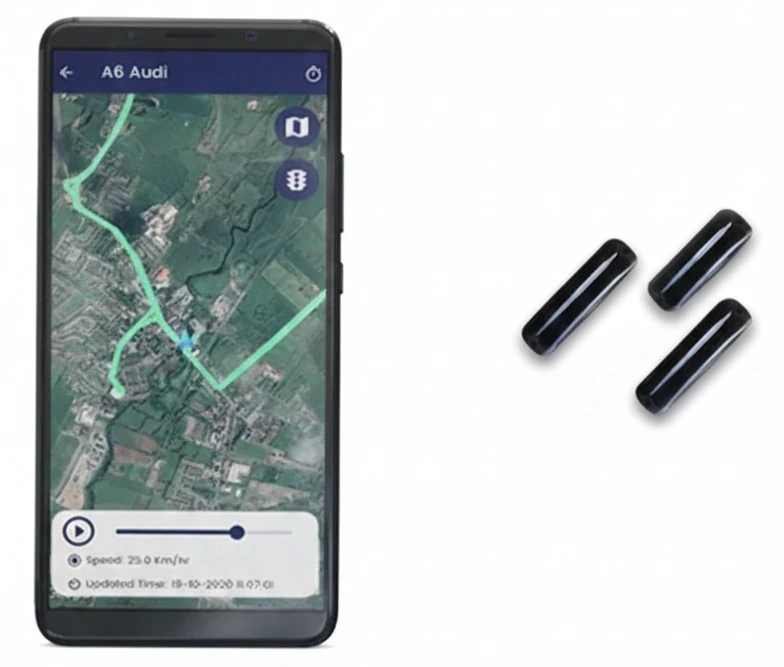
For a client requiring tamper-proof tracking of physical assets across distributed locations, we built an IoT asset tracking platform with cryptographically secured data records at its core. The system logs device events, custody transfers, and location data in a structure designed for auditability and integrity verification. The same architectural principles that underpin this system, immutable records, distributed validation, and cryptographic provenance, are the foundations we apply in dedicated blockchain engagements.
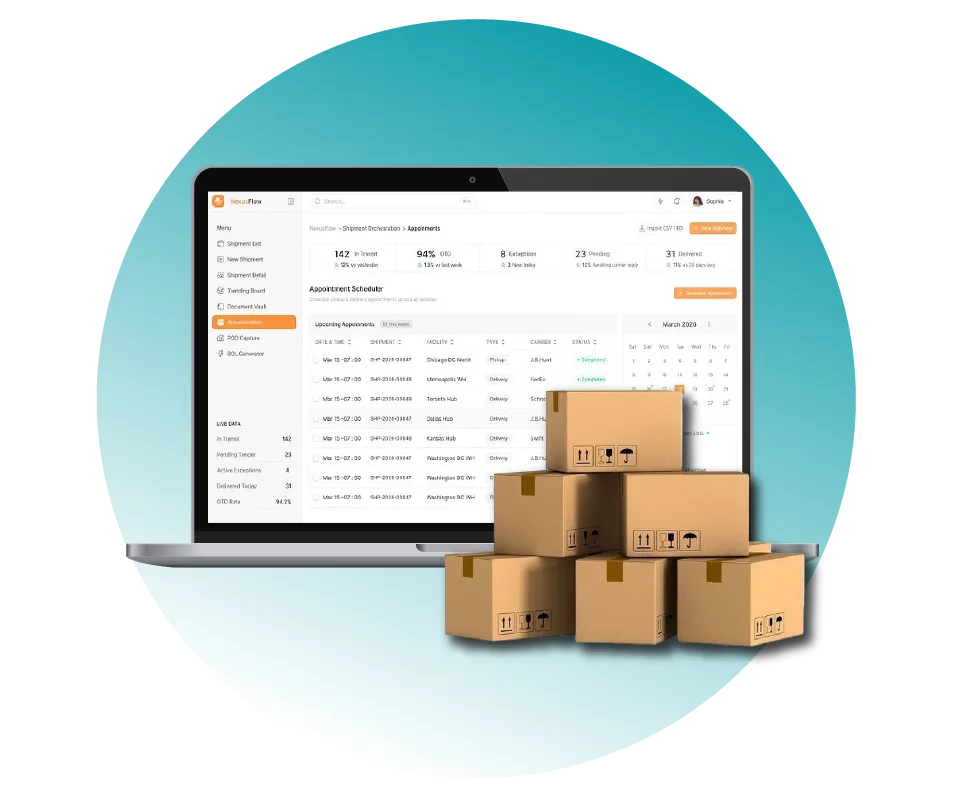
For Nexaflow Distribution, we built a multi-party supply chain visibility platform that gives all participants in the distribution network a verified, shared view of inventory status, shipment events, and compliance documentation. The platform was designed for the kind of cross-organisational data trust that blockchain supply chain applications formalise on-chain, providing the groundwork for a future distributed ledger layer as the client’s network scales.
Digital Dividend specializes in software development, mobile apps, eCommerce, CMS, IoT integration, analytics, and healthcare product solutions.
Expand your technology capabilities with top-tier blockchain experts.
Digital Dividend offers experienced developers to deliver custom blockchain applications tailored to your business needs.
Traditional application development uses centralised databases and server infrastructure where a single entity controls the data and logic. Blockchain app development distributes both data and execution across a network of nodes, with no single point of control or failure. This introduces specific engineering disciplines, including smart contract security, gas optimisation, consensus mechanism selection, and wallet integration, that do not exist in conventional software development. It also means that deployed smart contracts cannot be easily modified, making the design and testing phase significantly more consequential.
The range is broad. Common categories include decentralised finance (DeFi) applications such as lending protocols and exchanges, NFT platforms and digital collectables marketplaces, crypto wallets and payment gateways, supply chain provenance systems, digital identity and credential verification platforms, tokenised asset registries, blockchain-based voting systems, and enterprise data integrity platforms. The right type depends entirely on the business problem being solved. Not every use case benefits from blockchain, and part of our consulting process is confirming that it is genuinely the right tool before development begins.
Yes, though the regulatory landscape for initial coin offerings has changed significantly since 2017. Depending on the jurisdiction, token offerings may be classified as securities, requiring registration and compliance with financial regulation. A reputable blockchain application development firm will advise on the legal classification of your token before designing the smart contract and distribution mechanism. We help clients design compliant token structures, build the smart contract and investor portal, and integrate the KYC and AML verification that most jurisdictions require for token issuance.
No. There is a significant difference between companies that have shipped production blockchain applications and those that have only delivered internal prototypes or testnet experiments. Equally, experience on one chain does not automatically transfer to another. Ethereum developers working on Solana for the first time face a completely different programming model. When evaluating blockchain app development experts, ask for specific examples of mainnet deployments, smart contract audit reports from those projects, and references from clients whose applications are live and handling real transaction volume.
A capable blockchain app developer combines protocol-specific programming skills, for example, Solidity for Ethereum or Rust for Solana, with a strong foundation in cryptography, distributed systems, and security engineering. They should understand token standards, consensus mechanisms, gas economics, and common smart contract vulnerability patterns. On the application layer, experience with Web3 libraries such as ethers.js or Web3.js, wallet connection frameworks, and decentralised storage solutions like IPFS is essential. Beyond the technical skills, the best blockchain developers also understand the business context well enough to challenge a requirement that would introduce unnecessary on-chain complexity or cost.

Ready to build your blockchain platform with a team that has shipped production applications?
Talk to our senior developers about your project. We give honest assessments on technology fit, timeline, and cost no commitment required.