

Getting Odoo live without the common pitfalls takes a structured process and experienced people. Talk to our Odoo implementation team get a clear project plan and honest cost estimate with no obligation.
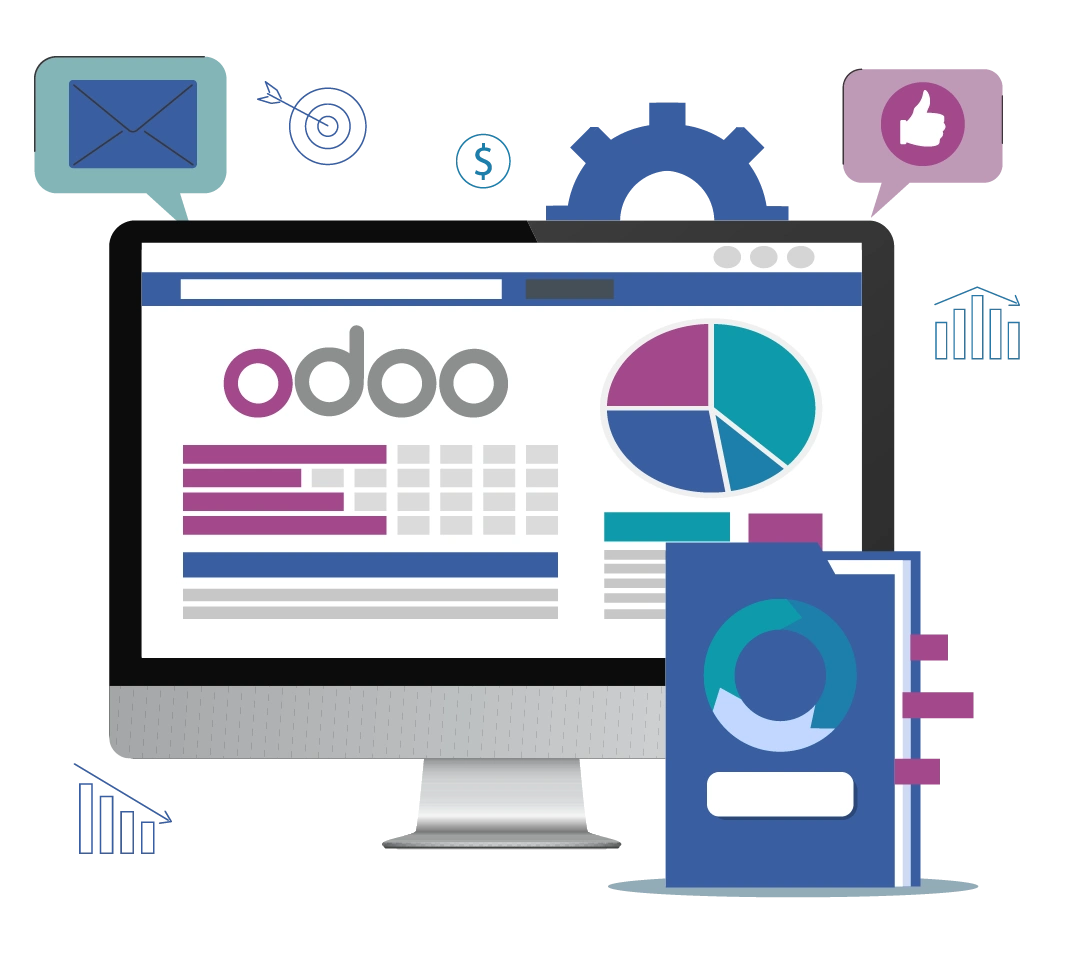
Odoo implementation services that get your ERP live and running correctly
Most ERP projects don’t fail because of the software. They fail because of the implementation. Wrong configuration, messy data migration, and teams that never properly adopt the system are what turn a sound investment into an expensive problem to fix.
Odoo implementation services cover the full process of getting Odoo live in your business setup, configuration, data migration, integrations, training, and go-live support. At Digital Dividend, we have delivered ERP and enterprise platform projects for clients across manufacturing, distribution, retail, and services since 2008. Our implementation team brings structured methodology and a post-launch commitment that keeps your system running correctly long after go-live day.
Table of Contents
What does Odoo implementation involve?
Odoo implementation is the structured process of installing, configuring, populating, and deploying Odoo ERP within your organization. It covers module selection based on your business requirements, system configuration to match your operational workflows, migration of historical data from legacy systems, integration with third-party tools, user training, and a phased go-live process designed to minimize disruption.
It is not simply installing software. A successful Odoo rollout requires detailed mapping of your existing processes, clear decisions about which modules to activate and in what sequence, and a data migration plan that preserves the accuracy and completeness of your historical records.
The difference between an Odoo implementation that delivers real business value and one that frustrates your team almost always comes down to the quality of the implementation process and the experience of the team running it.
Odoo ERP implementation services: what they include
Our Odoo ERP implementation services follow a structured methodology covering every stage from initial scoping through to post-launch support. As a certified implementation partner, we handle the full rollout, not just the installation. Here is what each component involves.
Odoo setup services
Odoo setup services cover initial installation and environment configuration. This includes selecting the correct Odoo edition, provisioning your hosting environment, configuring database settings, and activating the specific modules your business requires. A correctly configured Odoo setup establishes the foundation that all subsequent data work and configuration builds on. We also handle cloud-based software deployment on platforms including AWS and Microsoft Azure, giving you a production-ready environment from day one.
Odoo deployment services
Odoo deployment services cover the structured release of your configured system from development and staging environments through to production. This is the phase where your Odoo instance moves from testing to live operation. We manage the deployment pipeline, run data validation checks, complete production environment configuration, and execute the technical go-live sequence so your system launches cleanly without data loss or configuration drift between environments.
Odoo integration services
Most businesses need Odoo connected to existing systems before going live. Our Odoo integration services cover API connections to third-party platforms, data exchange with accounting tools, e-commerce synchronization, payment gateway integration, and connections to logistics or shipping providers. Software integration services at this stage are critical. Integrations left until after go-live are consistently the most common cause of post-launch disruption. We map every required integration during discovery and complete all of them before the production deployment date.
Odoo customization and implementation services
During implementation, it is common to need Odoo configured to reflect workflows that differ from platform defaults. Our Odoo customization and implementation services cover this configuration layer: adapting field labels, adjusting approval workflows, setting up automated rules, configuring user roles and access rights, and activating industry-specific features within the Odoo module set. This is configuration work performed during the implementation phase, not standalone custom development. The focus is on making Odoo work for how your business already operates, using the built-in capabilities of the platform.
What are the benefits of Odoo implementation services?
A properly implemented Odoo system delivers measurable operational improvements from the first weeks of live use. Departments that previously ran on separate tools and spreadsheets share a single data source. Reporting that took hours of manual compilation runs automatically. Purchase orders, invoices, inventory movements, and customer records flow through one system with no duplication or re-entry required.
The specific benefits our clients report most consistently include reduced time on administrative tasks, better inventory accuracy, faster month-end close processes, and improved management visibility for day-to-day decision-making. According to Statista, ERP adoption among mid-sized businesses continues to accelerate globally, with operational efficiency and cost reduction consistently cited as the primary drivers of investment.
For businesses replacing legacy systems, the additional benefit is lower IT overhead. A single integrated platform is simpler and cheaper to maintain than five or six separate tools connected by manual data transfers and spreadsheet bridges.
Common Odoo implementation challenges and how we resolve them
Most Odoo implementations that go wrong do so for the same predictable reasons. Identifying them at the start is the first step to avoiding them.
Scope creep during configuration
Business requirements that expand mid-project are the most common source of cost and timeline overrun. We address this with a formal discovery and sign-off process before configuration begins, and a structured change control procedure for anything that falls outside the agreed scope.
Data migration errors from legacy systems
Poor data in a legacy system becomes worse data in Odoo if migration is not carefully managed. We audit source data quality before migration, define mapping rules for each data entity, and run test migrations on a staging environment before any live data is committed to production.
User resistance and low adoption rates
An Odoo system that staff do not use properly delivers none of its intended benefits. We build role-specific user training into the implementation plan from the start, not as an afterthought, and complete it before go-live rather than the day after.
Underestimating integration complexity
Third-party integrations consistently take longer than expected when they are not scoped in detail upfront. We map every required integration during discovery, confirm API availability with third-party vendors, and allocate a dedicated resource for integration work as a separate project stream.
Our Odoo implementation process
We follow a stage-gated implementation process that manages risk at every phase and keeps projects on time and on budget.
Business process mapping and roadmap
We start by documenting how your business currently operates across purchasing, inventory, sales, accounting, and any other relevant functions. This process map becomes the specification for how Odoo will be configured.
Budget definition and edition selection
We confirm your budget parameters and recommend the correct Odoo edition. Community edition covers standard functionality. Enterprise adds advanced features, Odoo Studio, and official Odoo support. The right choice depends on your scale, integration requirements, and long-term plans.
Installation, modules, and configuration
We install Odoo in your hosting environment, activate the modules your business requires, and configure them to match your mapped processes. This includes the chart of accounts, tax configurations, product categories, warehouse structures, and all other master data frameworks your operations depend on.
Legacy data migration
Historical data from your existing systems is extracted, cleaned, mapped to Odoo’s data structure, validated in a test migration, and imported into your configured Odoo instance. We migrate customers, suppliers, products, opening balances, and active transactions as agreed during the scoping phase.
Testing on staging server
Before any go-live, we run structured testing on a staging environment that mirrors production. This covers functional testing of each module, end-to-end process testing across departments, integration testing with connected systems, and user acceptance testing with your team.
User training
Training is delivered by role, not as a generic platform walkthrough. Finance users learn invoice processing and reporting. Warehouse users learn stock movements and picking. Sales users learn order management and CRM. All training is documented with reference guides your team can use independently after go-live.
Go-live and production deployment
We manage the production deployment, coordinate the cutover from your old system, and provide on-site or remote go-live support during the first days of live operation. This is where having an experienced implementation team present makes the most practical difference to your staff’s confidence.
Ongoing support and maintenance
Post-go-live, we provide structured support covering bug resolution, user questions, minor configuration adjustments, and Odoo version monitoring. Most clients maintain a support agreement for the first six to twelve months while their team builds confidence with the system. Our broader Odoo development services are available for clients who need additional module development or more significant customization once the implementation is stable.
Odoo implementation by business function
Odoo’s modular structure means implementation scope varies significantly depending on which parts of your business you are bringing onto the platform.
Odoo CRM implementation services
Odoo CRM implementation services cover the setup and configuration of the Odoo CRM module: pipeline stages, lead sources, sales team structures, activity types, email integration, and reporting dashboards. We configure CRM to match your actual sales process rather than a generic template, and train your sales team on the specific workflows they will use each day.
Odoo eCommerce implementation services
Odoo eCommerce implementation services cover the connection between your online store and your Odoo back end: product catalogue synchronization, order flow from website to warehouse, payment gateway configuration, shipping method setup, and customer account management. For businesses migrating an existing store to Odoo eCommerce, we also handle product data migration and URL structure planning to protect organic search performance.
Odoo manufacturing implementation services
Odoo manufacturing implementation services cover Bills of Materials, work centre configuration, manufacturing order workflows, quality control checkpoints, and production reporting. We configure the manufacturing module to reflect your actual production process, including multi-level BoMs, routing steps, and subcontracting arrangements where relevant to your operations.
Odoo implementation services for large enterprises
Large enterprise Odoo implementations differ from small business rollouts in scope and complexity, not in methodology. The core process is the same. What changes is the number of concurrent workstreams, the volume of data being migrated, the number of integrations required, and the need for phased deployment across departments or locations.
We manage large enterprise Odoo projects with dedicated project management, a defined steering committee structure, and milestone-based delivery phases that allow each stage to be validated before the next begins. Enterprises migrating from SAP, Microsoft Dynamics, or Oracle face the most complex data migration and integration challenges. We structure these projects to address integration risk explicitly at each phase rather than discovering it during go-live. Our ERP software development capability supports enterprise clients who need bespoke integration development alongside the core implementation work.
What industries benefit from Odoo implementation?
Odoo’s module breadth makes it relevant across a wider range of industries than most single-vendor ERP platforms.
Manufacturing and production
Manufacturing businesses benefit from Odoo’s native connection between inventory, purchasing, production orders, and accounting. Real-time visibility into raw material stock, production progress, and finished goods availability is the primary driver for manufacturing Odoo adoption.
Retail and e-commerce
Retailers use Odoo to connect point-of-sale operations, e-commerce, inventory, and customer loyalty in a single system. Multi-location retail businesses particularly benefit from centralized stock visibility and consolidated reporting across sites.
Healthcare and life sciences
Healthcare organizations use Odoo for administrative operations: appointment scheduling, patient billing, medical supply inventory, and HR management. Clinical systems connect to Odoo via integration for administrative data exchange without exposing sensitive patient data to the ERP layer.
Distribution and logistics
Distribution businesses use Odoo’s inventory and purchasing modules to manage warehouse operations, supplier relationships, and delivery tracking. Odoo’s lot and serial number tracking is particularly valuable for businesses with product traceability requirements.
Professional services and consulting
Service businesses use Odoo for project management, timesheet tracking, invoicing, and CRM in a single connected platform. The ability to link project delivery directly to invoicing without manual data transfer is the primary operational benefit for professional services firms.
How long does Odoo implementation take?
Odoo implementation timeline depends directly on the scope. A focused implementation covering two or three modules for a small business can be completed in 6 to 10 weeks. A mid-size business implementing across sales, purchasing, inventory, manufacturing, and accounting typically requires 3 to 5 months. A multi-site enterprise implementation with complex data migration and multiple integrations will need 5 to 9 months or more, delivered in defined phases.
The most common cause of timeline overrun is the late discovery of data quality issues or integration complexity that was not scoped upfront. Our discovery phase is designed to surface these before the project begins, so the timeline estimate you receive reflects your actual situation rather than an optimistic industry average.
What is the cost of Odoo implementation services in the US?
Odoo implementation cost in the US varies based on business size, module scope, data migration complexity, and the number of integrations required. As a general guide, small business implementations typically range from $8,000 to $25,000. Mid-size business implementations with broader module scope and data migration run from $25,000 to $75,000. Large enterprise projects with multiple phases and complex integrations are scoped on a project-by-project basis and typically exceed $75,000.
Odoo’s own licensing is separate from implementation fees. Community edition is open source and free. Enterprise edition is licensed per user per month. According to Gartner, ERP implementation services typically cost two to three times the software licensing investment, a ratio that holds for Odoo projects of all sizes.
Affordable Odoo implementation services
Affordable Odoo implementation services are genuinely accessible to small and mid-size businesses because Odoo Community carries no licensing cost. The implementation fee is the primary investment. By scoping projects tightly, phasing delivery to spread cost, and building on Odoo’s existing module capabilities rather than commissioning custom development, we keep implementation costs within reach for growing businesses that cannot justify large enterprise ERP pricing. We provide itemized estimates so you can see exactly where your budget is being allocated before committing to the project.
Are Odoo implementation services worth it?
Yes, for businesses that have outgrown disconnected tools and spreadsheets. The return on a well-implemented Odoo system comes from time recovered from manual processes, reduced errors from data re-entry, faster reporting cycles, and better decision-making from consolidated, accurate business data.
The break-even point depends on the scale of your current inefficiency. Businesses losing significant staff hours to manual reconciliation, inventory discrepancies, or inter-department data sharing typically see the investment recovered within 12 to 18 months of a successful go-live. The risk is not in the investment itself but in a poor implementation. A system your team does not trust or use properly is the only scenario in which Odoo does not deliver value.
How do Odoo implementation services differ from other ERP solutions?
Odoo’s modular, open-source architecture makes it fundamentally different to implement compared to SAP, Oracle, or Microsoft Dynamics. Implementation timelines are shorter. Configuration is more accessible, without requiring specialist consultants for every operational adjustment. Total cost of ownership is lower because licensing does not scale aggressively with user count.
The trade-off is that Odoo requires careful configuration work during implementation to achieve the same operational fit that a more prescriptive enterprise ERP delivers through its rigid processes. This is why the quality of your Odoo implementation company matters more than it does with some other platforms. A general technical team can install Odoo. An experienced Odoo implementation partner configures it to work the way your specific business actually needs it to.
How to choose the right Odoo implementation service provider?
Choosing an Odoo implementation partner is a longer-term decision than most businesses treat it as. You are selecting a technical partner who will understand your business processes, your data structure, and your system configuration for years to come. The factors that matter most in practice include the following.
Verified Odoo experience. Ask specifically how many Odoo implementations the partner has delivered, on which versions, and in which industries. References from businesses similar in size and sector to yours carry more weight than a list of brand logos.
A structured discovery process. A partner who cannot explain their discovery methodology in detail is likely to underprice the project and underscope the complexity. The discovery phase is where most implementation risk is either identified and managed or ignored and encountered later at greater cost.
Data migration capability. Migration is the highest-risk phase of any ERP implementation. Your partner should have a clearly defined migration methodology, a data audit process, and a track record of clean migrations from the specific legacy systems you are moving away from.
Post-go-live commitment. Implementations do not end on launch day. The first 90 days of live operation generate the most user questions and configuration adjustment requests. A partner with a structured post-go-live support offering is significantly more valuable than one who hands over documentation and moves on to the next project.
Best Odoo implementation services in the US
The best Odoo implementation services in the US are not necessarily delivered by the largest consultancies or the lowest-cost offshore providers. They are delivered by teams with verified implementation depth, a structured methodology, and honest communication on cost and scope from the first conversation.
For businesses looking for Odoo implementation services near me, the good news is that location matters less for cloud-hosted Odoo than it did for on-premise ERP. The leading Odoo implementation providers deliver and support projects remotely without any loss of quality or accountability. What matters during a remote engagement is a clear communication structure, defined escalation paths, and access to your team at the key project milestones rather than physical proximity.
Digital Dividend’s Odoo implementation experts are based in Sweden and the USA, with delivery support from our Pakistan team. We provide the communication standards and technical oversight you would expect from a US or European implementation firm, at a cost structure that gives you more budget to invest in the implementation itself. Browse our case studies to see the range of ERP and enterprise platform work we have delivered.
Why work with Digital Dividend as your Odoo implementation company
Having delivered 300+ software and ERP projects since 2008, Digital Dividend brings implementation depth that most Odoo-specialist boutiques cannot match across industries and project scales.
As your Odoo implementation company, we provide a named project manager, direct access to the consultants and developers working on your system, and a clear escalation path for any issue that arises during or after the project. We do not subcontract. Every person on your project is part of our in-house team of 100+ engineers and consultants.
Our implementation work is backed by broader platform capabilities, including ERPNext and software development services, which means we support clients whose Odoo implementation needs extend into custom development or bespoke integrations that require development beyond the standard Odoo connector library.
Our delivery model, with teams in Sweden, the USA, and Pakistan, provides timezone coverage, clear English communication, and cost-effective execution across the full project lifecycle.
Our Odoo implementation work
BuildCore: ERP implementation for manufacturing operations
For BuildCore, we delivered a full ERP implementation across their manufacturing operations, covering Bills of Materials, work order management, inventory control, and purchasing workflows. The project involved migrating several years of production and inventory data from a legacy system, configuring the manufacturing module to match BuildCore’s multi-level BoM structure, and training operational and finance teams in parallel to enable a clean cutover with no production downtime on go-live day.
Nexaflow Distribution: operational platform rollout for distribution management
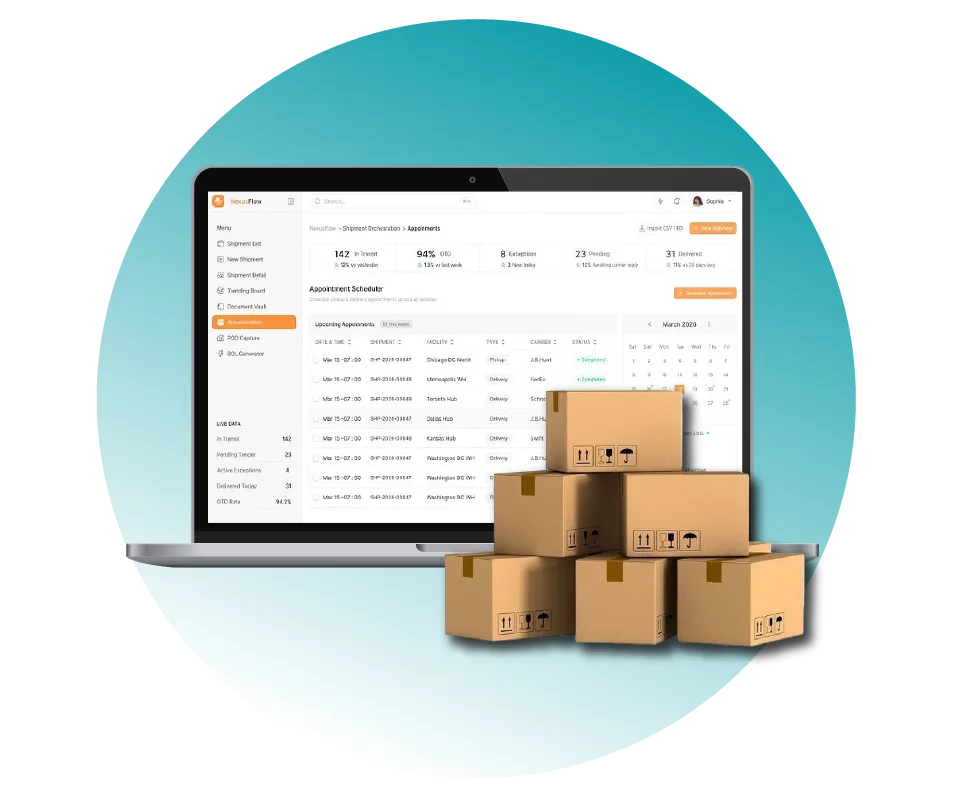
For Nexaflow Distribution, we implemented an integrated operational platform covering inventory management, purchase order workflows, customer order processing, and logistics tracking across their distribution network. The platform replaced a combination of spreadsheets and disconnected tools that were creating reconciliation delays and reporting gaps at month end, giving the team a single, accurate view of stock, orders, and supplier performance in real time.
What our clients say
"We had attempted an Odoo rollout with another partner before coming to Digital Dividend. The difference in approach was significant from the first meeting. They spent real time understanding our manufacturing process before touching any configuration. The go-live was clean, the data migration was accurate, and the team remained available through the first month of live operation."

"Our distribution operation runs entirely on Odoo now, and the difference in reporting visibility alone has justified the investment. Digital Dividend's team was honest about what the implementation would involve, delivered on the timeline they committed to, and the post-go-live support has been exactly what we needed as the team settled in."

"We are a retail business with three locations and an online store. Digital Dividend implemented Odoo across all of them with a single shared inventory pool and real-time stock visibility across channels. The project ran to budget, the training was practical and role-specific, and six months in, we have not had a single critical system issue."

Smart Solutions Across Multiple Technologies
Digital Dividend specializes in software development, mobile apps, eCommerce, CMS, IoT integration, analytics, and healthcare product solutions.
Scale your business with expert Odoo implementation specialists.
Digital Dividend provides skilled professionals to deploy, configure, and optimize Odoo solutions for seamless operations.
Frequently asked questions about Odoo implementation services
What is the difference between Odoo implementation and customization?
Odoo implementation is the process of setting up, configuring, migrating data to, and deploying Odoo within your business using the tools and capabilities built into the platform. Odoo customization refers to writing additional code to extend the platform beyond its standard functionality, such as building a new module, modifying core platform behaviour, or creating an integration that requires bespoke development. Implementation always comes first. Customization, where genuinely needed, is a separate workstream that should only begin once the core implementation is stable, and your team is using the standard platform effectively day to day.
What is included in Odoo implementation services?
A full Odoo implementation service includes requirements gathering and business process mapping, Odoo edition selection and licensing advice, hosting environment setup, module installation and configuration, master data setup, legacy data migration, third-party integrations, user training by role, staging environment testing, production deployment, go-live support, and post-launch support through the stabilisation period. Not all providers include all of these components. When evaluating quotes, confirm specifically whether data migration, integrations, and post-go-live support are included in the quoted fee or treated as separate billable items.
How do I measure the success of an Odoo implementation?
Success in an Odoo implementation is measurable across three dimensions. Adoption rate: Are your teams actively using the system for the processes it was implemented to manage? Data accuracy: Does the data in Odoo match the reality in your warehouse, your accounts, and your customer records? Process efficiency: Are the specific operational bottlenecks that drove the investment actually resolved? We define measurable success criteria during the discovery phase and review them formally at the 90-day post-go-live mark, so there is a clear, agreed basis for evaluating the outcome.
What if I need to add more Odoo modules after go-live?
Adding modules after go-live is straightforward in Odoo and is a common part of a phased implementation strategy. Many businesses go live with their core modules, stabilize operations, and then activate additional functionality in subsequent phases. The main consideration is data: some modules require historical data to be populated or migrated when they are first activated. We advise clients on the logical sequencing of module rollout from the start, so later phases are planned for rather than discovered reactively.
How does migrating from a legacy system to Odoo protect data integrity?
Data integrity during migration is protected through a structured four-stage process. First, a data audit of the source system identifies quality issues, duplicates, and gaps before any migration work begins. Second, a data mapping document defines exactly how each field in the legacy system maps to Odoo’s data model. Third, a test migration runs the full migration on a staging environment, with validation reports reviewed and signed off by your team before any production migration is authorized. Fourth, the production migration is executed from a validated, clean data set with rollback procedures in place if any critical issue is identified post-import.
Ready to implement Odoo the right way from day one?
Our implementation team gives you a structured process, honest timelines, and the post-go-live support your team needs to get confident quickly.