






























dd-logo-loader
logo
logo

Language

Awesome Image Awesome Image

ERPNext implementation services

Disconnected systems, manual workflows, and data silos cost mid-sized businesses up to 30% of their annual revenue in operational inefficiency (Panorama Consulting, 2024). ERPNext implementation services unify your finance, inventory, HR, procurement, and project management into one open-source platform, giving your team real-time visibility and the controls to scale. At Digital Dividend, we have delivered 300+ software projects across the US, Europe, and GCC, and our experienced developers bring that same production rigour to every ERPNext engagement.
ERPNext, built on the Frappe framework, is the world’s leading open-source ERP, trusted by over 5,000 businesses across manufacturing, retail, healthcare, and nonprofits (Frappe, 2025). Our software development company handles everything from consulting and configuration to data migration, custom module development, and post-go-live support, so you get a system that fits your business, not the other way around.
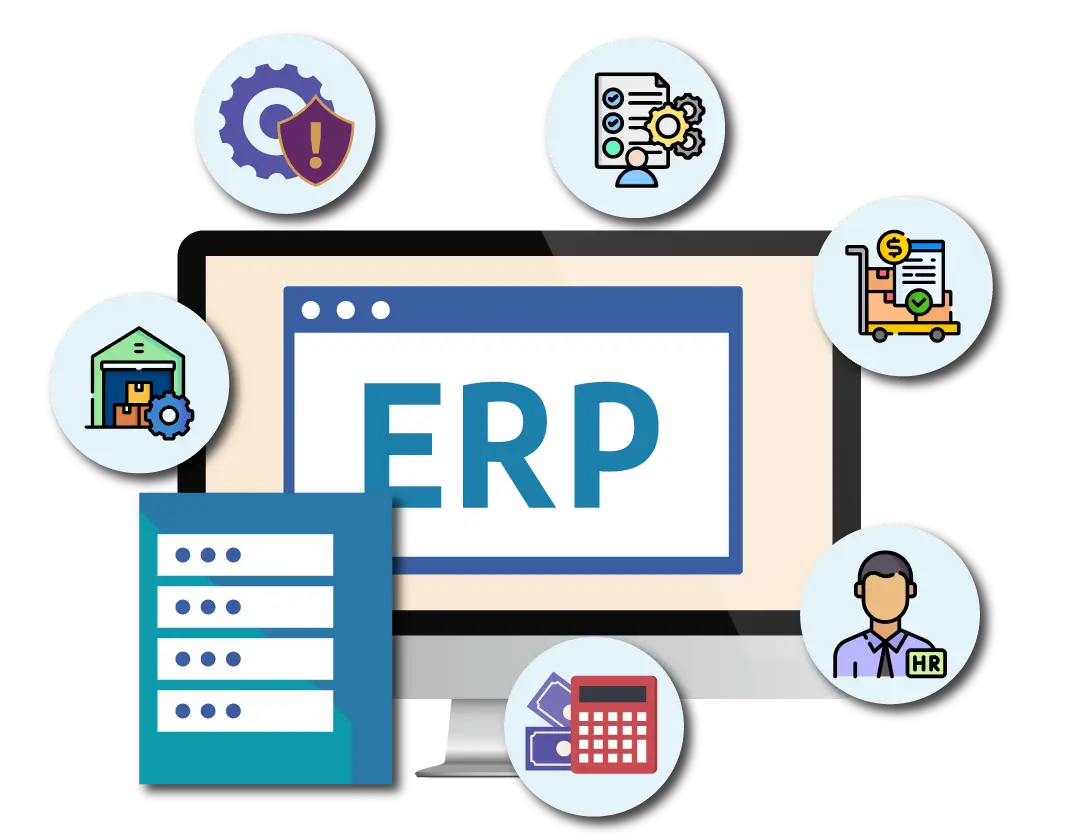
A flat design vector graphic highlighting ERPNext Implementation Services by Digital Dividend. The illustration features a central desktop monitor displaying a blue browser window with the large text "ERP." Surrounding the monitor are circular icons representing core business management modules: warehouse logistics, system security gears, project checklists, shipping distribution, human resources (HR), and accounting finance with a calculator. A teal and blue structured data sheet sits in the lower left corner against a plain light grey background.

Get a free ERPNext consultation – talk to our senior developers today.

Table of Contents

What is included in ERPNext implementation services?

ERPNext setup services cover every stage from initial audit to live deployment. A full engagement with a professional developer includes business process analysis, system configuration, custom module development, third-party integrations, data migration, user training, and ongoing support, delivered as a structured end-to-end programme rather than isolated tasks.

ERPNext configuration services also encompass workflow automation, role-based access controls, custom reports, and dashboard setup tailored to your team’s daily operations. Because every business process is mapped before configuration begins, you avoid the costly rework that comes from implementing a generic setup and customising it after go-live.

What are the benefits of ERPNext implementation?

Businesses that move from spreadsheets and siloed software to a unified ERP platform report an average 20-30% reduction in operational costs within the first year of go-live (Nucleus Research, 2024). ERPNext implementation consulting delivers those gains through centralised data, automated approvals, and real-time reporting across every department.

As an open-source platform, ERPNext carries no per-user licensing fees, making it the most cost-effective enterprise resource planning service option for SMBs and growing enterprises. Combined with its modular architecture, you can activate only the modules your business needs today and expand as you scale, without re-implementing from scratch.

Our ERPNext implementation services

Our software development agency delivers a full suite of ERPNext services across seven core areas, each scoped to your industry, team size, and technical environment.

ERPNext consulting and business process analysis

Before any configuration begins, our experienced developers run a structured AS-IS and TO-BE process mapping exercise to identify gaps between your current workflows and ERPNext’s native capabilities. This fit-gap analysis is the foundation of every successful ERPNext implementation, and it is what prevents scope creep and mid-project rework.

ERPNext setup, deployment and configuration

We handle full ERPNext installation assistance across cloud and on-premise environments, including server provisioning, domain setup, SSL configuration, and module activation. ERPNext system setup includes a chart of accounts, tax rules, warehouses, cost centres, and all master data required for day-one operations.

ERPNext customization during implementation

Where standard ERPNext modules do not fully match your workflow, our professional developers build custom DocTypes, scripts, and print formats using the Frappe framework. ERPNext customisation during implementation is scoped, documented, and built to survive future version upgrades, so your custom logic does not break when ERPNext releases a new version.

ERPNext integration support

We connect ERPNext to your existing third-party applications, including Shopify, WooCommerce, payment gateways, shipping providers, CRM platforms, and custom APIs. ERPNext integration support is delivered with full API documentation and regression testing, so every connected system behaves correctly after go-live.

ERPNext implementation with data migration

Our experienced developers extract, clean, transform, and validate data from your legacy systems, whether spreadsheets, Tally, QuickBooks, SAP, or a custom database, before loading it into ERPNext. ERPNext implementation with data migration includes a full reconciliation audit to confirm data accuracy before the system goes live.

ERPNext implementation and training services

User adoption is where most ERP implementations fail. Our ERPNext implementation and training services include role-specific training sessions, user documentation, video walkthroughs, and a hypercare support period immediately after go-live to resolve the day-one issues that always emerge in any live deployment.

Post-go-live support and maintenance

After deployment, our software development company provides structured support covering bug fixes, performance optimisation, module expansions, and ERPNext version upgrades. Because ERPNext releases major updates annually, ongoing maintenance ensures your system stays secure, compatible, and aligned with your evolving business processes.

How our ERPNext implementation process works

Our ERPNext implementation project management follows a six-stage process aligned with best practices for ERPNext implementation, ensuring every deliverable is documented, tested, and signed off before moving to the next stage.

Requirement gathering and fit-gap analysis

We conduct structured workshops with your department leads to document current workflows, system requirements, and pain points. The output is a formal fit-gap report and a scoped project plan with milestones, owners, and timelines.

Solution design and blueprint

Our professional developers produce a solution blueprint covering system architecture, module configuration plan, integration map, data migration strategy, and custom development scope, reviewed and signed off by your team before the build begins.

ERPNext configuration and customization

We configure ERPNext modules to your approved blueprint, build any custom DocTypes or scripts, set up workflows and approval rules, and complete all master data setup, including items, suppliers, customers, accounts, and warehouses.

Data migration and validation

Legacy data is extracted, cleaned against your master data rules, and loaded into ERPNext in a controlled migration cycle. All migrated data is validated against source records and reconciled before user acceptance testing begins.

Testing and user acceptance

We run functional testing across all configured modules, integration testing for every connected system, and facilitate user acceptance testing sessions where your team validates the system against real business scenarios before go-live sign-off.

Deployment, go-live and ongoing support

Go-live is managed as a structured cutover event with pre-defined rollback procedures and a dedicated hypercare period. Post go-live, our software development company provides tiered support covering critical fixes, optimisation requests, and planned enhancements on an agreed SLA.

What industries benefit from ERPNext implementation?

ERPNext’s modular architecture makes it one of the few open-source ERP platforms that genuinely serve diverse industries without requiring a full custom build for each sector.

A multi-panel collage graphic detailing What industries benefit from ERPNext implementation by Digital Dividend. The left side features a prominent close-up of a miniature metal shopping cart loaded with brown cardboard boxes resting on a black computer keyboard, situated above a healthcare scene of a medical professional working with a glowing AI neurology dashboard. The right side includes panels showcasing factory manufacturing workers packaging food goods on a conveyor line, stacked shipping boxes inside a large logistics warehouse aisle, and a close-up of hands counting coins over a wooden table with dates.

ERPNext cloud implementation services vs on-premise implementation solutions

ERPNext cloud implementation services host your ERP on managed infrastructure, typically AWS or Google Cloud, eliminating the need for in-house server management while delivering automatic backups, scaling, and version updates. Cloud deployment is the right choice for businesses that want predictable monthly costs, fast go-live timelines, and minimal IT overhead.
ERPNext on-premise implementation solutions give enterprises full control over their data environment, security configuration, and upgrade schedule, making them the preferred choice for businesses with strict data residency requirements, high-volume transaction processing needs, or existing on-premise infrastructure investments. Our experienced developers have delivered both models and will recommend the right deployment architecture based on your compliance requirements, team size, and long-term cost structure.

What is the cost of ERPNext implementation services?

ERPNext carries no software licensing fees, which makes it significantly more cost-effective than SAP, Oracle, or Microsoft Dynamics at equivalent scale. The cost of ERPNext implementation services covers professional services: consulting, configuration, customisation, data migration, training, and support.
Implementation scope Typical cost range Timeline
SMB — up to 25 users, 3-4 modules $8,000 – $20,000 6 – 10 weeks
Mid-market — up to 100 users, full suite $20,000 – $60,000 10 – 20 weeks
Enterprise — multi-site, custom modules $60,000 – $150,000+ 20 – 40 weeks
Ongoing support and maintenance $500 – $3,000/month Ongoing
What is the timeline for ERPNext implementation? For most SMBs, a standard six-module deployment goes live in 8 to 12 weeks. Enterprise deployments with custom modules and multi-site data migration typically run 20 to 40 weeks. Our software development agency provides a fixed-scope cost estimate after the fit-gap analysis, so there are no budget surprises mid-project.

How does ERPNext implementation differ from other ERPs?

ERPNext is built on the open-source Frappe framework, which means there are no per-user licensing fees, no vendor lock-in, and full access to source code for customisation. Compared to SAP Business One or Microsoft Dynamics 365, ERPNext implementations typically cost 60 to 80% less in total cost of ownership over five years, while covering the same core business functions (Panorama Consulting, 2024).

The Frappe framework also makes ERPNext customisation more accessible than proprietary ERP platforms, where customisation requires certified partner consultants and vendor-approved development environments. Our professional developers can build, test, and deploy custom ERPNext modules without third-party restrictions, giving your business a system that adapts to your processes rather than forcing your processes to adapt to the software.

ERPNext implementation case studies

Our experienced developers have delivered ERP, operational, and enterprise platform solutions across manufacturing, distribution, and supply chain sectors, with the same architecture principles that underpin every ERPNext implementation we deliver.

BuildCore — ERPNext for manufacturing

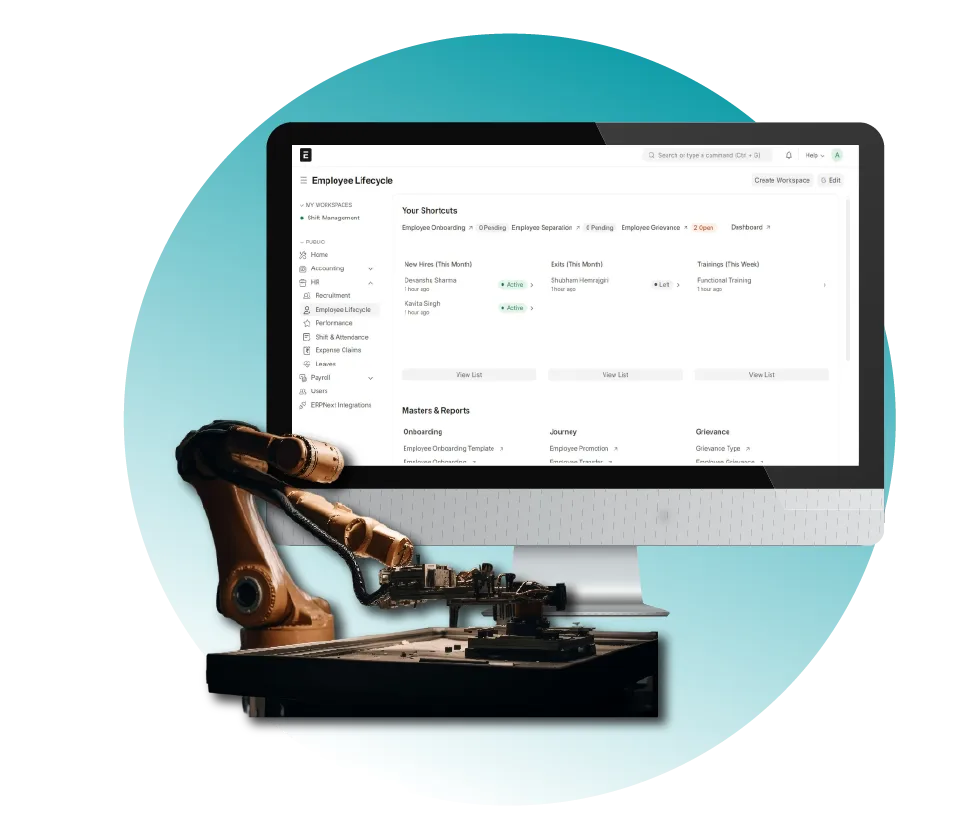
We delivered a full ERPNext implementation for BuildCore, a manufacturing client requiring BOM management, production planning, work order tracking, and supplier procurement in a unified system. The deployment consolidated three legacy tools into one platform, reducing manual reporting time by over 40% in the first quarter post go-live.

Digital Dividend providing BuildCore Manufacturing, ERPNext for a 200-Employee Production Firm, featuring an employee lifecycle management dashboard and an industrial robotic arm.
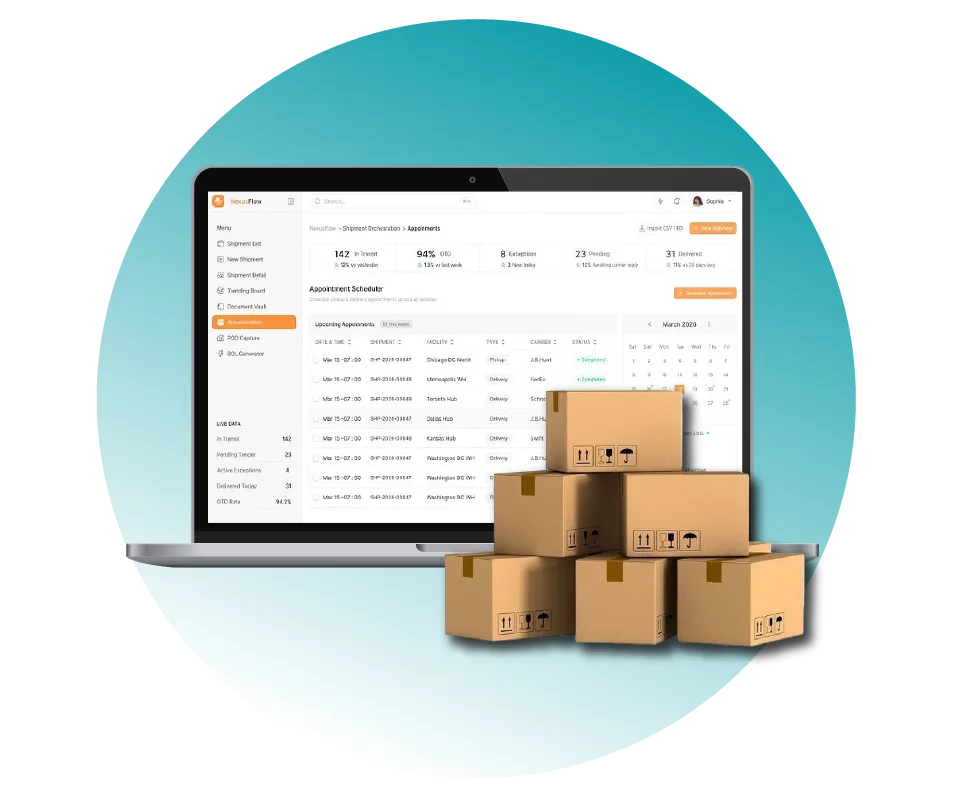
Digital Dividend implementing NexaFlow Distribution, ERPNext for a Multi-Warehouse Distributor, showing a professional appointment scheduling dashboard and shipping boxes on a laptop screen.

NexaFlow Distribution — ERP and operations platform

NexaFlow required a distribution operations platform handling multi-warehouse inventory, purchase orders, supplier management, and financial reporting across multiple entities. Our software development agency delivered a fully configured and integrated solution on time and within budget, with a structured data migration from the client’s legacy system.

Our delivery track record

With 15+ years of experience and 300+ projects delivered across the US, Europe, and GCC, Digital Dividend brings cross-industry production depth that purpose-built ERPNext boutiques cannot match. Our in-house team of 100+ developers means every engagement is staffed by full-time employees, not subcontractors.

How to choose an ERPNext implementation partner?

The right ERPNext implementation partner is not the one with the lowest day rate; it is the one whose process, industry experience, and post-launch accountability match the complexity of your business. Projects without a formal requirement gathering phase are 2.5x more likely to exceed budget (PMI, 2024), so the first question to ask any partner is how they scope a project before they price it.
Verify in-house capability across consulting, configuration, custom development, integration, and data migration. A partner who subcontracts any of these layers introduces handoff risk that surfaces at the worst possible time: go-live. Digital Dividend handles every stage in-house, with project leadership from our experienced teams in Sweden and the USA and delivery support from Pakistan, giving you one accountable partner from discovery to post-launch support. Explore our ERP software development services or hire a dedicated developer to get started.

Smart contract security is non-negotiable. Unaudited contracts are the largest attack vector in blockchain platforms, responsible for over $3.8 billion in losses across metaverse and DeFi platforms since 2021 (Chainalysis, 2024). We run full smart contract audits using MythX and Slither, combined with manual review, before any contract is deployed to mainnet.

Infrastructure security covers end-to-end encryption, DDoS protection, intrusion detection, and automated vulnerability scanning integrated into the CI/CD pipeline. The average cost of a metaverse platform data breach in 2024 was $4.88 million (IBM Cost of a Data Breach Report, 2024).

Ready to scope your ERPNext project?

Book a free consultation with our senior developers.

Smart Solutions Across Multiple Technologies

Digital Dividend specializes in software development, mobile apps, eCommerce, CMS, IoT integration, analytics, and healthcare product solutions.

Accelerate your digital transformation with top-tier ERPNext experts.

Digital Dividend delivers scalable ERPNext implementations that improve productivity, automation, and business performance.

Frequently asked questions

A standard SMB deployment covering three to four modules goes live in 6 to 10 weeks. Mid-market implementations with a full module suite and data migration typically take 10 to 20 weeks. Enterprise rollouts with custom development and multi-site deployment run 20 to 40 weeks. Timeline is confirmed after the fit-gap analysis, not before.

Yes. ERPNext’s modular architecture and zero licensing cost make it viable for businesses with five users or more. SMBs activate the modules they need and scale incrementally. Enterprises use the full suite with custom modules, multi-currency support, and multi-entity financial consolidation. It is one of the few platforms that scales without a re-implementation.

There are three primary models: cloud-hosted (managed infrastructure, fastest go-live), on-premise (full data control, best for regulated industries), and hybrid (cloud front end with on-premise data residency). The right model depends on your compliance requirements, IT capacity, and long-term cost priorities. Our experienced developers will recommend the correct architecture after reviewing your environment.

Yes. ERPNext customisation during implementation is handled through the Frappe framework using custom DocTypes, client scripts, server scripts, and custom print formats. All customisations are version-upgrade safe when built correctly, meaning your custom logic survives ERPNext’s annual major releases without manual rework.

Our post-go-live support covers bug fixes, performance optimisation, user queries, module expansions, and annual version upgrade management. Support is delivered on a tiered SLA basis, with critical issues responded to within four business hours. We also provide structured consultation and guidance for businesses planning phase-two expansions after initial go-live. Read more about our broader software development outsourcing approach on our blog.

What our clients say

Ready to implement ERPNext for your business?

Whether you are replacing a legacy system, consolidating multiple tools, or implementing an ERP for the first time, Digital Dividend has the process, the experience, and the in-house capability to deliver your ERPNext implementation on time and at scope. Our experienced developers have built enterprise platforms for clients across the US, Europe, the Middle East, and Asia, and we bring that same delivery rigour to every ERPNext engagement.

circle-shape-with-line
bottom-banner-image

    This site is registered on wpml.org as a development site. Switch to a production site key to remove this banner.