

dd-logo-loader
logo
logo

Language

Awesome Image Awesome Image

AI Software Development Services

Companies now treat AI as a software capability, not a side experiment. In Stanford’s 2025 AI Index, 78% of organizations reported using AI in 2024, up from 55% a year earlier, while U.S. private AI investment reached $109.1 billion. That shift rewards teams that can build, integrate, and maintain production-ready systems.

Digital Dividend helps startups, healthcare businesses, SMBs, and enterprises turn real workflows into usable products. We design, ship, and support AI software development services for web platforms, mobile apps, SaaS products, internal tools, and data-driven operations, backed by strong custom software development services.
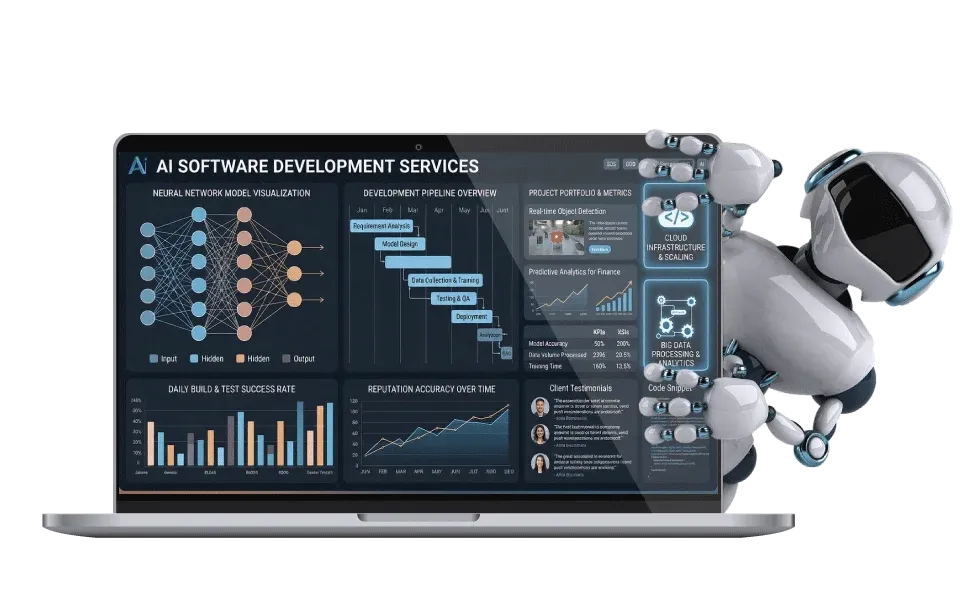
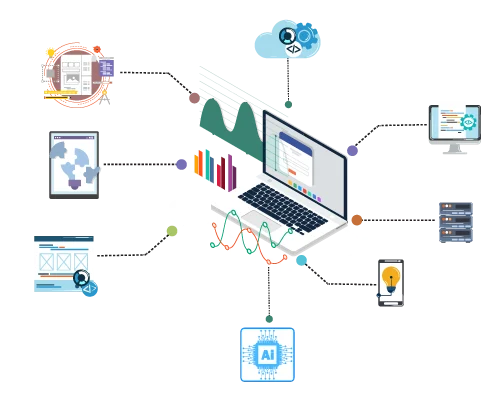
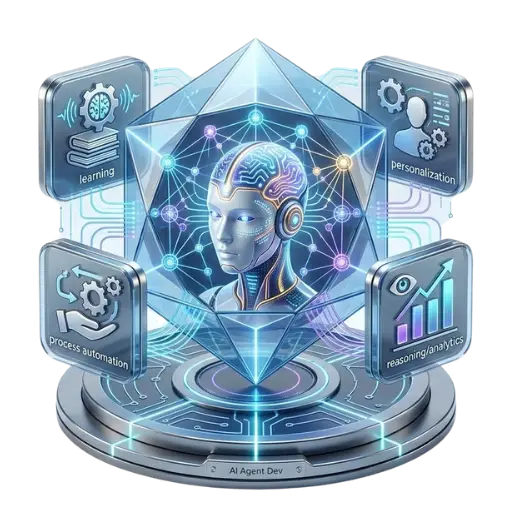
AI Software Development Services banner by Digital Dividend, illustrating machine learning workflows, data processing metrics, and automated software engineering.

Companies looking for AI software development services that align with product goals, user needs, and operational workflows can rely on Digital Dividend to build practical, scalable, and custom solutions.

Build AI Software Around Real Business Use Cases

The strongest AI projects start with a process that needs better speed, accuracy, or scale. McKinsey’s 2025 survey found that organizations seeing the most value from AI tie it to workflow redesign, governance, adoption, data, and operating models rather than isolated pilots.

That is why we focus on use cases such as smarter support, faster triage, recommendations, forecasting, document workflows, and operational automation. Building on this, AI software development services create value when they fit the product, the data, and the business rule set from day one.

What Are AI Software Development Services?

These services cover the design, build, integration, deployment, and support of AI-enabled software. They usually combine application engineering, data pipelines, model orchestration, APIs, governance, monitoring, and user experience so the result works inside daily operations, not just in demos.

What this service includes

A modern engagement often includes discovery, data assessment, model selection, product design, backend engineering, front-end delivery, cloud deployment, and ongoing optimization. In the U.S., the AI market’s largest solution segment in 2025 was services, which fits the growing need for implementation and support around production AI.

It can also include MLOps, prompt engineering, retrieval layers, evaluation workflows, human review, and analytics for business performance. As a result, AI software development services now sit closer to product engineering than to one-off consulting.

Custom AI software vs off-the-shelf AI tools

Off-the-shelf tools work well for broad tasks like drafting, summarizing, or basic assistant workflows. Custom AI software fits better when teams need domain logic, private data handling, deeper integrations, healthcare workflows, role-based access, or specific outcomes tied to a product or process.

Custom builds also help when accuracy, compliance, latency, or user experience matter. Deloitte’s enterprise AI research shows many organizations still struggle to turn AI investment into ROI, which is one reason tailored implementation and operating fit matter more than generic tool access.

When businesses should invest in AI development

A business should invest when teams repeat the same judgment-heavy tasks, data volumes are growing, support load is increasing, or valuable actions already live inside software workflows. Microsoft’s 2025 Work Trend research shows leaders expect teams to redesign processes with AI and build multi-agent systems over the next five years.

The timing is also right when current tools create friction or when off-the-shelf products cannot support product differentiation. That is where AI software development services can move from internal efficiency to revenue, retention, and product advantage.

AI Software Development Services We Offer

We structure our offer around product goals, system fit, and long-term maintainability. This helps clients avoid scattered experiments and build software that can scale with changing models, data, and business priorities.

Custom AI Development Services

We build tailored systems for domain-specific tasks, internal operations, and customer-facing products. These projects often combine models, business rules, user permissions, and software integrations that generic tools cannot handle cleanly.

Generative AI Development Services

We create GenAI features such as copilots, knowledge assistants, drafting tools, content workflows, and task agents. Stanford reports that generative AI attracted $33.9 billion in global private investment in 2024, showing how fast this layer is moving from experimentation into product roadmaps.

AI App Development Services

We add AI capabilities to mobile and web apps where the feature must feel natural inside the product. That can include onboarding assistance, search, recommendations, smart forms, diagnostics, workflow guidance, and user-specific personalization through mobile app development services.

AI Integration Services

We connect models and automation into CRM, ERP, support systems, EHR-linked workflows, internal dashboards, and SaaS stacks. In practice, integration work often determines whether AI software development services stay useful after launch.

AI Customer Service Software Development

We build customer support software that can classify tickets, draft replies, route cases, surface knowledge, and escalate risk-sensitive issues to humans. The AI assistant software market is expected to reach $9.8 billion in 2025, reflecting strong demand for assistants that support real service workflows.

AI Support, Maintenance, and Optimization

Launch is only the first step. We monitor outputs, adjust prompts and policies, improve retrieval quality, manage model changes, and track business performance so the system keeps delivering useful results over time.

From custom AI tools to integrations, assistants, and intelligent applications, Digital Dividend helps companies turn practical AI ideas into scalable digital products.

AI Solutions We Build

We focus on software that solves a defined business task and fits a measurable workflow. That reduces model drift risk, improves adoption, and makes the product easier to evaluate.AI is becoming an increasingly practical part of restaurant software when it is used to solve real business problems. The right AI implementation can improve convenience, efficiency, forecasting, and personalization without adding complexity for staff or guests.

AI Assistants & Chatbots

Assistants work best when they pull from trusted knowledge, understand user roles, and route edge cases safely. McKinsey’s 2025 research shows organizations are widening AI use, but scaling value still depends on guardrails, human validation, and strong operating practices.

Predictive Analytics Tools

Predictive tools help forecast demand, churn, utilization, fraud signals, or operational bottlenecks. They are most effective when the business can act on the prediction through alerts, workflows, or automated next steps.

Recommendation Engines

Recommendation systems improve conversion, engagement, cross-sell, and content discovery when they use live behavior, context, and product logic. For product-led companies, that makes recommendations a software feature with direct commercial impact, not just a data experiment.

Workflow Automation Systems

Automation systems combine models, rules, approvals, and integrations to move work faster with fewer manual steps. Microsoft’s 2025 findings show leaders expect AI agents to expand team capacity and automate complex work, which makes workflow design a core implementation concern. For readers who want a proof-oriented example of guided workflow improvement, see this digital adoption case study.

NLP-based software

Natural language processing supports search, extraction, summarization, document review, sentiment analysis, and conversational interfaces. It is especially useful for healthcare, support, legal-adjacent, and operations-heavy environments where text drives decisions and records.

Computer vision applications

Vision systems help with inspection, imaging workflows, object detection, document capture, and quality control. These projects usually need careful data labeling, edge-case testing, and deployment planning because production environments vary widely. They also pair well with AI-powered IoT solutions.

Our AI Development Process

A good process reduces delivery risk and keeps the scope tied to outcomes. We use staged planning so the product, data, integration path, and evaluation method are clear before engineering expands.

Discovery and Use-case Planning

We start by defining the problem, the user, the workflow, and the success metric. This step matters because many AI programs fail when the business case is broad but the task design is vague.

Data Review and Technical Assessment

We review data sources, permissions, quality, freshness, privacy constraints, and integration points. In healthcare and regulated settings, this stage often shapes architecture as much as the model choice.

Model and Architecture Selection

We choose the right combination of foundation models, custom logic, retrieval, fine-tuning paths, and orchestration layers. Building on this, AI software development services should use the least complex architecture that can meet the business target reliably.

Design, Development, and Integration

We build the application layer, backend services, admin controls, APIs, and user experience around the AI function. That keeps the software usable for real teams instead of leaving the model isolated from the product.

Testing and Deployment

We test for quality, latency, security, edge cases, and business accuracy before release. GitHub’s 2024 enterprise software team survey reflects how AI now influences engineering practice itself, which makes testing discipline even more important when AI becomes part of shipped software.

Monitoring, Refinement, and Support

After launch, we track output quality, user behavior, cost, and operational impact. As a result, teams can improve prompts, retrieval, policies, routing, and model choices without rebuilding the product from scratch.

AI Integration with Existing Platforms

The most valuable AI features usually sit inside systems a team already uses. Integration is how AI moves from novelty to workflow adoption.

CRM and ERP Integrations

We connect AI to CRM and ERP platforms to support lead qualification, forecasting, service actions, procurement steps, and internal decision support. This setup works best when data access, user roles, and handoff logic are defined early.

Marketing Platform Integrations

AI can help score leads, generate content variants, summarize campaign signals, and support reporting inside marketing systems. In parallel, better orchestration improves AI search visibility when teams align content production, analytics, and source quality around the same workflow.

Internal Tools and Workflows

Many high-value wins come from internal use, including document handling, approvals, ticket routing, research support, reporting, and QA. McKinsey’s 2025 findings note that organizations often report cost benefits from AI activities in software engineering, manufacturing, and IT.

AI for Application Development and Maintenance

AI also supports engineering teams through code assistance, test generation, issue triage, and maintenance workflows. GitHub’s research reports growing adoption of generative AI across software teams, reinforcing the case for product teams that want faster iteration with human review still in place.

AI Software Development Cost

Cost depends less on the model alone and more on scope, data readiness, security requirements, workflow complexity, and integration depth. That is why two projects with similar features can have very different delivery paths.

What Affects Project Cost

The main drivers are data preparation, number of integrations, user roles, evaluation needs, compliance controls, model routing, and support requirements. Projects that need healthcare-grade controls, custom admin tooling, or complex orchestration usually require more engineering effort.

Cost for Startups vs Larger Businesses

Startups often begin with a narrower scope, an MVP, and one or two high-value workflows. Larger businesses usually need broader integrations, governance, permissions, auditability, and multi-team rollout, which raises delivery and change-management effort.

MVP vs Full-Scale AI Implementation

An MVP proves workflow value fast and reduces early risk. Full-scale implementation adds production hardening, analytics, role controls, support layers, and change management so the software can handle live business usage with fewer surprises.

Maintenance and ongoing optimization costs

Ongoing work often includes monitoring, model updates, prompt tuning, retrieval changes, evaluation, incident response, and infrastructure adjustment. For most teams, that support layer protects ROI better than a one-time launch mindset.

How to Choose the Right AI Development Company

A strong partner should understand software delivery, data reality, and business adoption at the same time. The wrong fit often looks impressive in a demo but weak in production.

Technical Depth

Look for a team that can handle architecture, APIs, data flows, model orchestration, product UX, testing, and cloud deployment. The market is expanding quickly, but execution still depends on engineering depth more than vendor claims.

Integration Capability

Ask how the team will connect the system to your existing stack and where the business logic will live. Integration is often the difference between a useful AI product and another disconnected tool.

Experience with Custom Solutions

Custom work matters when a company serves regulated users, complex workflows, or unique product experiences. That includes many healthcare platforms, SaaS products, and operational systems that need more than basic chatbot functionality.

Delivery Process and Long-term Support

Ask how the team handles testing, monitoring, rollback, evaluation, and post-launch iteration. McKinsey’s survey work keeps showing that value capture depends on scaling practices and governance, not just initial deployment.

Questions to Ask Before Hiring

Ask which use case they would prioritize first, how they evaluate quality, what data risks they see, how they handle human review, and what success looks like in 90 days. Those questions expose whether the partner thinks like a product team or only like a vendor.

Industries and Use Cases

Different sectors need different architectures, evaluation methods, and rollout plans. We tailor AI software development services to the pace, risk, and user expectations of each environment.

AI for Startups

Startups use AI to launch differentiated features, speed up operations, and test product value without growing headcount at the same rate. A focused MVP often makes more sense than a broad platform build. Teams in healthtech can also explore our healthcare software development for startups expertise for regulated product planning.

AI for Customer Service

Customer service teams gain from ticket classification, knowledge retrieval, response drafting, and escalation logic. These workflows improve speed while keeping humans in control of high-risk or sensitive cases.

AI for Logistics Optimization

Logistics teams use AI for forecasting, route support, exception handling, and operational visibility. These projects usually create value when they connect predictions directly to workflow actions.

AI for Marketing Automation

Marketing teams use AI to summarize signals, support content operations, personalize journeys, and improve lead workflows. The best results come when the system connects with existing platforms instead of adding another silo.

AI for Business Process Automation

Business process automation often delivers some of the clearest early returns because it removes repetitive manual work from high-volume operations. Microsoft and McKinsey both point to growing momentum around AI-led process redesign and automation.

Measurable Impact Across AI Product Development

Restaurants work in an environment where margins, customer expectations, and operational consistency all matter at once. Our work is designed to support outcomes such as:

11+

Years Building
Custom Digital Products

100+

Software Projects
Delivered

25+

Markets Across the U.S.
and Beyond

30+

AI-Led Features, Workflows,
& Intelligent Systems Built

99%

Client Confidence in
Quality and Delivery

Success Stories: Empowering Businesses With AI Software

Examples of how we design and deliver scalable, secure, and practical AI-powered software for growing businesses.

AI Customer Support Platform for SupportSync AI

We helped SupportSync AI launch a smart customer support platform that enables businesses to automate ticket classification, suggest responses, and route conversations to the right team through an AI-powered support workflow.

Key Outcomes

Impact

Within 3 months of launch, 35% faster ticket resolution time and improved support team efficiency across high-volume workflows.

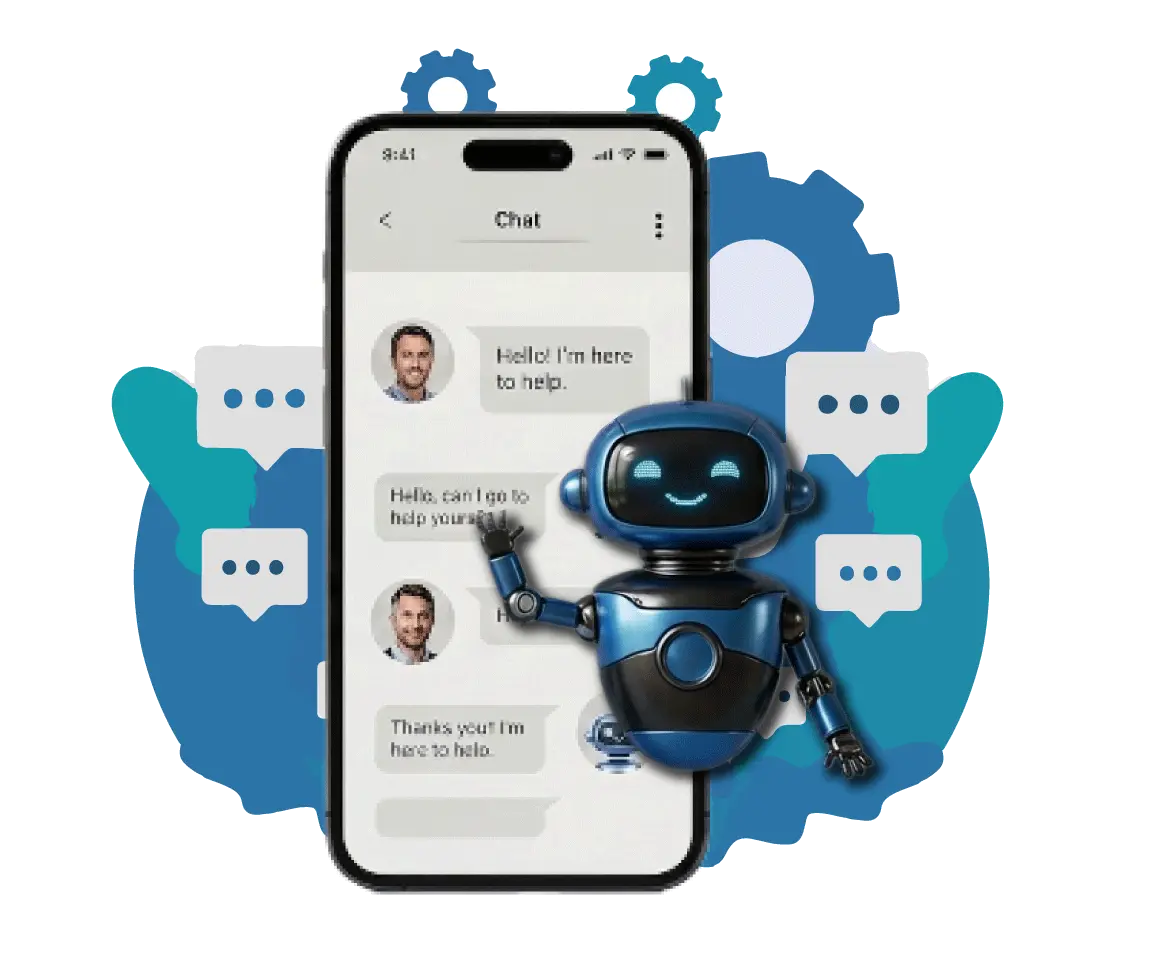
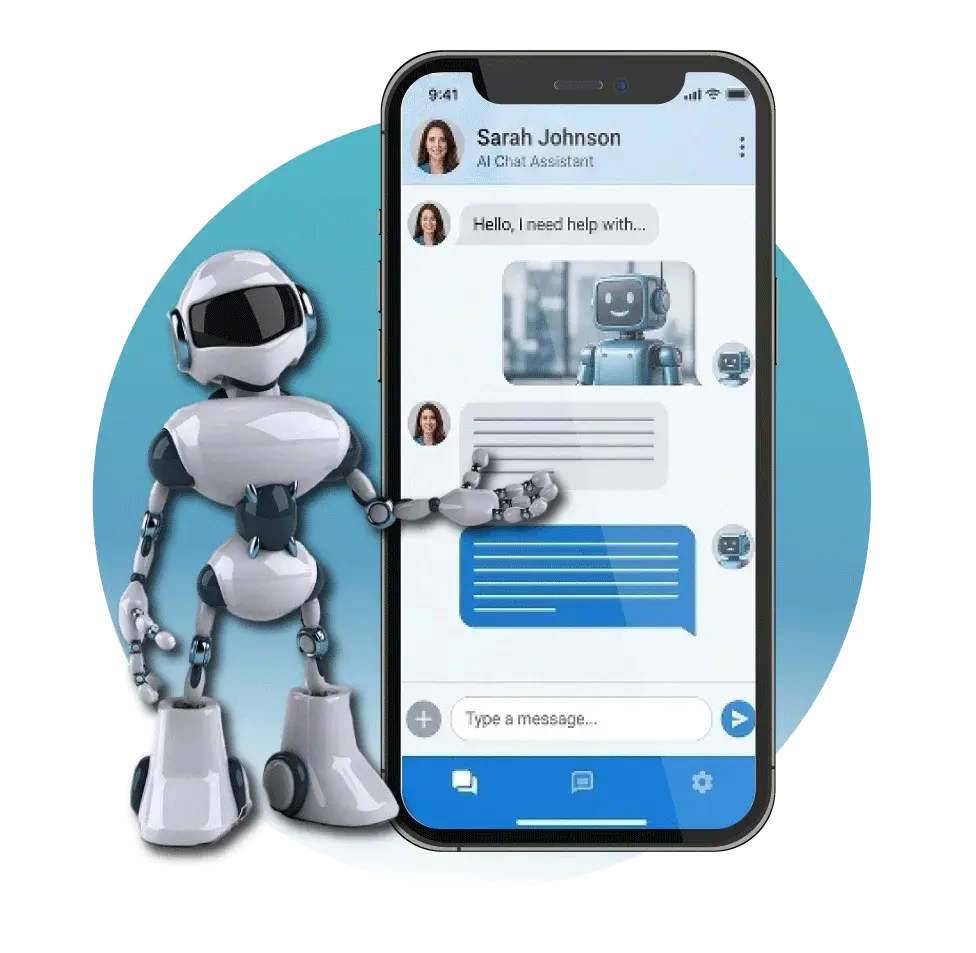
A digital illustration of a friendly AI robot standing next to a smartphone screen displaying a chat conversation, representing the AI Customer Support Platform for SupportSync AI by Digital Dividend.
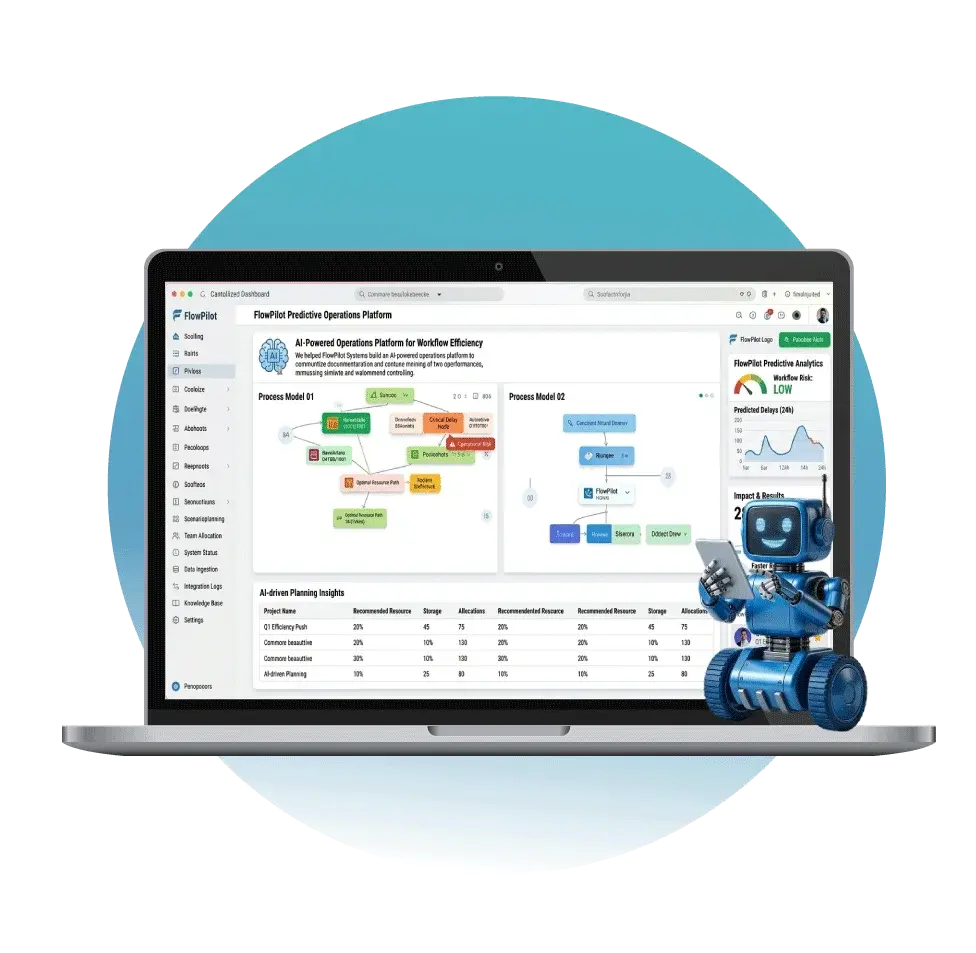
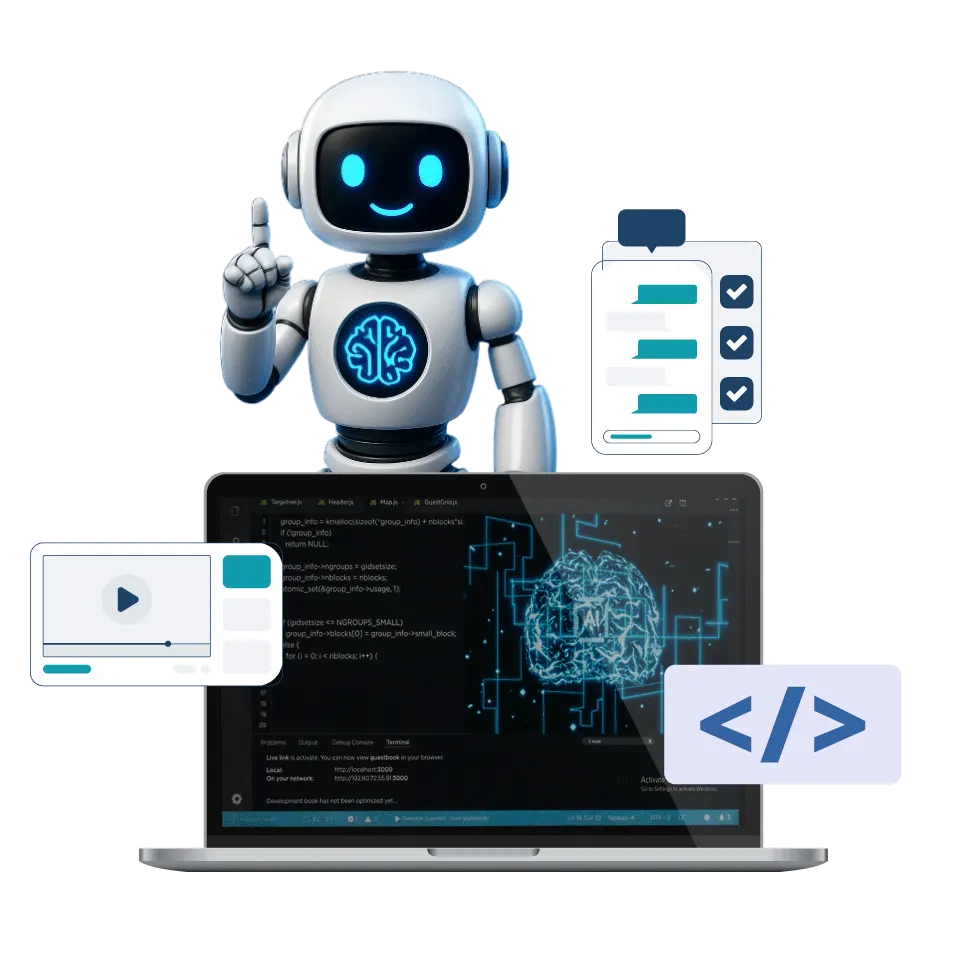
A laptop showing a Predictive Operations Platform for FlowPilot Systems dashboard with process models and efficiency charts, accompanied by a small blue robot assistant, built by Digital Dividend.

Predictive Operations Platform for FlowPilot Systems

We helped FlowPilot Systems build an AI-powered operations platform that helps teams monitor process bottlenecks, predict delays, and improve workflow visibility across internal business systems and day-to-day decision-making.

Key Outcomes

Impact

Within the first quarter after deployment, 28% improvement in process efficiency and a faster response to operational exceptions.

Why Choose Digital Dividend

We build around the business case first, then shape the software, integrations, and AI layer to support it. That approach keeps the project grounded in adoption, cost control, and operational value.

Custom-First Development

We do not force every client into the same template. For teams with unique workflows, domain data, or product goals, custom work protects usability and differentiation better than a generic setup.

Product-Focused Execution

We think in terms of release quality, user adoption, and measurable outcomes. That matters because AI that fails inside the product experience rarely creates durable value.

Scalable Architecture

We design systems that can add features, integrations, and controls as the software grows. In a market where models and tooling change fast, flexible architecture protects the investment behind AI software development services.
Clear Collaboration and Support

Clients need visibility into tradeoffs, milestones, and post-launch improvement, not just code delivery. Strong collaboration helps teams move from pilot ideas to software that real users trust and keep using.

Smart Solutions Across Multiple Technologies

Digital Dividend specializes in software development, mobile apps, eCommerce, CMS, IoT integration, analytics, and healthcare product solutions.

Expand your capabilities with top-tier AI software experts.
Digital Dividend supplies qualified professionals to accelerate AI adoption and enhance digital transformation.

FAQs

They cover the planning, design, engineering, integration, deployment, and support of software that uses AI to perform or improve business tasks. Most production projects also need workflow design, governance, and performance monitoring.

Cost depends on scope, data quality, compliance needs, integration complexity, and support requirements. A focused MVP usually costs less than a full rollout because it limits features, systems, and operational overhead.

Yes, and that is often the best route to adoption. AI can connect through APIs, data services, retrieval layers, and workflow triggers so teams can use it inside current web apps, SaaS tools, and internal platforms.

AI development is broader and can include prediction, classification, recommendations, vision, optimization, and automation. Generative AI development focuses on systems that create or transform content, language, or actions using foundation models.

Timeline depends on the use case, data readiness, integration scope, review needs, and rollout plan. Narrow MVPs move faster, while regulated or multi-system products need more time for testing, governance, and change management.

Not always, but many do when they need product differentiation, private workflow logic, or tighter integration with their app and data. For startups with a clear high-value use case, custom delivery can create a stronger moat than generic tools.

Get a Custom AI Solution

If your business is planning to launch, improve, or scale AI-powered software, Digital Dividend can help you move from concept to production with a solution built around your exact needs.

circle-shape-with-line
bottom-banner-image

    This site is registered on wpml.org as a development site. Switch to a production site key to remove this banner.