






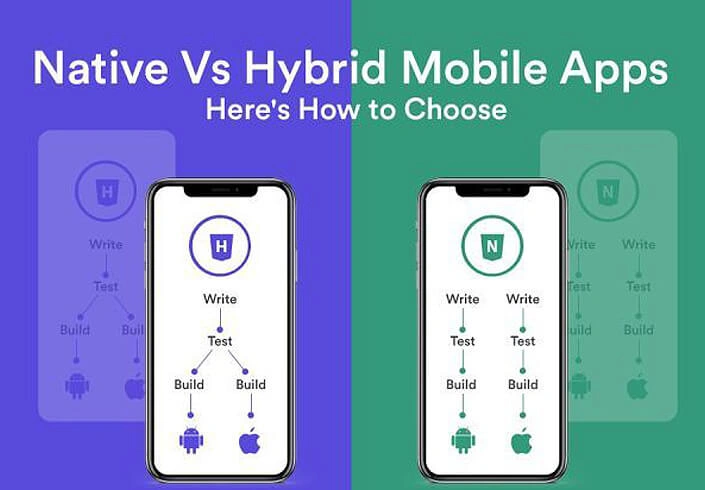
The native vs hybrid app decision affects speed, launch cost, user experience, and long-term scalability. That matters because Android recommends targeting cold starts under 500 milliseconds where possible, and treats startup delays as a real app quality issue.
For startups, healthcare businesses, SMBs, and enterprises in the US, the right architecture depends on product complexity, device access, security needs, and roadmap pressure. React Native and Flutter both support shared-code delivery, but React Native also documents the need for platform-specific code when product requirements differ across iOS and Android.
A business should choose architecture based on product stress, not trend language. That is where Digital Dividend, as a Software development team, can support this through mobile app services with business outcomes.
Why the Native vs Hybrid App Decision Matters
This choice shapes more than engineering effort. It affects release speed, maintenance load, feature flexibility, and the amount of rework a product may require as the roadmap expands to include GPS, offline sync, secure workflows, or real-time features.
It also changes the risk. OWASP’s Mobile Top 10 for 2024 includes things like weak authentication and authorization, weak communication, weak privacy controls, weak data storage, and weak encryption. This shows how important it is to think about security when making architectural decisions.
For business teams, this is a product strategy decision as much as a technical one. A weak choice can slow growth later, while the right one can reduce friction across product, design, engineering, and support.
Businesses comparing native and hybrid app architecture often need more than code-level advice. Digital Dividend’s expert developers and software development agency team help map architecture to launch goals, user experience, and long-term product growth.
What Is a Native App, a Hybrid App, and a Web App?
A native app is built for a specific operating system using platform-native tools and APIs. That usually gives teams more control over interface behavior, hardware features, and platform-level performance.
A hybrid app usually starts out as a web app and then runs inside a native shell. Cross-platform frameworks are more like native than older wrapper-based methods, but they still focus on reusing code between iOS and Android. React Native lets you write code that works on different platforms, and Flutter says it can help you make apps that work on multiple platforms from a single codebase.
Web apps and PWAs remain browser-first. They can be useful for lighter service layers and self-service workflows, but they still offer less device-level control than native mobile apps.
Native vs Hybrid App Performance
Performance differences usually come from how close the app runs to the operating system. Native apps work directly with platform services, while hybrid and shared-code apps may add abstraction layers that affect rendering, input handling, and hardware-intensive flows.
Android recommends optimizing apps to render a frame within 16 milliseconds for smooth UI, and flags startup performance as part of app quality. That makes performance a business issue, not just an engineering preference.
Native usually performs better for telehealth, logistics, fintech, real-time tracking, and media-heavy apps. Hybrid and shared-code approaches can still perform very well for portals, dashboards, scheduling flows, and standard ecommerce journeys when the workload stays moderate.
Native vs Hybrid App Security
Security does not depend on labels alone, but architecture changes the attack surface. OWASP’s Mobile Top 10 2024 highlights risks such as inadequate supply chain security, insecure authentication and authorization, insecure communication, inadequate privacy controls, insecure data storage, and insufficient cryptography.
Native apps often give teams tighter control over device-level security features and platform behavior. Hybrid apps can still be secure, but they require more discipline around plugin trust, dependency management, content loading, and bridge handling. That makes implementation quality central to the outcome.
This is the best place to add one external trust-building link in the published article: OWASP Mobile Top 10. It is authoritative, current, and directly relevant to architecture risk.
Native vs Hybrid App Development Cost
Native development often costs more upfront because teams may need separate iOS and Android workstreams. Shared-code approaches reduce duplication, which can lower early delivery effort and help teams launch faster across both ecosystems. Flutter positions single-codebase delivery explicitly as a way to speed up and simplify workflows.
The more important comparison is lifecycle cost. React Native’s documentation makes clear that shared-code apps still need platform-specific code in some cases, so a lower-cost launch can become more complex when the product grows into advanced device behavior or custom UX.
This is why cost should be measured against roadmap depth, not only against the first release. A professional developer team will usually evaluate both build cost and change cost before choosing the stack.
When cost, performance, and roadmap risk need a practical review, Digital Dividend’s Software service providers and experienced developers with AI can help reduce expensive rework before development begins.
Pros and Cons of Native vs Hybrid Apps
Native apps usually win when the product depends on deeper hardware access, smoother performance under stress, and tighter platform-level behavior. That is why they remain strong choices for secure healthcare, mobility, and field-service products.
Hybrid and shared-code apps usually win when speed to market, efficient resourcing, and cross-platform reuse matter most. They are often a strong fit for MVPs, customer portals, booking flows, loyalty experiences, and internal tools.
The most overlooked tradeoff is that shared-code does not remove platform differences. It reduces duplication, but product teams still need targeted native work when requirements become more advanced.
Native App vs Hybrid App Examples
The clearest way to compare app types is through product use cases. Native often fits telehealth apps, secure messaging products, route-tracking systems, and premium consumer apps where responsiveness and device behavior directly affect trust and retention.
Shared-code delivery also supports large-scale production apps. React Native’s official showcase says all mobile apps at Shopify are built using React Native, and Flutter’s showcase highlights production apps from major businesses building with Flutter.
That means the better question is not which model sounds newer. The real question is which one fits the product’s behavior, scaling plan, compliance needs, and release speed.
Native App vs Hybrid App for Delivery, GPS, and Shopify Use Cases
Delivery and GPS-heavy products usually favor native because they depend on continuous location handling, background behavior, and reliable updates under movement. Android’s performance and ANR guidance show how strongly responsiveness affects real user experience.
Shopify-related mobile products can work very well with shared-code delivery when the focus is on catalog browsing, loyalty, customer accounts, and standard commerce flows. But when the product depends on premium motion, advanced interactions, or hardware-linked experiences, native becomes more attractive.
How to Choose Between Native and Hybrid App Development
The best choice starts with the heaviest workflow in the roadmap. If the product depends on high-frequency interaction, deeper hardware access, premium UX, or stricter compliance, native usually reduces long-term friction.
If the product is mainly a portal, dashboard, booking system, service layer, or e-commerce companion, hybrid or shared-code delivery can be the smarter business move because it reduces duplication and speeds up release cycles.
Best fit for startups
Startups often benefit from shared-code delivery when the goal is fast validation and efficient use of budget. Native becomes the stronger option when the core product depends on premium UX, demanding device behavior, or performance as a competitive edge.
Best fit for healthcare businesses
Healthcare businesses usually need more control over privacy, permissions, secure flows, and system reliability. This is especially true for teams building healthcare software with telehealth or remote care workflows. Native often fits telehealth, remote care, and clinician-facing tools better, while lighter patient portals and scheduling layers can still work well with shared-code delivery.
Best fit for SMBs
SMBs often need software that launches quickly and stays manageable to maintain. Hybrid or shared-code approaches are often strong fits for service apps, communication tools, and business-support products, while native makes more sense when the app itself drives retention or repeat revenue.
Best fit for enterprises
Enterprises usually choose based on governance, stability, and integration depth. Native often fits business-critical field operations and secure workflows, while shared-code can work well for employee apps, “internal systems supported by custom software services, and approval flows.
Comparison Table
| Factor | Native App | Hybrid / Shared-Code App |
|---|---|---|
| Performance | Better for demanding UX, real-time workflows, GPS, camera, and offline sync | Strong for moderate workloads and standard business flows |
| Security Control | Tighter platform-level control | Secure when implemented well, but broader attack surface |
| Development Cost | Higher upfront | Lower upfront |
| Speed to Launch | Slower | Faster |
| Best Fit | Telehealth, logistics, fintech, premium mobile products | MVPs, portals, dashboards, and e-commerce companions |
FAQ
Is the Amazon app native or hybrid?
The Amazon app mainly follows a native-app approach to support performance, security, and a smoother commerce experience.
Is WhatsApp a hybrid or native app?
WhatsApp is a native app built for fast messaging, calling, and reliable device-level behavior.
Is YouTube a native or hybrid app?
YouTube is primarily native because video playback quality, responsiveness, and platform optimization matter at scale.
What are the disadvantages of native apps?
Native apps usually cost more to build and maintain because separate platform work is often needed.
Do native apps require internet access?
Not always. Many native apps can support offline features depending on how they are designed.
Final Verdict on Native vs Hybrid App
The best native vs hybrid app choice depends on what the product must do under real conditions. Native is usually the better long-term option for performance-heavy, security-sensitive, and device-intensive apps, while hybrid is often the smarter option for faster launches and efficient cross-platform delivery.
When the roadmap includes both short-term delivery goals and long-term product demands, the best choice is to evaluate the app against real usage, technical complexity, and future scale. In cases like this, Digital Dividend can help teams choose an architecture that supports performance, maintainability, and business growth without adding unnecessary complexity.
For startups, healthcare businesses, SMBs, and enterprises planning mobile products, Digital Dividend’s expert developers, a software development company, and experienced developers with an AI team can help choose the right architecture for performance, compliance, and faster delivery.

Leave A Comment