A device that cannot report its own status reliably is not much use to the business relying on it. Digital Dividend’s IoT application development services team builds secure, scalable applications that connect physical devices to real-time software your team can act on.
A sensor or device without a reliable software layer just generates noise instead of insight. Integrating IoT application development early gives your hardware a real-time software counterpart your team can actually act on.
Healthcare, manufacturing, and logistics lead IoT adoption because connected devices turn physical operations into data businesses can measure, alert on, and optimize.
What is IoT application development?
IoT application development covers the software layer that connects physical devices, sensors, and wearables to the cloud, collecting, processing, and displaying data in real time.
Unlike standard web or mobile development, IoT applications have to handle intermittent connectivity, device-level security, and data streams that never stop, not just user-triggered requests.
Our Impact at a Glance
Digital Dividend has delivered 300+ projects over 15+ years, backed by a 100+ developer team spanning web, mobile, and AI engineering.
That scale means an IoT project draws on the same cloud, security, and data engineering resources used across our other connected-device work, not a standalone team assembled per client.
Challenges companies face with IoT application development
Building or maintaining an IoT application comes with technical and operational challenges. Common obstacles include:
Handling intermittent connectivity without losing or duplicating device data
Securing device-level access as the number of connected endpoints grows
Processing high-volume sensor data in real time without overwhelming the backend
Integrating with existing ERP, analytics, or business systems
Scaling device fleet management as deployment size increases
Core features of an IoT application
Every IoT build we ship is scoped around the features that turn device data into something your team can act on.
Real-time data tracking
Continuous data collection from connected devices, processed and displayed with minimal delay.
Device connectivity and management
A unified view for provisioning, monitoring, and managing devices across a growing fleet.
Cloud data processing
Sensor data streams into cloud infrastructure built to handle high-volume, continuous ingestion.
Alerts and automation
Automated alerts trigger on abnormal readings, enabling proactive response instead of manual monitoring.
Dashboards and analytics
Real-time dashboards, supported by our data and analytics services, turn raw sensor data into trends your team can actually use.
Security and encryption
Device-level authentication and encrypted data transmission protect the application as the device count grows.
Benefits of IoT application development
Startups
Startups launch a connected product MVP fast, validating the hardware-software combination before scaling manufacturing.
SMBs
SMBs get real-time visibility into equipment or inventory without hiring a dedicated IoT engineering team.
Enterprises
Enterprises get fleet-scale device management and the security architecture to support thousands of connected endpoints.
Maximize the ROI of your IoT application
Cloud deployment now accounts for the majority of IoT spend, and the platform and network management segment alone commands over half of total IoT component spending, reflecting how much value sits in the software layer rather than the hardware itself.
Healthcare leads industry verticals in IoT adoption, which means proven patterns already exist for turning connected devices into measurable operational and clinical value.
Custom IoT solutions for your business
At Digital Dividend, we understand that every connected product has different device, connectivity, and data requirements. Our custom IoT solutions are built to align with your specific hardware, backed by our broader wearable and IoT services for teams building consumer or industrial wearables.
IoT application development system integrations
An IoT application is only as useful as the systems it connects to. We build integrations across the tools your business already relies on.
Integration
Purpose
Cloud IoT platforms
Device provisioning, telemetry ingestion, and fleet management at scale
ERP and CRM systems
Sync device and sensor data with business operations and customer records
Analytics and BI platforms
Turn raw sensor data into dashboards and actionable reporting
Third-party APIs
Connect the application to external services and partner systems
Technologies we use
An IoT application development services team needs to work fluently across device connectivity, cloud infrastructure, and application layers.
AWS IoT - Amazon's platform for device connectivity, management, and data ingestion.
Azure IoT - Microsoft's equivalent platform, strong for enterprises already on Azure.
MQTT - a lightweight messaging protocol built for low-bandwidth, intermittent device connections.
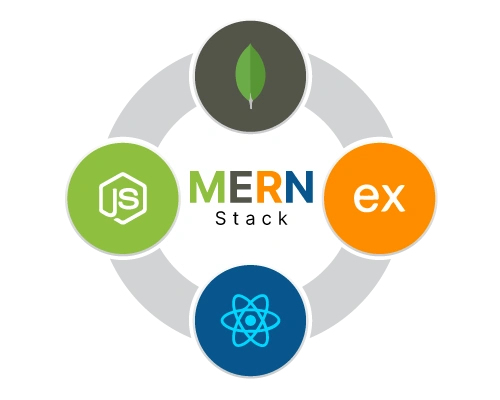
Node.js - handles real-time data processing on the backend efficiently.
React Native - powers the mobile apps that give users control over connected devices.
Our IoT application development approach
Digital Dividend runs every IoT engagement through a structured process so scope, cost, and timeline stay predictable from day one.
Discovery and architecture planning
We audit your device requirements, connectivity constraints, and data volume, then design the architecture before any code is written.
MVP development
We build a functional MVP focused on core device connectivity and data display, so you can validate the product quickly.
Device integration
We connect the application to your devices or sensors, handling protocol translation and data normalization.
Testing and QA
Every build goes through structured testing, including checkout and payment flows, before release.
Launch and scaling
After launch, we monitor performance and scale infrastructure as the device fleet grows.
End to end IoT application development services
Consulting
Expert consulting to define the right IoT architecture and connectivity strategy for your specific hardware.
Implementation
We build secure and scalable IoT applications with core features like real-time tracking, device management, and dashboards.
Integration
Seamless integration with cloud platforms, ERP systems, and third-party APIs for real-time data exchange.
Support and maintenance
After launch, we handle security patches, performance tuning, and bug fixes, so the application keeps running as your device fleet scales.
How an IoT application works
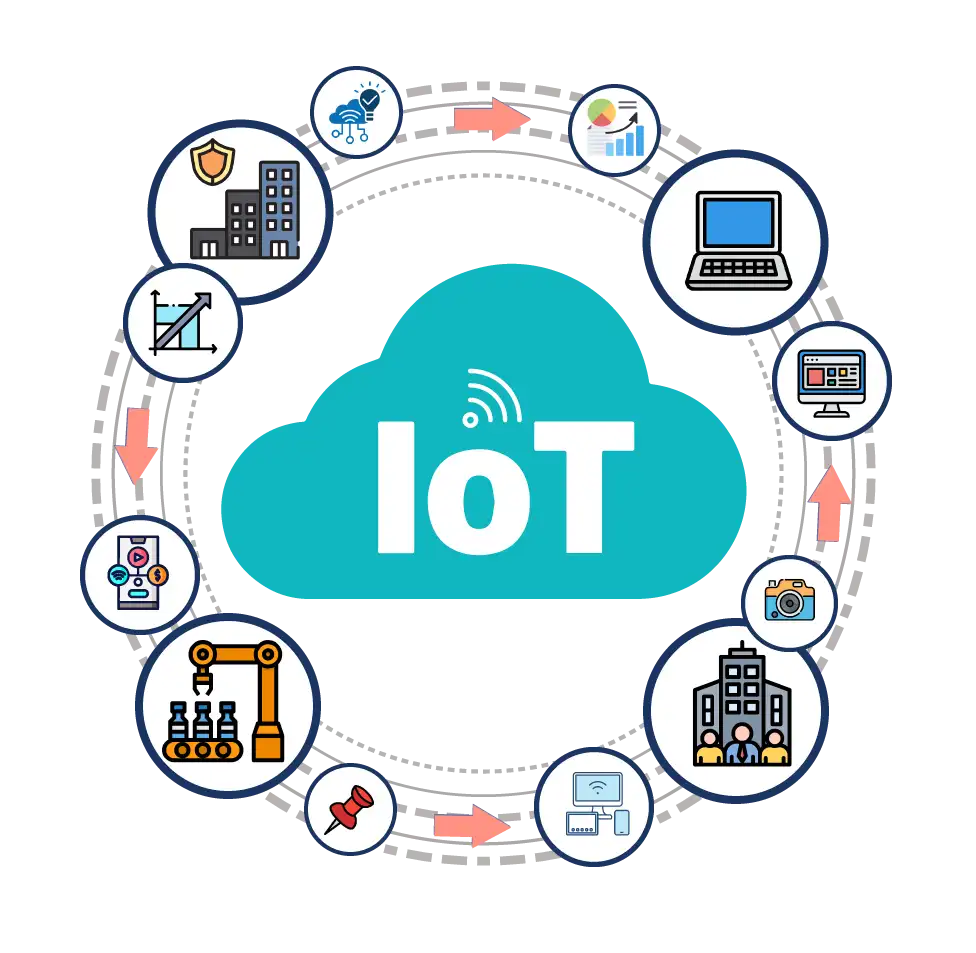
An IoT application collects data from connected devices through protocols like MQTT, transmitting it to cloud infrastructure where it is processed and stored.
Dashboards and mobile apps then give users real-time visibility into that data, while automated alerts trigger on abnormal readings without requiring constant manual monitoring.
IoT application development implementation roadmap
A successful IoT build moves through requirement analysis and architecture planning, then MVP development for early validation. From there, we integrate with devices and business systems, test for connectivity and data integrity, and move to deployment with continuous optimization.
Secure and compliant IoT application development
For healthcare and industrial applications, we implement device-level authentication and encrypted data transmission, since IoT devices remain a common attack surface if left unsecured.
For clients serving the EU or UK, we also build with GDPR data handling in mind, including consent flows and data deletion support where personal data is involved.
Timeline and cost for IoT application development
A standard IoT MVP typically takes 8 to 14 weeks and starts from $30,000. A full IoT platform with fleet management typically takes 4 to 8 months and starts from $100,000, depending on device count and data volume.
Which IoT application development approach is right for your business?
Custom IoT development
Best suited for businesses with proprietary hardware or specific connectivity requirements. Custom development offers full control over the device-to-cloud pipeline.
Platform-based IoT solutions
Ideal for businesses that want to launch fast on an established cloud IoT platform without building core infrastructure from scratch.
Our guidance
We guide you in choosing the right approach based on your hardware, budget, and growth plans, so you launch efficiently while building something that scales.
Success Stories: Scaling IoT Applications for Real Businesses
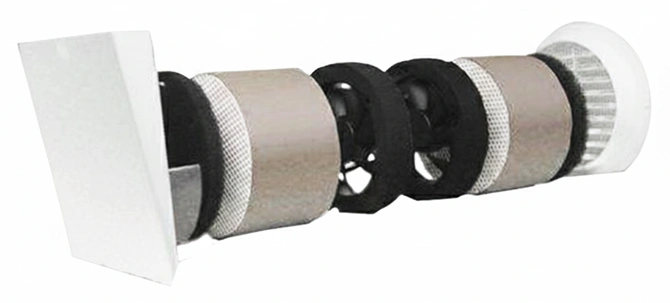
Smart Ventilation System
We built the Smart Ventilation System, connecting sensors and controls into a single application for real-time monitoring and automated adjustments.
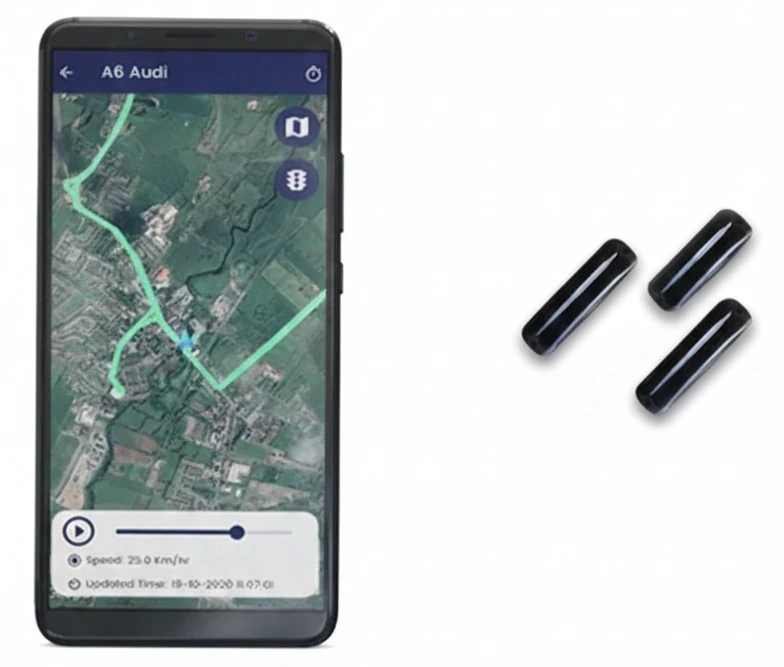
IoT Asset Tracking Device
We built the IoT Asset Tracking Device platform, giving the client real-time visibility into asset location and status across a growing device fleet.
Why businesses choose Digital Dividend for IoT application development
Businesses choose Digital Dividend for a proven track record connecting devices to real software, fast launches, and custom solutions tailored to specific hardware, backed by a delivery model led from Sweden and the USA, with an in-house development team in Pakistan.
Need to move fast? You can also hire a dedicated developer and embed them directly into your product sprint.
Future trends in IoT application development
Edge AI is growing fast, processing data closer to the device instead of relying entirely on the cloud, cutting latency for time-sensitive applications. Cloud deployment continues to take a larger share of IoT spend as businesses move away from on-premises infrastructure.
Discover Our Full Range of Digital Services
From software and mobile apps to eCommerce, CMS, IoT, analytics, and healthcare product development, Digital Dividend covers all your digital needs.
Mobile App Development Services:
Software, Web & Design Services:
eCommerce Development Services:
Restaurant App Development:
AI Software Development Services:
ERP Software Development Services:
CMS Development Services:
IoT, Wearables & Data Services:
Healthcare Product Development for Startups:
Scale your team with expert IoT application developers.
Digital Dividend provides skilled IoT specialists to bridge resource gaps and accelerate smart application development.
IoT applications have to handle continuous data streams from physical devices and intermittent connectivity, while traditional apps mostly respond to direct user interaction.
Device-level authentication, encrypted data transmission, and secure firmware updates are the main concerns, since unsecured devices remain a common attack surface.
Backend development, cloud infrastructure experience, and familiarity with device communication protocols like MQTT, alongside standard mobile or web development skills.