All these services have made us one of the fastest-growing app development companies serving clients globally and across the USA.
Digital Dividend focuses on delivering AR applications aligned with business goals, user needs, and technical feasibility.
Augmented reality app development services
Get a free AR app consultation — talk to our senior developers today.
What is augmented reality app development?
Augmented reality app development is the process of designing, building, and deploying applications that blend digital content with the physical environment in real time. Unlike virtual reality (VR), which replaces the real world entirely, AR enhances it, making it useful in live operational contexts like surgery guidance, warehouse picking, and retail product visualization.
A production-ready AR app combines computer vision, 3D rendering, motion tracking, and depth sensing into a single user experience. Platforms like ARKit, ARCore, Vuforia (a marker-based AR SDK), and 8th Wall (a WebAR platform) each serve different deployment scenarios, and selecting the right one is the first architecture decision our professional developers make before any code is written.
What are the benefits of augmented reality in app development?
Businesses using AR in e-commerce see up to 94% higher conversion rates compared to standard product pages (Shopify, 2024), because AR eliminates purchase uncertainty by letting customers visualize products in their own environment. In enterprise training, AR-based instruction reduces error rates by up to 40% compared to manual documentation (PwC, 2024).
Beyond conversion and training, AR delivers three structural advantages: it reduces product return rates by giving customers accurate pre-purchase visualization, it cuts onboarding time for complex equipment by replacing static manuals with live overlay guidance, and it creates differentiated digital experiences that build brand recall in markets where standard mobile apps no longer stand out.
Our augmented reality app development services
Our software development agency delivers custom augmented reality app development across five core service areas, each scoped to your platform, industry, and user requirements.
AR app development for iOS and Android
Enterprise augmented reality app solutions
Marker-based and markerless AR development
AR integration into existing mobile applications
Augmented reality app development for education
What are the best AR app development tools and platforms?
The right AR development tool depends on your target platform, content complexity, and whether the experience needs to work offline. ARKit (Apple) delivers the highest spatial accuracy for iOS, with LiDAR support on iPhone Pro and iPad Pro devices. ARCore (Google) provides reliable plane detection and motion tracking across Android devices. Unity (real-time 3D engine) is the most widely used development environment for cross-platform AR, powering over 60% of all AR and VR content globally (Unity Technologies, 2025).
For web-based AR without app downloads, 8th Wall and A-Frame enable WebAR experiences in mobile browsers using WebXR (the W3C standard for immersive web experiences). Vuforia (a PTC product) leads for marker-based industrial and training AR. Niantic Lightship (the platform behind Pokémon GO) powers location-based AR at scale. Our experienced developers with AI select from this stack based on your session type, offline requirements, and device targets.
What industries use augmented reality app development?
AR delivers the strongest ROI in industries where physical-digital interaction, spatial understanding, or real-time data overlay directly reduces cost or drives conversion.
- Healthcare and medical: AR-assisted surgical navigation, anatomical training, wound care management, and physical therapy guidance. Our healthcare software development experience across EHR, telemedicine, and RPM platforms gives us the compliance foundation AR health apps require.
- Retail and e-commerce: virtual try-on for fashion and footwear, furniture placement visualization, and AR-enhanced in-store navigation that reduces return rates and increases conversion.
- Education and training: interactive 3D learning environments, AR vocational training simulations, and professional development tools that replace static manuals with live overlay guidance.
- Real estate and architecture: virtual property walkthroughs, interior design visualization, and AR-enabled floor plan overlays that help buyers make faster decisions without physical site visits.
- Manufacturing and logistics: AR-guided assembly instructions, warehouse picking assistance, and predictive maintenance overlays that reduce error rates and cut training time for complex equipment.
How to integrate AR into mobile applications
Integrating AR into an existing mobile application follows four structured stages. Our expert developers follow this process for every AR integration engagement.
Define the AR use case and target platform
We map the specific user action AR must support, whether product visualization, overlay guidance, or spatial navigation, and confirm whether ARKit (iOS), ARCore (Android), or WebXR (browser-based) is the correct deployment environment for your user base and device spread.
Select the AR framework and SDK
Framework selection depends on content type: Unity for 3D model rendering, Vuforia for marker-based triggers, 8th Wall for WebAR, or native ARKit/ARCore for platform-optimized performance. We document the selection rationale and integration architecture before any code is written.
Build, test, and optimize for performance
AR features are performance-sensitive: frame rate drops below 60fps cause motion sickness and session abandonment. Our QA process includes device-specific performance benchmarking, lighting condition testing, and occlusion accuracy testing across a representative device matrix before any AR feature reaches production.
Deploy and maintain across platforms
Post-launch, AR modules require maintenance as ARKit, ARCore, and device OS versions update. Our software development company provides structured post-launch support covering SDK compatibility updates, performance monitoring, and feature iteration based on in-app behavioral analytics from tools like Mixpanel and Firebase.
What are the costs of developing an AR app?
AR app development cost is driven by three variables: platform scope (iOS only, Android only, or cross-platform), content complexity (2D overlays vs. full 3D model rendering), and backend integration requirements (standalone experience vs. live ERP or CRM data connection).
| AR app scope | Description | Estimated cost | Timeline |
| Simple AR feature | Single AR function added to existing app (e.g. product visualizer) | $8,000 – $20,000 | 4 – 8 weeks |
| Standalone AR app (MVP) | Dedicated AR app, one platform, basic 3D content | $20,000 – $55,000 | 8 – 16 weeks |
| Cross-platform AR app | iOS and Android, custom 3D models, UI/UX design included | $55,000 – $120,000 | 16 – 28 weeks |
| Enterprise AR solution | ERP/CRM integration, multi-user, offline support, custom SDK | $120,000 – $300,000+ | 24 – 48 weeks |
Ongoing maintenance runs at 15 to 20% of initial build cost annually, covering SDK updates, OS compatibility patches, and performance tuning. Our software development agency provides a fixed-scope cost estimate after the initial requirement workshop, so your budget is confirmed before development begins, not estimated during it.
What are the future trends in AR app development?
Spatial computing is the most significant structural shift in AR’s near-term trajectory. Apple Vision Pro (Apple’s spatial computing headset) introduced visionOS, a platform that blends AR and VR into persistent spatial experiences that stay anchored in physical space across sessions. By 2027, spatial computing devices are projected to reach a combined installed base of over 20 million units globally (IDC, 2025), creating a new tier of enterprise AR deployment above smartphone-based experiences.
AI-powered AR is the second major trend. Generative AI models including GPT-4o and Gemini are being integrated directly into AR experiences to enable real-time object recognition, natural language interaction with AR overlays, and dynamic content generation based on what the camera sees. Our AI software development capability means we build these AI layers natively into AR applications, rather than connecting them as afterthoughts. 5G connectivity, wearable AR devices like Meta’s smart glasses, and WebXR maturation across browsers are three additional forces accelerating AR adoption across retail, healthcare, and field service industries.
How to choose the right AR app development company
The most common mistake businesses make when choosing an AR development partner is selecting a company that specializes in AR demos but has never shipped a production AR application to an app store. Ask any provider you evaluate for their App Store and Google Play submission history for AR-specific applications, not just portfolio screenshots or prototype videos.
Verify in-house capability across ARKit, ARCore, Unity, and WebAR, because AR projects that combine multiple frameworks require developers who understand how those tools interact, not a team that subcontracts each layer. Digital Dividend handles every layer in-house, with project leadership from our experienced teams in Sweden and the USA and delivery from our 100+ in-house developers. Explore our IoT and wearable development services or read our blog on native vs hybrid app development to understand how we approach platform decisions.
Ready to scope your AR app project?
Augmented reality app development: real results
Our software development company has delivered AI-powered, data-intensive, and spatially-aware applications across legal, real estate, healthcare, pharma, and e-commerce sectors the same architecture disciplines that underpin every AR application we build. Explore our full case studies portfolio for detailed delivery evidence.
AI Real Estate Search Agent
We built an AI-powered real estate search agent that processes property listings, user preferences, and location data to deliver spatially relevant results in real time. The spatial data processing and location-awareness architecture we developed for this platform directly informs our AR real estate and navigation application builds.
WhatsApp-powered B2B procurement automation
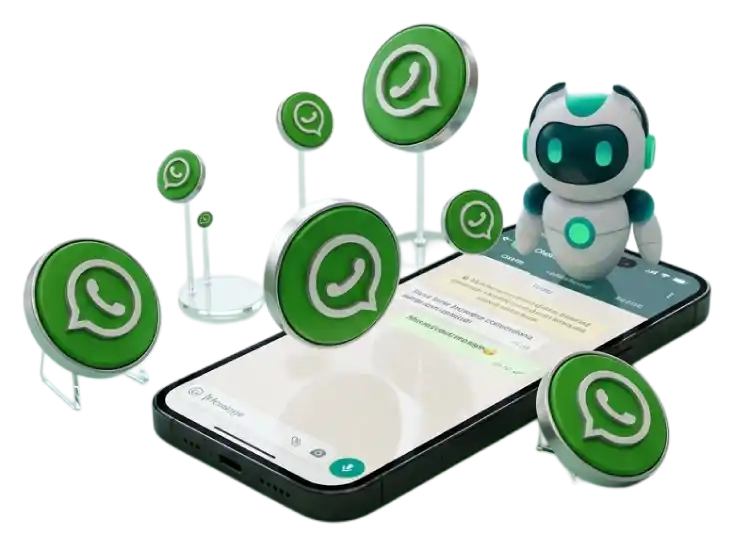
We delivered a WhatsApp-based B2B procurement automation platform that connects buyers, suppliers, and inventory systems through a conversational AI interface integrated with live product data. The real-time inventory integration and multi-system data layer we built here is directly applicable to AR commerce and warehouse applications requiring live product and stock overlay.
Shopify AI Intelligence Platform
We built a Shopify AI intelligence platform that delivers product recommendation, customer behavior analysis, and real-time personalization at scale. The product data architecture and real-time rendering pipeline we developed here underpins AR product visualization experiences where live catalog data must sync with what the AR camera sees.
AI-powered legal intelligence platform
We delivered an AI-powered legal research platform that processes large document sets, extracts structured legal entities, and surfaces relevant case law in seconds. The computer vision and document intelligence pipeline we built here translates directly to AR document overlay and annotation applications in legal, compliance, and field service contexts.
Our delivery track record
With 15+ years of experience, 300+ projects delivered, and 100+ in-house developers across the US, Europe, and GCC, our cross-industry production depth means every AR app we build is grounded in real architecture decisions from live deployments, not template work.
Expand Your Capabilities with Our Expert Services
Digital Dividend offers cutting-edge services in software development, mobile applications, eCommerce, CMS platforms, IoT, analytics, and healthcare products.
Scale your team with expert augmented reality developers.
Digital Dividend provides skilled AR specialists to bridge resource gaps and accelerate your immersive app development.
Frequently Asked Questions
How does AR app development differ from VR?
AR (augmented reality) overlays digital content onto the real world through a camera, keeping the user anchored in their physical environment. VR (virtual reality) replaces the real world entirely with a digital environment, requiring a headset that blocks external view. AR is deployed on standard smartphones and tablets, making it significantly more accessible and lower-friction than VR for consumer and enterprise applications.
What technologies are used in AR app development?
The core technology stack includes ARKit and ARCore for spatial tracking, Unity or Unreal Engine for 3D content rendering, computer vision libraries for object recognition, and cloud backends for dynamic content delivery. Supporting tools include Vuforia for marker-based AR, 8th Wall for WebAR, Apple’s RealityKit for visionOS, and LiDAR sensors on supported iOS and iPad Pro devices for high-accuracy depth mapping.
Is augmented reality app development expensive?
A simple AR feature added to an existing mobile app starts from $8,000 to $20,000. A standalone cross-platform AR app with custom 3D models runs $55,000 to $120,000. Enterprise solutions with ERP integration and multi-user support typically start above $120,000. The primary cost driver is 3D content complexity, not AR framework licensing, because ARKit and ARCore are both free SDKs.

How to develop an augmented reality app step by step?
The six essential steps are: define the AR use case and success metric; select the target platform (iOS, Android, or WebAR); choose the AR framework based on content type and offline requirements; build and test 3D assets in Unity or RealityKit; run device-specific QA across a representative device matrix; and deploy with a structured post-launch monitoring plan covering frame rate, session length, and crash reporting.
What skills are needed for AR app development?
AR development requires native iOS or Android engineering (Swift or Kotlin), 3D content creation in Unity or Blender, understanding of ARKit and ARCore spatial anchoring APIs, computer vision fundamentals for object recognition features, and UI/UX experience specific to immersive interfaces. Enterprise AR additionally requires backend integration skills for connecting AR experiences to live ERP, CRM, and inventory systems.
What our clients say
Ready to build your AR application?
Whether you need a single AR feature added to an existing app or a full enterprise AR platform with live data integration, Digital Dividend has the in-house capability to build it. Our experienced developers with AI handle every layer from spatial design and 3D content through SDK integration, QA, and post-launch support. Explore our emerging technologies services or read our blog on AI-powered innovation in software to see how we approach immersive technology builds.