




Metaverse app development services
Ready to build your metaverse platform?
Get a free project estimate from our senior developers, no commitment needed.
Why businesses are investing in metaverse app services right now
The business case for metaverse technology is measurable. 71% of executives say the metaverse will positively impact their industry within five years, and companies using virtual reality app services report up to 30% faster employee onboarding outcomes (PwC, 2024). Because immersive environments reduce friction in collaboration and commerce, businesses that invest now build compounding advantages over competitors.
Augmented reality app solutions are already generating direct revenue. Retail brands using AR shopping experiences see up to 94% higher conversion rates compared to standard product pages (Shopify, 2024). With 600 million people active on metaverse platforms in 2024, a figure expected to cross 1 billion by 2026 (Statista, 2025), enterprises and startups are treating metaverse investment as core infrastructure, not experimentation.
What is included in metaverse app development services?
Full-scale metaverse application services cover the entire technology stack, from immersive front-end experiences to blockchain infrastructure, AI layers, and backend systems. A complete engagement with a software development company typically covers six core areas: AR/VR application builds, 3D world creation, avatar systems, NFT integration, smart contract development, and AI-powered interactions, each scoped to your specific industry and use case.
Beyond the build itself, production-ready immersive app development services always include UI/UX design optimized for immersive environments, rigorous QA and performance testing, deployment support, and long-term maintenance. Skipping post-launch support is the single most common reason metaverse platforms fail to scale, because immersive environments require continuous optimization as user loads and hardware standards evolve.
Core metaverse app development services we deliver
Our custom metaverse app services are built around your business model, users, and long-term scaling needs. From digital universe application services to full 3D environment app offerings, here is exactly what our experienced developers deliver.
AR/VR app development
We build AR/VR applications for Meta Quest, Apple Vision Pro, HoloLens, and WebXR-compatible browsers. Businesses using our AR app development services report up to 40% reductions in training costs and measurable improvements in customer engagement (Deloitte, 2024). Our experienced developers select the right hardware target based on your audience and budget, not what is trending.
Virtual world creation and 3D environment design
Our 3D environment app offerings combine spatial design, physics simulation, and real-time rendering, built in Unity and Unreal Engine, to create digital spaces that feel intuitive and immersive. Whether you need a virtual office, a branded retail environment, or a healthcare simulation, we design every environment around your users’ behavior and performance requirements.
NFT integration and blockchain smart contracts
NFTs (non-fungible tokens) give digital assets verifiable ownership, critical for any platform where users buy, sell, or trade virtual goods. We build on Ethereum, Solana, and Polygon through our blockchain app development capability, developing smart contracts that automate transactions without intermediaries. The NFT market is projected to reach $231 billion by 2030 (Statista, 2024), making early blockchain integration a strategic advantage.
Avatar and 3D modeling
We build fully customizable avatar systems with real-time animation, facial expression mapping, and cross-platform compatibility using Blender, Maya, and ZBrush. Avatars render cleanly across both high-end VR headsets and standard mobile devices, because your platform cannot afford to lose users to poor performance on lower-spec hardware.
Metaverse marketplace development
Our professional developers build marketplace infrastructure with integrated crypto payment wallets, gas fee optimization, and anti-fraud smart contract logic. Platforms with native marketplaces generate 2.7x higher user lifetime value compared to those without transactional layers (Gartner, 2024).
AI integration in metaverse platforms
We integrate large language models (LLMs) for NPC dialogue, machine learning for personalized environment rendering, and predictive analytics for user behavior modeling. Because AI reduces manual content overhead, businesses using AI-integrated immersive technology services scale at 60% lower operational cost than those relying on manual moderation (McKinsey, 2024).
Metaverse app development for social interaction
Our metaverse app services for social interaction include real-time voice and spatial audio, proximity-based communication systems, group event infrastructure, and community moderation tools. We integrate identity verification and privacy controls that meet US data protection standards, because trust is what keeps social metaverse platforms growing long after launch.
What industries use metaverse app services?
Enterprise metaverse app services are generating measurable ROI across healthcare, education, retail, gaming, real estate, and marketing. By 2025, over 70% of enterprises in these six sectors will have active metaverse pilots or live deployments (Gartner, 2024).
Healthcare and telemedicine
Hospitals and healthtech startups use metaverse platforms for surgical simulation, medical training, virtual rehabilitation, and remote consultations. The healthcare metaverse market is projected to reach $71.97 billion by 2030 (Grand View Research, 2024). Digital Dividend has delivered healthcare software development and telemedicine platforms, giving our developers a proven foundation for healthcare metaverse builds.
Education and e-learning
Metaverse app services for education replace passive screen-based learning with immersive, interactive environments. Students in VR-based learning environments demonstrate 75% better knowledge retention compared to traditional e-learning (PwC, 2024). We built Laroteket, a digital learning platform for Swedish schools, giving us direct experience in scalable educational app architecture.
Retail and e-commerce
Virtual shopping environments allow customers to try products and complete purchases without leaving their homes. AR-enabled product pages deliver up to 94% higher conversion rates over standard listings (Shopify, 2024). We build end-to-end virtual retail environments with integrated payment gateways, NFT-based loyalty systems, and real-time inventory sync.
Gaming and entertainment
Metaverse app services for gaming cover play-to-earn mechanics, NFT-based virtual asset ownership, and cross-platform multiplayer environments. Platforms like Roblox, Axie Infinity, Decentraland, and The Sandbox have collectively generated over $4 billion in virtual asset transactions (DappRadar, 2024). The high-performance architecture we build for gaming directly informs our enterprise and healthcare metaverse work.
Real estate and virtual offices
Individual virtual land sales on platforms like Decentraland and The Sandbox have exceeded $2.4 million (CoinDesk, 2023). Beyond investment, enterprises use virtual office environments to run distributed teams and conduct immersive onboarding, cutting real estate overhead while improving remote collaboration quality.
Marketing and brand experiences
Metaverse app services for marketing let brands create immersive campaigns beyond banner ads. Brands running metaverse marketing activations report 5x higher engagement rates compared to equivalent 2D campaigns (Forrester, 2024). We design brand experiences that integrate directly with existing CRM platforms and e-commerce backends, so every interaction generates trackable business data.
Key technologies behind our metaverse development services
Our metaverse technology services are built on a proven, production-tested stack, selected for virtual environment services that need to perform reliably at scale across devices, geographies, and user loads.
Unity and Unreal Engine
Unity holds over 60% of the global real-time 3D content market (Unity Technologies, 2024), making it the default choice for cross-platform metaverse apps targeting mobile, desktop, and VR. Unreal Engine delivers photorealistic rendering through its Nanite and Lumen systems, preferred for high-fidelity enterprise and retail environments. Our experienced developers work across both, selecting the right engine based on your performance requirements and rendering budget.
Blockchain and smart contract infrastructure
We build on Ethereum, Solana, and Polygon, selecting the chain based on your transaction volume, gas fee tolerance, and decentralization requirements. Smart contracts automate asset transfers, royalty distributions, and access control without intermediaries. Blockchain-powered metaverse platforms process over $1 billion in monthly NFT transactions globally (DappRadar, 2025).
AI and machine learning layers
We integrate LLMs, including GPT-4o and Claude for NPC dialogue, computer vision for real-time avatar animation, and reinforcement learning for dynamic environment personalization. Because AI handles content generation and moderation autonomously, platforms built with AI layers operate at significantly lower cost per active user, a critical advantage for startups scaling on constrained budgets.
IoT and digital twins
IoT (Internet of Things) integration connects physical world data, from sensors, machines, and medical devices, directly into a metaverse environment in real time. The global digital twin market is projected to reach $110 billion by 2028 (MarketsandMarkets, 2024). Our developers have delivered IoT asset tracking and smart ventilation platforms, giving us a proven foundation for industrial metaverse builds.
WebXR, WebGL, and Cross-Platform Frameworks
WebXR enables AR and VR experiences to run directly in a browser, no app downloads, no proprietary hardware required. WebGL powers real-time 3D rendering across desktop, mobile, and low-end devices. Using frameworks including A-Frame, Babylon.js, and Three.js, our experienced developers build metaverse experiences accessible on any device with a modern browser, dramatically expanding your addressable user base.
What features should I look for in metaverse app services?
Choosing between metaverse app service providers is not just about who builds the best 3D environment, it is about which provider engineers the right foundation for long-term performance, security, and growth. These are the non-negotiable capabilities your digital experience solutions partner must deliver.
- Cross-platform compatibility, performs across VR headsets, desktop, and mobile.
72% of first-time users access metaverse platforms through mobile or desktop before buying hardware (Statista, 2024).
- Real-time rendering at 72fps minimum,
dropping below this threshold causes motion sickness and immediate session abandonment (Oculus Developer Guidelines, 2024).
- Scalable cloud-native backend,
built on AWS, Google Cloud, or Azure with auto-scaling load balancers. Monolithic backends fail at an average of 3,000 concurrent users (Gartner, 2023).
- Audited smart contracts,
security vulnerabilities have caused over $3.8 billion in metaverse platform losses since 2021 (Chainalysis, 2024).
- Immersive UI/UX,
spatial interfaces, gaze-based navigation, and spatial audio require specific immersive design experience, not flat design principles applied to 3D.
- Built-in analytics,
session recording, 3D heatmapping, and funnel tracking integrated with tools like Mixpanel or Amplitude.
- Compliance architecture,
GDPR, CCPA, HIPAA, and COPPA baked into the data layer from day one. Retrofitting compliance onto a live platform costs significantly more than building it correctly from the start.
How our metaverse app development process works
Our software development agency runs a structured, milestone-driven process that keeps every layer aligned, from discovery through to post-launch scale.
Discovery and requirement gathering
UI/UX design and 3D prototyping
Development and blockchain integration
Testing, QA, and performance validation
Deployment and post-launch support
Benefits of Metaverse App Development for Your Business
The strongest argument for metaverse app services for businesses is the compounding commercial advantage it creates. Companies that build immersive platforms now establish user bases and digital asset ecosystems in environments where competition is still low and switching costs are high.
- Higher engagement, metaverse environments generate average session times of 27 minutes versus 6.5 minutes for standard mobile apps (Newzoo, 2024).
- New revenue streams, virtual goods, NFT-based memberships, in-platform advertising, and play-to-earn mechanics. Virtual goods generated over $54 billion globally in 2024 (Statista, 2025).
- Reduced operational costs, VR-based training cuts per-employee costs by up to 52% (PwC, 2024). Digital twins reduce physical inspection costs by up to 25% in industrial deployments (Deloitte, 2024).
- Global reach, a single metaverse environment serves users across the US, Europe, the GCC, and Asia simultaneously with localized language, currency, and compliance settings.
- Faster product validation, virtual prototyping cycles run 60% faster than physical equivalents (McKinsey, 2024), compressing time-to-market significantly.
- Brand differentiation, most businesses have not yet built a metaverse presence. Early movers establish authority in immersive environments before competitors arrive.
How much do metaverse app development services cost?
As a software development company that has delivered 300+ projects, we break down cost honestly, because underestimating budget at the planning stage is the most common reason metaverse projects stall mid-build.
| Platform type | Scope | Estimated cost | Timeline |
|---|---|---|---|
| MVP metaverse app | Single environment, basic avatars, WebXR browser-based | $40,000 – $80,000 | 3–5 months |
| Mid-scale platform | AR/VR app, avatar system, limited blockchain integration | $80,000 – $180,000 | 5–9 months |
| Full metaverse platform | NFT marketplace, AI integration, multi-environment, cross-platform VR | $180,000 – $400,000 | 9–18 months |
| Enterprise solution | Custom digital twin, IoT integration, enterprise security, global deployment | $400,000+ | 12–24 months |
Working with a software development agency like Digital Dividend gives you access to the full capability stack, 3D developers, blockchain engineers, AI/ML specialists, immersive UI/UX designers, and QA engineers, under a single engagement. Hiring this team independently in the US market costs $180,000–$320,000 in annual salaries alone before a single line of production code is written (Glassdoor, 2024).
The most cost-effective approach for startups and SMBs is a phased build, launching an MVP environment, validating it with real users, and expanding iteratively. Budget 15–20% of your initial build cost annually for maintenance. Startups using phased metaverse builds reach profitability 2.3x faster than those attempting full-scale launches from day one (CB Insights, 2024).
Ready to scope your metaverse project?
Talk to our senior developers and get a documented cost estimate for your build, no commitment needed.
Are metaverse app services safe and compliant?
- CCPA, mandatory for platforms serving California residents, covering data collection, storage, and user deletion rights.
- GDPR, required for any platform with European users, including strict consent management and data residency controls.
- HIPAA, mandatory for healthcare metaverse platforms handling patient data or virtual consultations. Average HIPAA violation fine: $1.9 million (HHS, 2024).
- COPPA, critical for education platforms serving users under 13, with strict parental consent and data minimization requirements.
Smart contract security is non-negotiable. Unaudited contracts are the largest attack vector in blockchain platforms, responsible for over $3.8 billion in losses across metaverse and DeFi platforms since 2021 (Chainalysis, 2024). We run full smart contract audits using MythX and Slither, combined with manual review, before any contract is deployed to mainnet.
Infrastructure security covers end-to-end encryption, DDoS protection, intrusion detection, and automated vulnerability scanning integrated into the CI/CD pipeline. The average cost of a metaverse platform data breach in 2024 was $4.88 million (IBM Cost of a Data Breach Report, 2024).
How do I choose the right metaverse app development company?
63% of failed software projects cite poor vendor selection as the primary cause of failure (Standish Group CHAOS Report, 2024). Here is the framework our clients use when evaluating metaverse app service providers, and where Digital Dividend stands against each criterion.
- Full-stack in-house capability, a provider that subcontracts any layer introduces accountability gaps. Ask for documented case studies, not just portfolio screenshots.
- Industry-specific experience, a healthcare metaverse has fundamentally different compliance and architecture requirements than a retail or gaming platform. Verify actual delivery in your sector.
- Documented development process, projects run without a documented specification are 3x more likely to exceed budget (PMI, 2024). Ask for a sample spec and sprint review report before signing.
- Phased delivery options, a provider that only offers fixed-scope full-platform engagements is not structured for startup or SMB budgets.
- Post-launch support, platforms with dedicated post-launch development retain 3x more users in the first 90 days (Appsflyer, 2024). Confirm your provider's maintenance SLA before engaging.
Digital Dividend’s delivery model, project leadership from experienced teams in Sweden and the USA, with in-house development delivery from Pakistan, gives you Western-standard oversight at a cost structure that makes sustained metaverse investment viable. Every developer on your project is a full-time Digital Dividend employee. Nothing is subcontracted. Having built 300+ projects across 15 years, our cross-industry depth is something most specialist metaverse agencies, many founded after 2020, simply cannot match. Hire a dedicated developer or explore our case studies to see our delivery track record.
Real results: metaverse and immersive tech projects we've delivered
Having delivered 300+ software projects across 15 years, Digital Dividend’s experienced developers have built production immersive, IoT, and intelligent platform solutions across healthcare, enterprise, education, and transport. Explore our full case studies, a proven technical foundation that directly informs every metaverse app development service engagement we take on today.
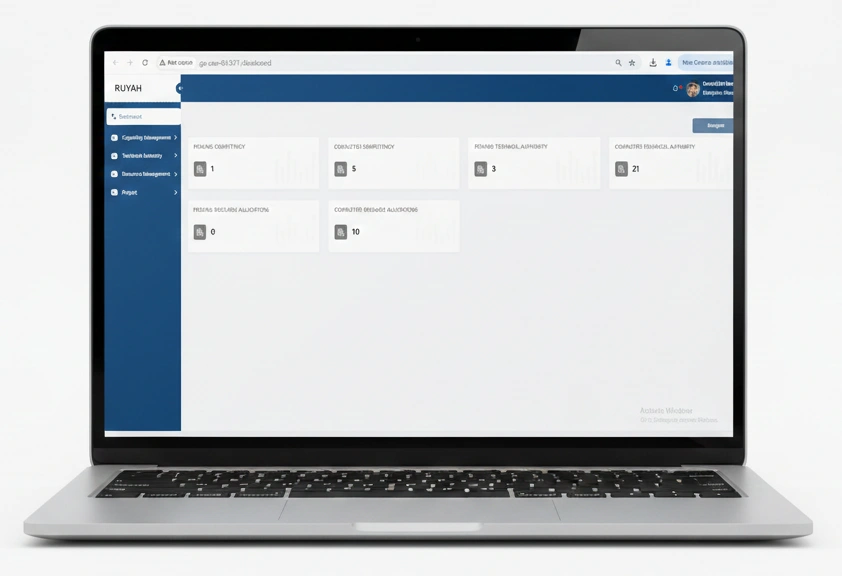
RUYAH, Enterprise resource management for the Middle East oil sector
We built a scalable, role-based platform for 1,000+ users across multiple operational departments, with real-time data synchronization, complex permission hierarchies, and multi-region deployment under strict enterprise security requirements. The high-concurrency backend and RBAC architecture we developed for RUYAH directly translates to an enterprise metaverse environment infrastructure.
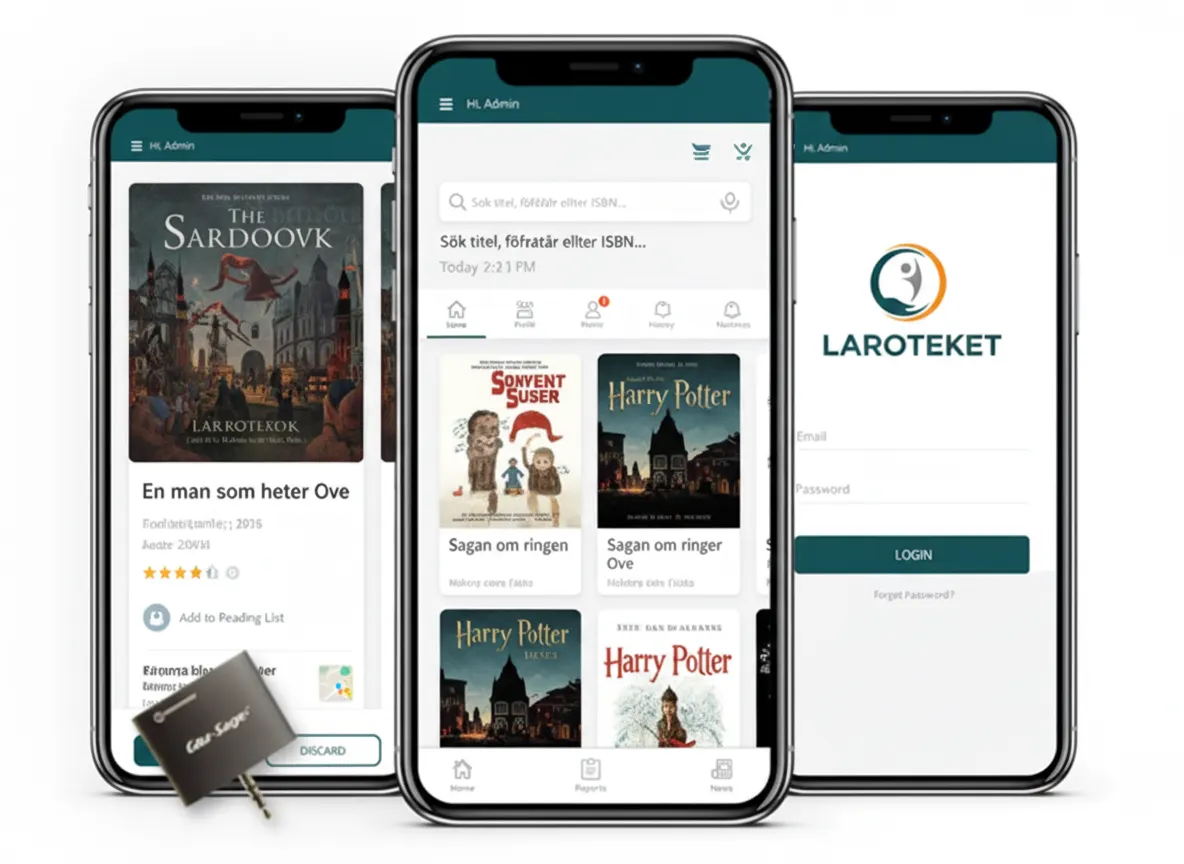
Laroteket, Digital learning platform for Swedish schools
We engineered a scalable multi-tenant architecture, an intuitive content management system, and a cross-device front end, built to perform reliably for concurrent users across a national education network. The multi-tenant scalability and content delivery infrastructure Laroteket demanded gives our developers a direct reference point for immersive education platform builds.
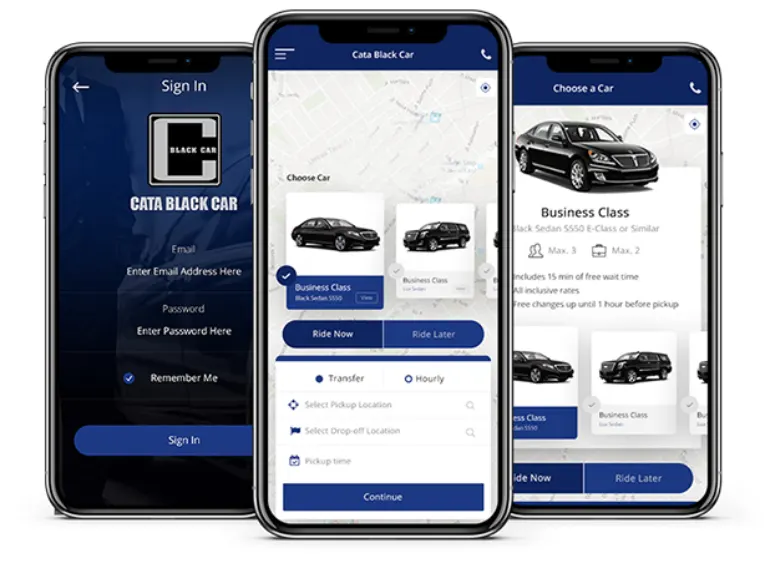
Limousine app, Real-time transport ordering and dispatch
A real-time vehicle ordering platform handling live booking, driver dispatch, GPS tracking, and payment processing simultaneously. The real-time event-driven architecture and high-availability backend we delivered here is directly applicable to live metaverse environments requiring persistent state management and concurrent session handling at scale.
IoT asset tracking and smart ventilation, Industrial IoT platforms
| Our impact | Figure |
|---|---|
| Years of software delivery experience | 15+ |
| Projects delivered across all verticals | 300+ |
| In-house developers | 100+ |
| Industries served | Healthcare, enterprise, e-commerce, education, IoT, transport |
| Markets delivered for | US, Europe, GCC, Asia |
Thinking about building a metaverse app?
Get a free project estimate from our senior developers, no commitment needed.
What platforms support metaverse app services?
The metaverse is a growing ecosystem of interconnected environments, each with its own hardware requirements, development standards, and user base. Our experienced developers evaluate platform fit during discovery based on your industry, target users, and business model.
- Meta Quest, approximately 80% of the standalone VR headset market (IDC, 2024). The default primary target for consumer-facing metaverse experiences.
- Apple Vision Pro, highest-fidelity spatial computing hardware, targeting enterprise and premium consumer segments. We build visionOS-native applications using RealityKit and ARKit.
- Steam and SteamVR, over 132 million monthly active users (Valve, 2024). Primary distribution for PC VR metaverse experiences targeting gaming and entertainment.
- Decentraland and The Sandbox, over $1.3 billion in virtual real estate transactions combined (DappRadar, 2024). We build custom environments and smart contract infrastructure within both platforms.
- WebXR, runs directly in Chrome, Firefox, Edge, and Safari. No app store submission, no hardware required. Right for mainstream business audiences not yet equipped with dedicated VR hardware.
- Roblox, 88.9 million daily active users as of Q1 2025 (Roblox Corporation, 2025). Best for brands targeting Gen Z in education, entertainment, and consumer products.
- NVIDIA Omniverse, an enterprise-grade platform for digital twins and industrial simulation. Used by over 700 companies, including BMW and Lockheed Martin (Nvidia, 2024).
- Custom proprietary platforms, full control over data architecture, compliance environment, and UX. Built on Unity or Unreal Engine, deployed on your own cloud infrastructure.
The future of metaverse app development services
The metaverse is an infrastructure layer still being built. Understanding where the technology is heading is as important as understanding where it stands today, because the architecture decisions you make in your first build determine how easily your platform evolves with the market.
- AI-native environments
by 2027, 40% of large enterprises will use AI-generated environments as core metaverse infrastructure (Gartner, 2025). Businesses that build AI-native from day one scale at a fraction of the operational cost of those that retrofit later.
- Affordable metaverse app services for SMBs
WebXR-based development costs have decreased by approximately 35% since 2022 (Forrester, 2024) as browser-native frameworks mature and cross-platform tooling eliminates rebuild cycles.
- Spatial computing as the primary interface
Apple, Google, Samsung, and Meta are all developing next-generation spatial computing hardware targeting mainstream price points by 2026–2027.
- Cross-platform interoperability
by 2026, cross-platform asset portability is projected to increase virtual goods transaction volume by 300% (DappRadar, 2025). We already build with open standards, WebXR, OpenXR, and ERC-721, ensuring every platform we deliver is compatible with tomorrow’s infrastructure.
- Industrial metaverse
projected to reach $540 billion by 2030 (McKinsey, 2024). Our existing IoT delivery capability positions Digital Dividend at the intersection of industrial IoT and metaverse infrastructure.
- Regulatory maturity
the EU Digital Services Act, FTC platform accountability guidelines, and COPPA enforcement expansion are all moving toward formal metaverse-specific provisions by 2026. Businesses that build compliant now face no transition cost when regulations formalize.
Smart Solutions Across Multiple Technologies
Digital Dividend specializes in software development, mobile apps, eCommerce, CMS, IoT integration, analytics, and healthcare product solutions.
Mobile App Development Services:




Software, Web & Design Services:



eCommerce Development Services:



Restaurant App Development:

AI Software Development Services:
ERP Software Development Services:

CMS Development Services:




IoT, Wearables & Data Services:

Healthcare Product Development for Startups:


Scale your innovation with expert Metaverse app developers.
Digital Dividend provides skilled specialists to build immersive, interactive, and scalable Metaverse experiences.
Frequently asked questions
Are there free metaverse app services available?
Free tools like Unity, Unreal Engine, A-Frame, and Babylon.js exist for individual developers. However, free tools are not the same as free metaverse app services. 74% of businesses that attempt metaverse builds using free tools without experienced development support fail to reach a deployable product (Gartner, 2024). Free tools are a starting point for experimentation, not a substitute for professional metaverse app development services when your platform needs to perform reliably at scale.
What is the difference between enterprise metaverse app services and standard packages?
Enterprise metaverse app services differ in four critical dimensions: compliance architecture, scalability, security depth, and integration complexity. Standard packages deliver a functional immersive environment. Enterprise services add HIPAA/GDPR/CCPA-compliant data architecture, SSO integration with Okta or Azure Active Directory, high-availability backends for thousands of concurrent users, custom digital twin and IoT layers, and dedicated SLA-backed post-launch support.
Which metaverse app services are best suited for startups?
Startups get the highest return by focusing on a single high-value use case. The three service areas that consistently deliver the fastest ROI are: browser-based WebXR experiences requiring no hardware from users, NFT-powered digital asset economies that generate revenue from day one, and AI-integrated environments that scale engagement without proportional headcount growth. Our professional developers recommend a phased MVP approach, launching in the $40,000–$80,000 range with architecture that scales without a rebuild as your user base grows.
How long does it take to build a metaverse app?
Building timelines depends directly on platform complexity. A browser-based WebXR MVP takes 3–5 months. A mid-scale AR/VR platform takes 5–9 months. A full-scale platform with NFT marketplace and AI integration takes 9–18 months. Enterprise solutions with digital twins and global deployment run 12–24 months. Our software development company runs a formal documented discovery process before committing to any delivery schedule, giving you a timeline based on your actual scope, not a generic estimate.
What makes Digital Dividend different from other metaverse app service providers?
Most metaverse app service providers were founded after 2020. Digital Dividend has been delivering production software since 2008, with 300+ projects completed across healthcare, enterprise, e-commerce, education, and IoT. Our delivery model, project leadership from experienced teams in Sweden and the USA, with in-house development delivery from Pakistan, gives clients Western-standard oversight at a cost structure accessible to startups and SMBs. Every developer is a full-time Digital Dividend employee. Nothing is subcontracted. And our post-launch support means we are accountable for your platform’s performance long after the build is complete.
What our clients say

Ready to build your metaverse platform?
The businesses gaining the strongest metaverse positions right now are not the ones with the biggest budgets, they are the ones that started with a clear use case, a structured build process, and an experienced development partner who delivered on time and at scope. Whether you are a startup validating a metaverse MVP, an SMB building a virtual commerce environment, or an enterprise deploying a digital twin platform, Digital Dividend has the technical depth and delivery infrastructure to build it right the first time. Explore our software development services or hire a dedicated developer to get started.