dd-logo-loader
logo
logo

Language

Awesome Image Awesome Image

ERPNext integration services

Running ERPNext alongside disconnected tools for payments, e-commerce, CRM, and logistics creates the exact data silos ERPNext was built to eliminate. Businesses operating with unintegrated systems spend an average of 30% more time on manual data entry and face significantly higher billing and inventory error rates compared to those running unified platforms (Panorama Consulting, 2025). Digital Dividend is a software development agency with 15+ years of experience and 300+ projects delivered, connecting ERPNext to the platforms your business already depends on across the US, Europe, and the GCC.
ERPNext integration services connect your live ERPNext instance to third-party platforms including Shopify, WooCommerce, Salesforce, QuickBooks, Stripe, Magento, and custom enterprise systems through REST API (representational state transfer application programming interface), JSON-RPC (a remote procedure call protocol), webhooks, and iPaaS (integration platform as a service) middleware. Our experienced developers with AI build every integration with error handling, retry logic, and real-time data sync as standard. Full documentation on ERPNext’s API architecture is available through the official ERPNext documentation.
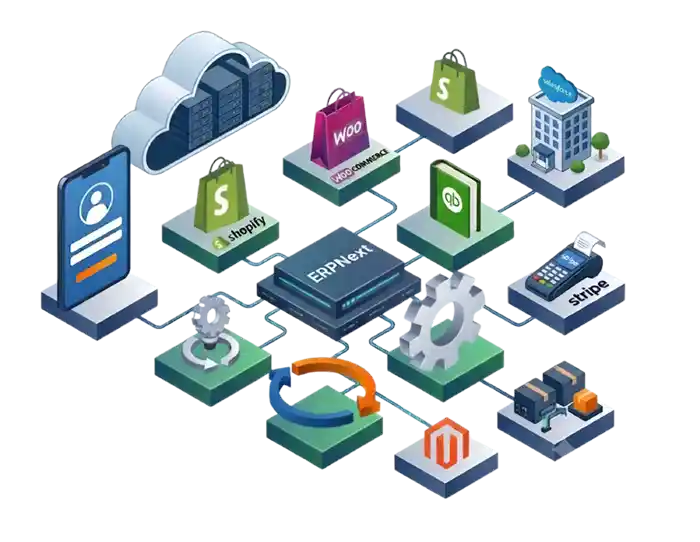
An isometric digital flowchart illustrating ERPNext Integration Services by Digital Dividend. The graphic centers around a dark blue central database node labeled "ERPNext," which connects via circuit lines to various third-party platform icons arranged on elevated geometric blocks. The integrated platforms include e-commerce systems like Shopify, WooCommerce, and Magento; business tools like Salesforce and QuickBooks; and a Stripe payment terminal. The network diagram also connects technical infrastructure components, featuring a cloud server stack in the top-left corner, a smartphone login screen interface, operational gears representing automation, and rotating circular arrows indicating real-time data synchronization on a solid white background.

Get a free ERPNext integration scoping calltalk to our senior developers today.

Table of Contents

What are ERPNext integration services?

ERPNext integration services connect your ERPNext instance to external platforms and tools so data flows automatically between systems without manual re-entry. An ERPNext system integration can be a direct API connection between ERPNext and a third-party platform, a webhook-based sync that triggers updates in real time when records change, or a middleware layer built on iPaaS platforms such as Zapier (a no-code automation tool), Make (formerly Integromat), or a custom Python connector that transforms data between incompatible data models.

ERPNext connection services range from simple one-way data pushes, for example syncing WooCommerce orders into ERPNext’s sales module, to complex bidirectional integrations where ERPNext and a third-party platform stay in continuous sync across inventory levels, pricing rules, customer records, and order status simultaneously. Because ERPNext is built on the open-source Frappe framework, its REST API and JSON-RPC endpoints are fully accessible without vendor restrictions, giving businesses significantly more integration flexibility than proprietary ERP platforms.

What benefits do ERPNext integration services provide?

How ERPNext integration improves efficiency is measurable from day one: businesses that integrate ERPNext with their existing platforms report a 40% reduction in order processing time and significantly lower data entry error rates compared to those managing the same workflows across disconnected tools (Nucleus Research, 2025). Because ERPNext integration services eliminate the manual steps between systems, your team spends time on productive work rather than copying data between platforms.

Beyond operational efficiency, ERPNext integration solutions give your leadership a single source of truth: unified customer records, accurate inventory figures, and real-time financial data that does not require manual reconciliation across multiple dashboards. As a result, decision-making becomes faster and more reliable because every department works from the same current data set rather than systems that were last synchronized hours or days ago.

ERPNext integration services we deliver

Our software development company delivers custom ERPNext integration services across seven core integration categories, each built with production-grade error handling, logging, and data validation as standard.

ERPNext e-commerce integration

We connect ERPNext to Shopify, WooCommerce, Magento 2 (Adobe’s enterprise e-commerce platform), BigCommerce, and custom storefronts to sync product catalogs, orders, customer records, and inventory in real time. Our Shopify development and WooCommerce development teams handle both the ERPNext integration layer and any required storefront changes, giving you a single accountable partner for both sides of every e-commerce connection.

ERPNext API integration services

We build ERPNext API integration services using ERPNext’s native REST API and JSON-RPC endpoints, combined with the third-party platform’s official API, to create reliable bidirectional data connections. Every API integration includes authentication management, rate limit handling, error queuing, and webhook validation to ensure the connection performs reliably in production without silent failures or data loss.

ERPNext CRM integration

We connect ERPNext’s native CRM module with Salesforce (a cloud-based CRM platform), HubSpot (an inbound marketing and CRM platform), Zoho CRM, and Pipedrive (a sales pipeline CRM) to maintain a single unified customer record across your sales, marketing, and operations teams. ERPNext integration with CRM software uses bidirectional sync so lead updates, deal stages, and contact records stay consistent in both systems without manual duplication.

ERPNext accounting software integration

We integrate ERPNext with QuickBooks (a widely used SMB accounting platform), Xero (a cloud-based accounting software), Tally (an accounting platform common in GCC markets), and Jasper (a business intelligence reporting tool) to automate journal entries, bank reconciliation, and financial reporting. Because ERPNext has its own native accounting module, accounting integrations are scoped carefully to avoid duplicate data entry between the two systems.

ERPNext inventory and supply chain integration

We connect ERPNext’s inventory module with WMS (warehouse management systems), barcode scanners, RFID (radio-frequency identification) readers, and IoT (Internet of Things) devices to keep stock levels, bin locations, and reorder points accurate in real time. ERPNext integration for inventory management is one of the highest-impact integration categories for manufacturing and distribution businesses because inventory accuracy directly affects order fulfillment speed and customer satisfaction.

ERPNext HR and payroll integration

We integrate ERPNext’s HR module with BambooHR (an HR information system), Paylocity (a cloud payroll platform), and Employment Hero to sync employee records, leave balances, payroll runs, and expense claims. Because payroll errors carry compliance risk, every ERPNext HR integration includes a reconciliation validation layer that confirms payroll figures match between ERPNext and the connected payroll platform before each pay run is processed.

ERPNext iPaaS and middleware integration

For businesses needing to connect ERPNext to multiple platforms simultaneously, or where direct API connections are not supported by a third-party tool, our experienced developers build middleware integration layers using iPaaS platforms and custom Python connectors with queue-based architectures. This approach handles high-volume data sync reliably and provides a single monitoring dashboard covering all ERPNext integration connections in your environment.

What is included in ERPNext integration services?

A complete ERPNext integration services engagement from Digital Dividend covers: integration audit and architecture design, API development and connector build, staging environment testing with real data volumes, production deployment with rollback procedures, and full technical documentation covering what was built, how data flows, and how each integration is maintained. ERPNext integration support is included for the first 30 days post-launch as standard on every engagement.

ERPNext integration consulting is also available as a standalone service for businesses that need an architecture review and integration roadmap before committing to development. Our experienced developers assess your current ERPNext instance, document your existing tool stack, and produce a prioritized integration plan with effort estimates and ROI projections for each connection, giving you a decision-ready brief before any development budget is committed.

ERPNext integration services USA: how our process works

Our professional developers follow a four-stage integration process for every ERPNext integration services engagement, whether the project is a single API connection or a multi-system enterprise integration architecture. Every stage has documented outputs and sign-off criteria before the next stage begins.

Integration audit and architecture design

We document every data object that must move between ERPNext and the third-party platform: field mappings, transformation rules, sync frequency, conflict resolution logic, and authentication requirements. This integration architecture document is reviewed and approved by your team before any development begins, eliminating the scope ambiguity that causes budget overruns in integration projects.

API development and connector build

Our expert developers build the integration layer using ERPNext’s REST API or JSON-RPC endpoints on the ERPNext side, and the third-party platform’s official API on the external side. Where a third-party platform does not offer a direct API, we build a middleware connector using Python or Node.js (a JavaScript runtime) with a Redis (an in-memory queue manager) backed task queue to handle high-volume data sync reliably without overloading either system.

Testing and monitoring

Every integration is tested in a staging environment against real data volumes before production deployment. Testing covers successful sync scenarios, error handling when the third-party API is temporarily unavailable, duplicate record prevention, and data integrity validation confirming that field values in ERPNext match values in the connected platform after every sync cycle.

Deployment and post-launch support

Integrations are deployed during a scheduled maintenance window with rollback procedures confirmed before cutover. Post-launch, our ERPNext support services cover integration monitoring, API version updates when third-party platforms release breaking changes, and performance optimization as data volumes grow. Because third-party APIs change without advance notice, ongoing support is what keeps ERPNext integrations reliable over time.

What industries use ERPNext integration services?

ERPNext integration services for businesses are relevant in any sector where operational data currently lives in more than one system. Our experienced developers with AI have delivered production ERPNext integrations across the following industries.

What is the cost of ERPNext integration services?

ERPNext integration services cost depends on the number of platforms being connected, the complexity of data transformations required, and whether real-time sync or scheduled batch sync is needed. Because ERPNext is open-source with no per-user licensing fees, professional development time is the only cost variable.

Integration scope Examples Typical cost Timeline
Simple one-way sync Push Shopify orders into ERPNext sales module $2,000 – $6,000 1 – 2 weeks
Standard bidirectional ERPNext and WooCommerce inventory and order sync $6,000 – $18,000 3 – 6 weeks
Multi-system integration ERPNext and CRM and accounting and shipping carrier $18,000 – $45,000 6 – 14 weeks
Enterprise middleware ERPNext and SAP, Oracle, or NetSuite with custom middleware $45,000+ 12 – 24 weeks

Our software development agency provides a fixed-scope cost estimate after the integration audit and architecture design stage, so your budget is confirmed before development begins. Ongoing API monitoring and maintenance is priced as a fixed monthly retainer agreed at project close.

How to choose ERPNext integration services?

The most important technical question to ask any ERPNext integration services provider is how they handle API failures and data conflicts. Providers who build integrations without error queues and retry logic deliver connections that silently fail when a third-party API is temporarily unavailable, causing data gaps that surface as inventory discrepancies or missing orders days later. Finding ERPNext integration experts who can clearly describe their error handling architecture is the fastest way to filter qualified providers.

Verify that the provider has delivered the specific integration you need in a production environment. ERPNext integration services companies that can share documented case studies from live deployments are significantly lower-risk than those offering only architectural proposals or sandbox demos. Digital Dividend handles every integration layer in-house, with project leadership from our experienced teams in Sweden and the USA. Read our blog on software development outsourcing to understand our in-house delivery model.

Ready to scope your ERPNext integration project? Book a free consultation with our senior developers.

ERPNext integration services: real results

Our software development company has delivered production ERPNext and ERP integration projects across procurement, distribution, and operations sectors. Explore our full case studies portfolio for detailed delivery evidence from live production deployments.

WhatsApp-powered B2B procurement automation

We built a WhatsApp integration layer that connected live buyer-supplier communication directly into ERPNext’s purchase module through a custom API connector. Purchase orders were created, approved, and dispatched to suppliers entirely through WhatsApp-initiated triggers, with ERPNext maintaining the full audit trail and inventory update automatically. The integration eliminated three manual handoff steps from the client’s procurement cycle.

A conceptual graphic representing WhatsApp-Powered B2B Procurement Automation - Measurable Outcomes by Digital Dividend. The image showcases a modern smartphone lying flat, displaying an active chat interface. A small, futuristic white and green AI chatbot assistant stands on the top right of the phone screen, surrounded by multiple 3D circular green WhatsApp logos floating and standing on pins around the device against a solid white background.
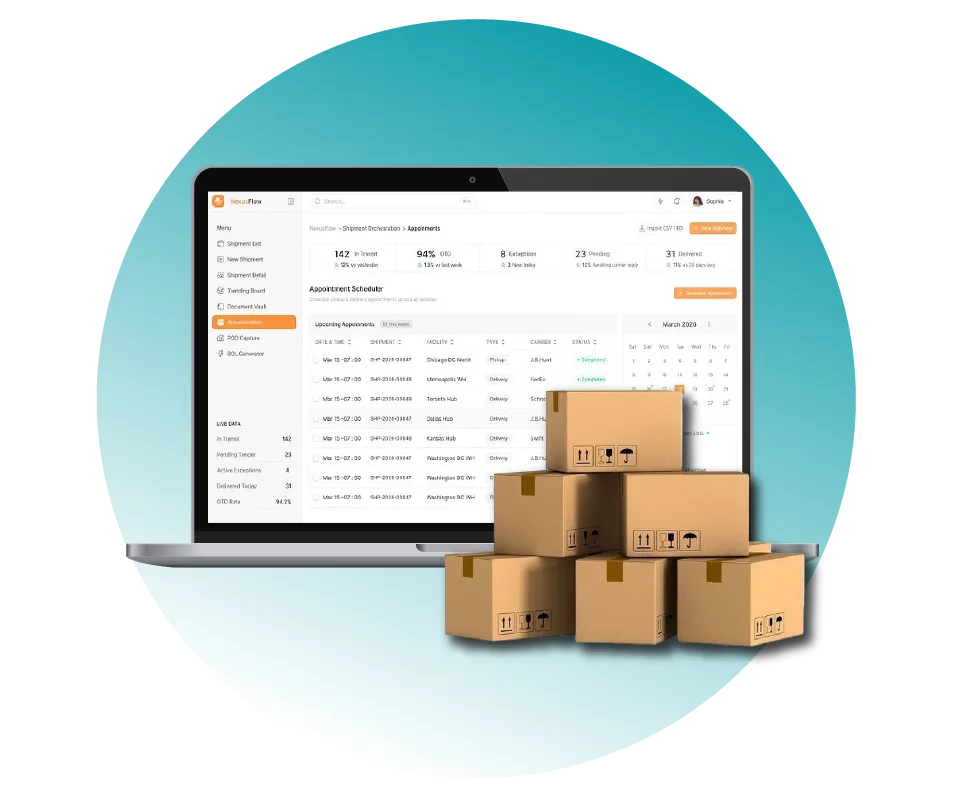
Digital Dividend implementing NexaFlow Distribution, ERPNext for a Multi-Warehouse Distributor, showing a professional appointment scheduling dashboard and shipping boxes on a laptop screen.

NexaFlow Distribution — multi-system ERP integration

For NexaFlow, our experienced developers integrated ERPNext’s inventory and purchase modules with the client’s existing warehouse management system and carrier APIs, creating a unified operational platform where stock movements, purchase orders, and shipment tracking all updated in real time across systems. The integration reduced end-of-day stock reconciliation from three hours to under 20 minutes.

FlowPilot Systems — IoT and ERPNext maintenance integration

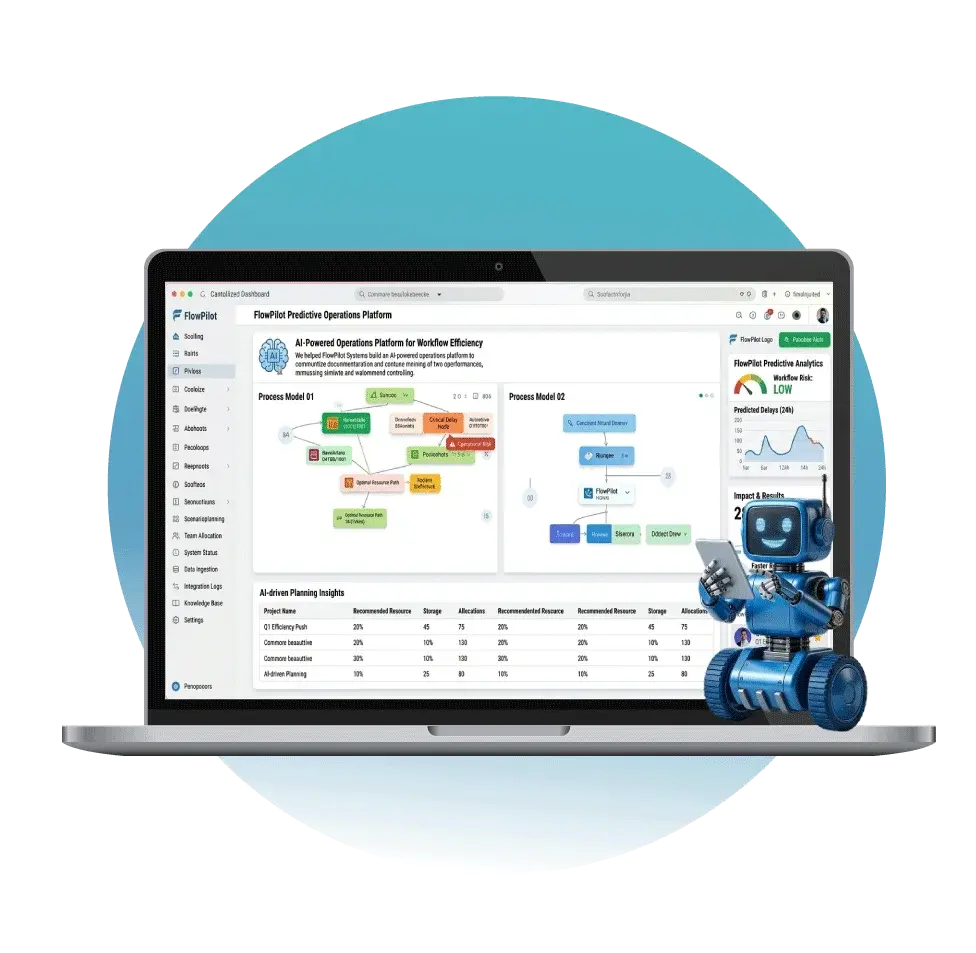
We integrated live machine sensor data from IoT devices directly into ERPNext’s maintenance module for FlowPilot Systems, triggering automated work orders when sensor thresholds indicated impending equipment failure. The integration connected hardware-generated data to ERPNext’s operational workflows in real time, replacing a manual inspection schedule with a predictive maintenance system that reduced unplanned downtime measurably.

A laptop showing a Predictive Operations Platform for FlowPilot Systems dashboard with process models and efficiency charts, accompanied by a small blue robot assistant, built by Digital Dividend.
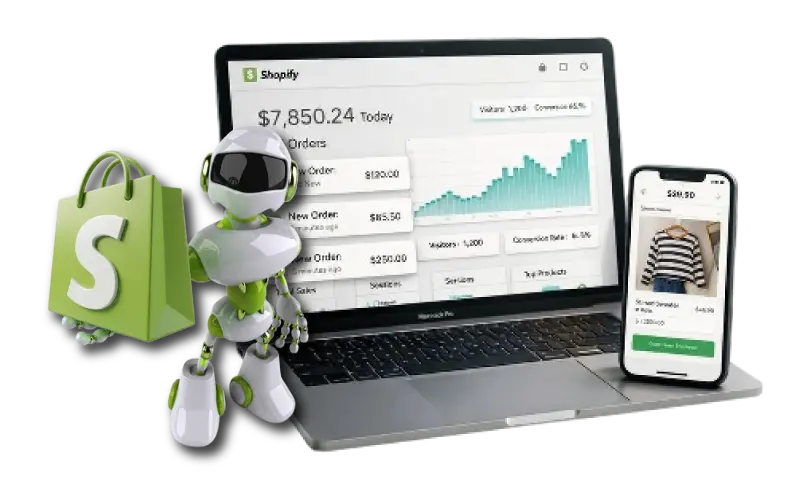
A 3D promotional graphic highlighting the Shopify AI Intelligence Platform - Measurable Outcomes by Digital Dividend. An open laptop displays a detailed Shopify analytics dashboard showing data metrics such as daily earnings of "$7,850.24 Today," visitor counts, recent orders, and a rising green bar graph tracking conversion rates. To the right, a smartphone rests against the laptop showcasing a striped shirt product page, while a small white and green 3D mascot robot stands on the left next to a prominent green Shopify shopping bag logo.

Shopify AI Intelligence Platform

We built a Shopify AI intelligence platform that integrates product catalog data, customer behavior signals, and real-time inventory levels into a unified intelligence layer. The integration architecture we developed here, connecting live e-commerce data with an operational backend in real time, directly informs our ERPNext e-commerce integration builds for clients requiring the same live data synchronization between their storefront and ERP.

Our delivery track record

With 15+ years of experience, 300+ projects delivered, and 100+ in-house developers across the US, Europe, and GCC, every ERPNext integration we deliver is grounded in real production API and systems integration experience, not template-based connector work.

Your Partner for Diverse Technology Solutions

From software and mobile apps to eCommerce, CMS, IoT, analytics, and healthcare—Digital Dividend is your trusted development partner.

Streamline your operations with experienced ERPNext integration experts.

Digital Dividend’s professionals integrate ERPNext with CRM, eCommerce, accounting, payment, and other platforms to improve efficiency.

Frequently asked questions

ERPNext integration services are relevant for any business running ERPNext alongside at least one other platform for payments, e-commerce, CRM, accounting, shipping, or HR. ERPNext integration for small businesses typically starts with a single platform connection at a relatively low cost and expands as the business grows. The scalability of ERPNext’s open API architecture means integration complexity can match your business size without requiring a full system replacement as your tool stack evolves.

The primary technologies are ERPNext’s built-in REST API and JSON-RPC endpoints, Python (ERPNext’s server-side language), and the third-party platform’s official API. For high-volume or complex multi-system integrations, our expert developers use middleware architectures built on Node.js, Redis for queue management, and Celery (a Python task queue framework) for async data processing. iPaaS platforms including Zapier and Make are used for low-code integrations where development time is more constrained than budget.

Yes. Every ERPNext integration we deliver is custom-built around your specific data model, business logic, and third-party platform’s API behavior. Off-the-shelf ERPNext connector apps from the Frappe marketplace cover standard integration patterns, but custom ERPNext integration services are required whenever your data transformation rules, conflict resolution logic, or integration frequency requirements differ from what a pre-built connector supports. Our experienced developers scope custom integrations explicitly in the architecture design stage.

Yes, in one important way: ERPNext’s REST API and JSON-RPC endpoints are fully open and accessible without vendor-gated access or partner certification requirements, unlike proprietary ERP platforms where API access requires certified developer status or additional licensing. This makes ERPNext integration services more flexible and significantly less expensive to implement than equivalent integrations for SAP Business One, Oracle NetSuite, or Microsoft Dynamics 365, where integration development is constrained by vendor-controlled development environments.

ERPNext integration works by using ERPNext’s REST API or JSON-RPC endpoints to read, create, update, or delete records in ERPNext from an external system, and by using the third-party platform’s API to do the same in reverse. A typical bidirectional integration uses webhooks to trigger sync events in real time when records change, combined with scheduled batch jobs that reconcile data between the two systems at regular intervals to catch any changes that webhooks may have missed during periods of API unavailability.

What our clients say

Ready to connect ERPNext to your business systems?

Whether you need a single e-commerce connection or a multi-platform enterprise integration architecture, Digital Dividend has the in-house API development capability and the production integration experience to deliver it reliably. Our expert developers handle every stage from integration audit through deployment and ongoing maintenance, with project leadership from our teams in Sweden and the USA. Explore our ERPNext implementation services or our broader ERP software development services to see the full scope of our ERPNext delivery capability.

circle-shape-with-line
bottom-banner-image

    This site is registered on wpml.org as a development site. Switch to a production site key to remove this banner.