Research and development consulting services
Get a free R&D consultation — talk to our senior developers today.
What is included in R&D consulting?
R&D consulting services cover four core activities: research (identifying what is technically possible and what competitors, markets, and technologies are doing), development feasibility assessment (determining whether a specific solution can be built within your constraints), proof of concept execution (building a minimal working prototype to validate a hypothesis), and strategy delivery (producing a documented plan for how to move from validated concept to production build). As defined by the OECD Frascati Manual, R&D covers basic research, applied research, and experimental development our engagements focus specifically on applied research and experimental development for software and technology products.
A complete R&D consulting engagement from Digital Dividend includes technology landscape analysis, competitive intelligence, technical feasibility documentation, PoC development where required, risk identification, build-vs-buy assessment, and a prioritized product roadmap with effort estimates. The output is a decision-ready brief your leadership team can use to allocate development budget with confidence.
What are the benefits of R&D consulting?
The primary benefit of R&D consulting is risk reduction. Businesses that validate technical and market assumptions before committing to a full development build avoid the average $1.3 million cost of a failed software product launch (Standish Group CHAOS Report, 2024). Professional R&D consulting services identify the assumptions that are most likely to be wrong before they become expensive production failures.
Beyond risk reduction, R&D consulting improves business performance in three measurable ways: it accelerates decision-making by replacing internal debate with documented evidence, it reduces development waste by identifying the minimum viable feature set before a single production line is written, and it creates competitive intelligence that informs not just your product but your market positioning, pricing, and go-to-market strategy simultaneously.
Our research and development consulting services
Our software development company delivers research and development consulting across six structured service areas, each producing documented, actionable outputs rather than advisory reports that sit unread.
Proof of concept development
Innovation research and technology assessment
Research and development strategy consulting
Product development consulting services
IT research and development consulting
Digital transformation in R&D
How does R&D consulting differ from general consulting?
General business consulting focuses on strategy, operations, and organizational performance using existing knowledge frameworks and industry benchmarks. R&D consulting focuses specifically on what is technically possible and what is worth building, requiring hands-on technology expertise rather than strategic frameworks alone. A general consultant can advise on whether to invest in AI, but an R&D consulting firm can build the proof of concept that proves whether your specific AI use case is technically viable before the investment is committed.
The output of general consulting is typically a strategic recommendation. The output of R&D consulting is typically a technical artefact: a PoC, a feasibility report with documented test results, a technology assessment with evaluation criteria and evidence, or a product specification ready for development team handover. Because our professional developers at Digital Dividend deliver the R&D consulting and the subsequent development work, our assessments are calibrated to what is actually buildable, not what is theoretically possible.
What industries use R&D consulting services?
R&D consulting services are relevant in any industry where technology decisions carry significant investment risk or where the technical feasibility of a new product is uncertain before development begins.
- Healthcare and life sciences: clinical software feasibility assessments, HealthKit and EHR (electronic health record) integration research, AI-powered diagnostic tool PoC development, and regulatory pathway analysis for digital health products. Our healthcare software development experience across EHR, RPM, and telemedicine platforms gives our R&D consultants direct clinical software delivery context.
- Fintech and financial services: blockchain feasibility assessments, open banking API integration research, AI fraud detection PoC builds, and payment infrastructure modernization strategy for financial institutions navigating regulatory and technical complexity simultaneously.
- Manufacturing and industrial: IoT sensor integration feasibility, digital twin PoC development, predictive maintenance algorithm research, and Industry 4.0 (the fourth industrial revolution covering automation and data exchange in manufacturing) technology assessment for production facilities.
- SaaS and product companies: AI feature integration research, competitive technology landscape mapping, platform architecture feasibility for scaling from startup to enterprise, and build-vs-buy assessments for core product infrastructure decisions.
- E-commerce and retail: AR product visualization feasibility, recommendation engine PoC builds, omnichannel data architecture research, and headless commerce platform assessment for retailers planning significant technology investment.
What types of projects require R&D consulting?
R&D consulting is most valuable on projects where the outcome is uncertain before the work begins. The three clearest signals that a project needs R&D consulting before development starts are: the technology your product depends on has never been implemented in your specific context before, the cost of getting the technical approach wrong exceeds the cost of validating it first, or your team disagrees about which technology or architecture to use because the evidence base is insufficient.
Specific project types that consistently benefit from R&D consulting include: first-time AI or machine learning integrations where model selection and training data requirements are unknown, IoT hardware-software integration projects where device compatibility and data pipeline architecture need validation, platform migration projects where the target architecture has not been assessed against the source system’s data model, and new product builds in regulated industries where compliance requirements affect the technical design before a line of code is written.
How our R&D consulting process works
Our professional developers follow a four-stage R&D consulting process that moves from problem definition to decision-ready output in a structured, time-boxed engagement.
Discovery and problem definition
We run structured workshops with your product, technical, and commercial teams to define the specific question the R&D engagement must answer. A well-defined R&D question for example, whether a specific LLM (large language model) can extract structured legal entities from unstructured case documents with sufficient accuracy for production use is the difference between a focused engagement with a clear output and an open-ended research project with no actionable conclusion.
Research and feasibility assessment
We conduct technology landscape research, competitive analysis, and technical feasibility assessment using both desk research and hands-on technical exploration. For IT R&D consulting engagements, this stage includes evaluation builds using candidate frameworks, APIs, or models against your actual data and use case, because feasibility conclusions based on vendor documentation alone are unreliable.
Proof of concept and validation
Where feasibility research identifies a viable technical approach, we build a PoC against your actual data and infrastructure to validate the conclusion under real conditions. PoC outputs are documented with test results, performance metrics, identified limitations, and a clear statement of what the PoC proves and does not prove, so your team can make a confident build decision based on evidence rather than assumptions.
Strategy and roadmap delivery
The final stage delivers a documented output covering the recommended technical approach, the rationale and evidence base, identified risks and mitigation strategies, a phased build roadmap with effort estimates, and a clear recommendation on build-vs-buy where relevant. Our consultation and guidance services team works alongside the R&D consulting output to support implementation planning for clients ready to move directly from R&D to build.
What is the cost of research consulting services?
R&D consulting cost depends on the scope of the question being answered, the depth of technical exploration required, and whether a PoC build is included. Compared to the cost of a failed full development build, professional R&D consulting services consistently deliver positive ROI even at the upper end of the cost range.
| Engagement type | Scope | Typical cost | Timeline |
|---|---|---|---|
| Technology assessment | Feasibility research, vendor eval, documented recommendation | $3,000 – $8,000 | 1 – 2 weeks |
| Innovation research | Landscape mapping, competitive analysis, opportunity brief | $8,000 – $18,000 | 2 – 4 weeks |
| Proof of concept build | PoC development, test results, documented findings | $12,000 – $35,000 | 3 – 8 weeks |
| Full R&D strategy | Research, PoC, roadmap, build-vs-buy, effort estimates | $35,000 – $80,000 | 6 – 16 weeks |
Our software development agency provides a fixed-scope cost estimate after the discovery workshop, so your R&D budget is confirmed before any research or development work begins. For startups and SMBs, we recommend starting with a focused technology assessment or PoC before committing to a full R&D strategy engagement.
How to choose a research and development consultant?
The most important criterion when evaluating R&D consulting firms is whether their consultants have hands-on delivery experience in the technology category they are assessing. An R&D consultant who has never built a production AI system will produce a feasibility assessment calibrated to documentation and theory rather than the real-world constraints of model selection, training data requirements, inference latency, and production deployment that experienced developers encounter in practice.
Verify that the consulting firm delivers PoCs using your target production technology stack, not simplified stand-ins that make the feasibility question easier to answer. A PoC built on a different stack than your planned production environment does not answer the actual feasibility question. Digital Dividend builds every PoC in the target production stack, documented with real test results your development team can validate independently. Explore our AI software development services and our emerging technologies services to see the technology categories our R&D consultants assess from direct production delivery experience.
Ready to validate your next product idea? Book a free R&D consultation with our senior developers.
R&D consulting: real results
Our software development company has delivered AI feasibility assessments, PoC builds, and technology research engagements across legal, real estate, healthcare, and operational sectors. Explore our full case studies portfolio for detailed delivery evidence.
AI-powered legal intelligence platform
We conducted a technical feasibility assessment for an AI-powered legal research platform, evaluating whether LLMs (large language models) including GPT-4 and Claude could extract structured legal entities from unstructured case documents with sufficient accuracy for production legal research use. The PoC we built validated the approach and informed the production architecture, reducing the client’s time from concept to production build by an estimated 40%.
AI Real Estate Search Agent
We assessed the feasibility of building an AI-powered property search agent that could process natural language buyer queries and return spatially relevant property listings in real time. The R&D engagement evaluated LLM suitability, vector database (Pinecone and Weaviate) performance for property data retrieval, and API integration requirements before a production architecture decision was made, eliminating three candidate approaches that benchmarking revealed were unsuitable before any production code was written.
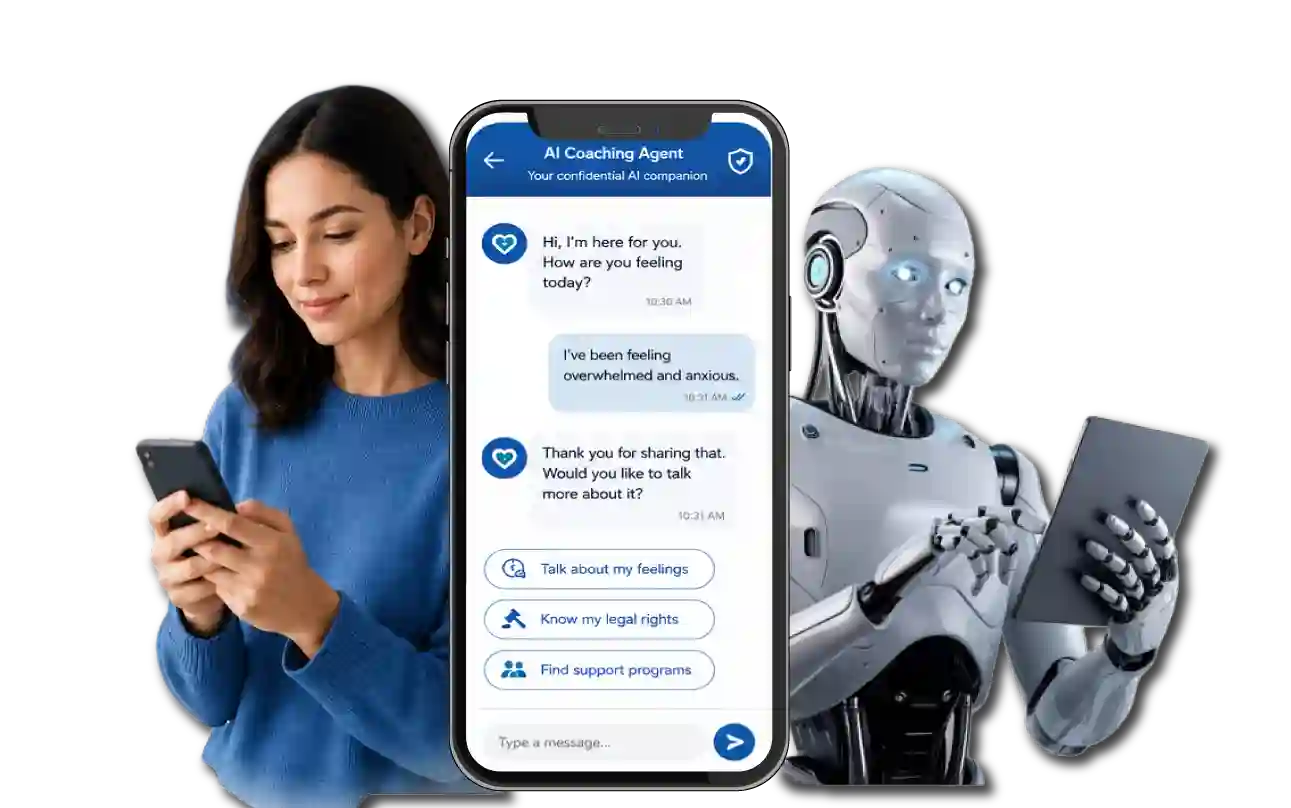
AI Therapeutic Coaching Agent for women's rights
We delivered a PoC for an AI therapeutic coaching application, assessing whether on-device CoreML (Apple’s machine learning framework) inference could deliver sufficiently responsive, privacy-preserving conversational AI without server-side processing. The PoC confirmed viability and identified the specific model compression and quantization requirements that would make on-device inference production-ready, giving the development team a clear technical specification before the build began.
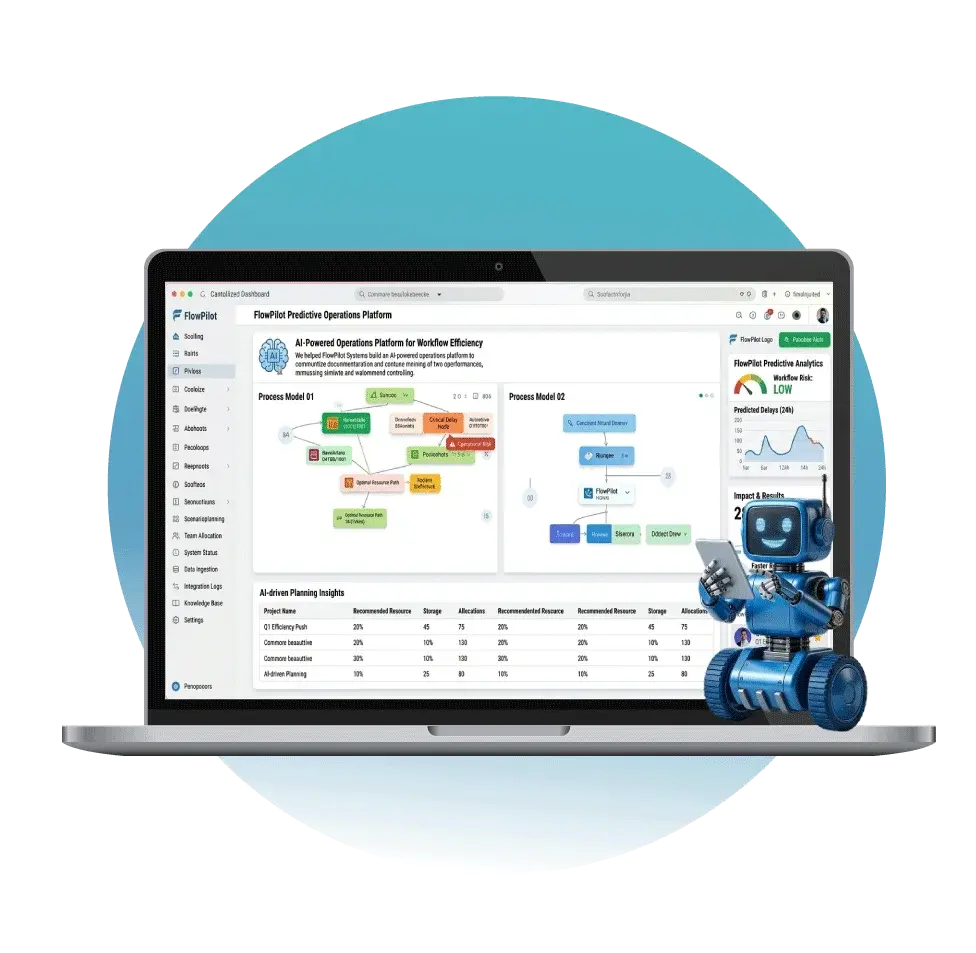
FlowPilot Systems — predictive maintenance R&D
We conducted an IoT data pipeline feasibility assessment for FlowPilot Systems, evaluating whether real-time machine sensor data could be ingested, processed, and used to trigger predictive maintenance work orders within latency thresholds that made the system operationally useful. The assessment validated the approach and defined the data pipeline architecture that the subsequent production build followed precisely.
Our delivery track record
With 15+ years of experience, 300+ projects delivered, and 100+ in-house developers across the US, Europe, and GCC, every R&D consulting engagement we run is backed by real production delivery experience in the technology category being assessed.
Enhance Your Project with Our Related Services
At Digital Dividend, we specialize in software, mobile apps, eCommerce solutions, CMS development, IoT systems, analytics, and healthcare technologies.
Research and development consulting services
Digital Dividend’s experts help you research emerging technologies, evaluate opportunities, and develop market-ready solutions.
Frequently Asked Questions
Is R&D consulting suitable for small businesses?
Yes, particularly for small businesses making their first significant technology investment or entering a new product category. The cost of a focused technology assessment or PoC build is a fraction of the cost of committing a full development budget to an approach that later proves technically unviable. R&D consulting for startups typically starts with a scoped technology assessment or single-question PoC, priced from $3,000 to $12,000, giving small businesses access to validated technical guidance without enterprise-scale consulting fees.

What qualifications should R&D consultants have?
R&D consultants assessing software and technology products should have hands-on development experience in the specific technology category they are evaluating, not just advisory experience. For AI and machine learning assessments, consultants should have delivered production AI systems, not just read research papers. For IoT feasibility work, they should have built hardware-software integrations in production environments. Ask any R&D consulting firm for case studies demonstrating delivery experience in the specific technology your project involves.

In-house or outsourced R&D: which is right for my business?
In-house R&D is appropriate when your core product depends on a proprietary technology advantage that competitors should not be able to replicate, and when you have the budget to build and retain a specialized research team long-term. Outsourced R&D consulting is appropriate when you need a specific feasibility question answered quickly, when the technology being assessed is outside your in-house team’s expertise, or when the R&D output will inform a one-time architecture decision rather than a continuous research programme.
How can R&D consulting improve existing products?
R&D consulting improves existing products by identifying technology opportunities your current architecture cannot exploit, assessing whether AI, automation, or new platform integrations could address the performance or feature gaps your users are reporting, and producing a validated upgrade roadmap with prioritized effort estimates. Many of our R&D consulting engagements result in targeted enhancement recommendations that deliver measurable product improvement in 6 to 12 weeks rather than a full product rebuild.
What are the main stages of R&D?
The three stages of R&D are basic research (generating new knowledge without a specific application in mind), applied research (investigating specific technical questions with a defined application target), and experimental development (building prototypes and PoCs to validate that the research findings work in practice). Our R&D consulting engagements focus on applied research and experimental development, producing outputs that move directly into production planning rather than academic knowledge generation.
What our clients say
Ready to validate your next product or technology investment?
Whether you need a focused technology assessment, a proof of concept for a new AI feature, or a full research and development strategy for your next product, Digital Dividend has the in-house technical expertise and the structured delivery process to answer your feasibility questions with evidence rather than assumptions. Our expert developers handle every stage from problem definition through PoC delivery and roadmap documentation. Explore our software development services or read our blog on AI-powered innovation in software to see how we approach technology-driven product development.