Building two separate native apps doubles your codebase, your bug count, and your review cycles. Digital Dividend’s React Native development services team builds one JavaScript codebase that compiles to true native UI components on both iOS and Android.
As a Digital Dividendsoftware development agency, we build on a framework used by 18,800+ production companies, where the modern architecture has cut bridge latency from 16ms to under 2ms (Eduonix, 2026).
With mobile users split across iOS and Android, businesses increasingly need one codebase that reaches both without doubling the build. Integrating React Native development early lets startups and enterprises alike launch faster without sacrificing native performance.
Major platforms including Shopify, Discord, and Microsoft Teams continue to invest in React Native because it balances performance, scalability, and development efficiency at production scale.
What is React Native development?
React Native development uses Meta’s open-source framework to build mobile apps in JavaScript and TypeScript that compile to true native UI components, not a web view wrapped in a native shell.
Unlike Ionic, which renders UI through web components inside a native wrapper, React Native compiles to native views directly. Our Ionic app development team can walk you through the trade-offs if you are weighing both approaches.
Our Impact at a Glance
Digital Dividend has delivered 300+ projects over 15+ years, backed by a 100+ developer team spanning web, mobile, and AI engineering.
That scale means a React Native project draws on the same design, QA, and DevOps resources used across our other mobile work, not a standalone team assembled per client.
Challenges companies face with React Native development
Building a successful React Native app comes with technical and operational challenges. Common obstacles include:
Hitting performance ceilings on animation-heavy screens without proper native module optimization
Outsourcing design and development separately, so the UI never quite matches platform conventions
Inheriting an app still on the old bridge architecture instead of Fabric and TurboModules
Managing native module dependencies as the app and its libraries evolve
Scaling the app as user demand and feature requests grow
Core features of a React Native app
Every React Native build we ship is scoped around the features that drive real business usage, not just a demo.
API integration
Every build includes REST or GraphQL API integration, connecting the app to your existing backend and business tools.
Offline data caching
Local data caching keeps the app usable without a connection, syncing automatically once the device reconnects.
Push notifications
Real-time alerts and re-engagement messaging delivered through Firebase Cloud Messaging, consistent across both platforms.
Native device access
Camera, GPS, and biometric login access where the app needs it, through native modules built on the current Fabric architecture.
Custom native modules
When a native feature has no ready-made library, we build a custom native module in Swift or Kotlin, so the app still ships on schedule.
Cross-platform deployment
The same codebase deploys to iOS and Android from day one, so you launch on every platform your customers use without a separate build.
Benefits of React Native development
Startups
Startups launch an MVP on one codebase instead of two, validating the product faster without maintaining separate native teams.
SMBs
SMBs get feature parity across platforms without hiring separate iOS and Android teams, keeping ongoing maintenance costs down.
Enterprises
Enterprises get long-term maintainability, since updates can deploy simultaneously across platforms instead of on two separate native release schedules.
Maximize the ROI of your React Native app
Adopting React and React Native can save up to 40% in development costs compared to building separate native apps, while keeping one team, not two, responsible for the entire mobile experience.
With the modern architecture rolled out across the ecosystem, that cost advantage no longer comes with the performance trade-off that used to hold some enterprise teams back.
Custom React Native solutions for your business
At Digital Dividend, we understand that every business has different workflows. Our custom React Native solutions are built to align with your specific needs, backed by our broader mobile app development services, whether you need a lean MVP or a fully custom enterprise build.
React Native development system integrations
A React Native app is only as useful as the systems it connects to. We build integrations across the tools your business already relies on.
Integration
Purpose
Firebase
Auth, real-time database, and push notifications in one platform
Payment gateways
Secure in-app checkout through Stripe, PayPal, or region-specific processors
Maps and geolocation
Location-based features for logistics, delivery, and field service apps
REST and GraphQL APIs
Connect the app to your existing backend systems and business tools
Technologies we use
A React Native development services team needs to work fluently across the framework’s core toolkit and its wider native ecosystem.
React Native - Meta's framework for compiling JavaScript to native UI components.
TypeScript - adds type safety across the codebase, catching bugs before release.
Expo - a framework and toolchain that speeds up setup, builds, and over-the-air updates.
Fabric and TurboModules - React Native's modern architecture, cutting bridge latency and improving startup time.
Redux and Zustand - state management libraries that keep large apps predictable as they grow.
Our React Native development approach
Digital Dividend follows a structured development process to help businesses build a secure, scalable React Native app from day one.
Discovery and architecture planning
We audit your requirements and existing systems, then recommend the right state management approach and native module strategy before any code is written.
MVP development
We build a functional MVP focused on core features and platform compatibility, so you can validate the product in market quickly.
Design and development
Our designers and developers build the UI and business logic together, so the app matches platform conventions and performs well on both iOS and Android.
Testing and QA
Every build goes through device testing across common iOS and Android versions before release, not just simulator checks.
Launch and scaling
Once tested and optimized, we support deployment and scaling so the app performs reliably as your user base and feature set grow.
End to end React Native development services
Consulting
Expert consulting to define the right React Native development strategy, including state management and native module planning.
Implementation
We build secure and scalable React Native apps with core features like offline support, push notifications, and native device access.
Integration
Seamless integration with payment gateways, Firebase, and third-party APIs for real-time data exchange.
Support and maintenance
After launch, we handle framework upgrades, dependency updates, and bug fixes, so the app keeps running as React Native and OS versions change.
Legacy migration
We migrate existing native or Flutter app development apps to React Native without losing user data or existing features, when that is the right move for your team.
How a React Native app works
A React Native app runs JavaScript or TypeScript through the Fabric renderer, which maps components directly to native iOS and Android UI elements instead of drawing them in a web view.
The same interface renders on both platforms using native components, while updates and bug fixes deploy to both at once.
React Native development implementation roadmap
A successful React Native build moves through requirement analysis and architecture planning, then MVP development for early validation. From there, we handle design and development, test for performance and compatibility, and move to deployment with continuous optimization.
Secure and compliant React Native development
For healthcare and financial apps, we encrypt data in transit and at rest, and design storage so it meets HIPAA requirements for patient and financial information.
For clients serving the EU or UK, we also build with GDPR data handling in mind, including consent flows and data deletion support.
Timeline and cost for React Native development
A React Native MVP typically takes 4 to 8 weeks and starts from $15,000. A standard business app typically takes 8 to 16 weeks and starts from $35,000, while enterprise programs with multiple integrations run $120,000 or more over 3 to 6 months.
Which React Native development approach is right for your business?
Custom React Native development
Best suited for businesses with complex workflows or specific integration needs. Custom development offers full control and flexibility to build a solution tailored to your exact use case.
Expo-based rapid development
Ideal for businesses looking for a fast, cost-efficient launch. Expo's managed workflow speeds up delivery for straightforward apps without heavy upfront investment.
Our guidance
We guide you in choosing the right approach based on your goals, budget, and growth plans, so you launch efficiently while building something that scales.
Success stories: scaling React Native apps for real businesses
Cross-platform Navigation and Logistics: AppNavi
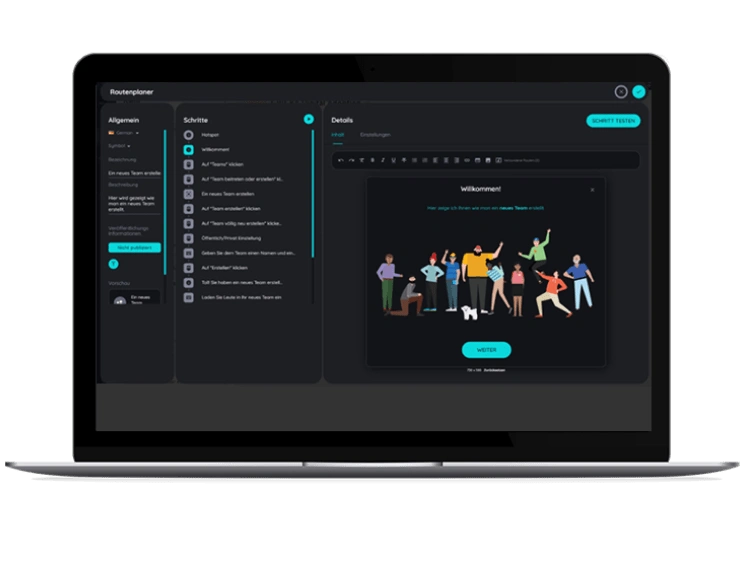
We helped AppNavi build a cross-platform navigation and logistics app on a single React Native codebase, cutting ongoing maintenance cost compared to separate native builds.
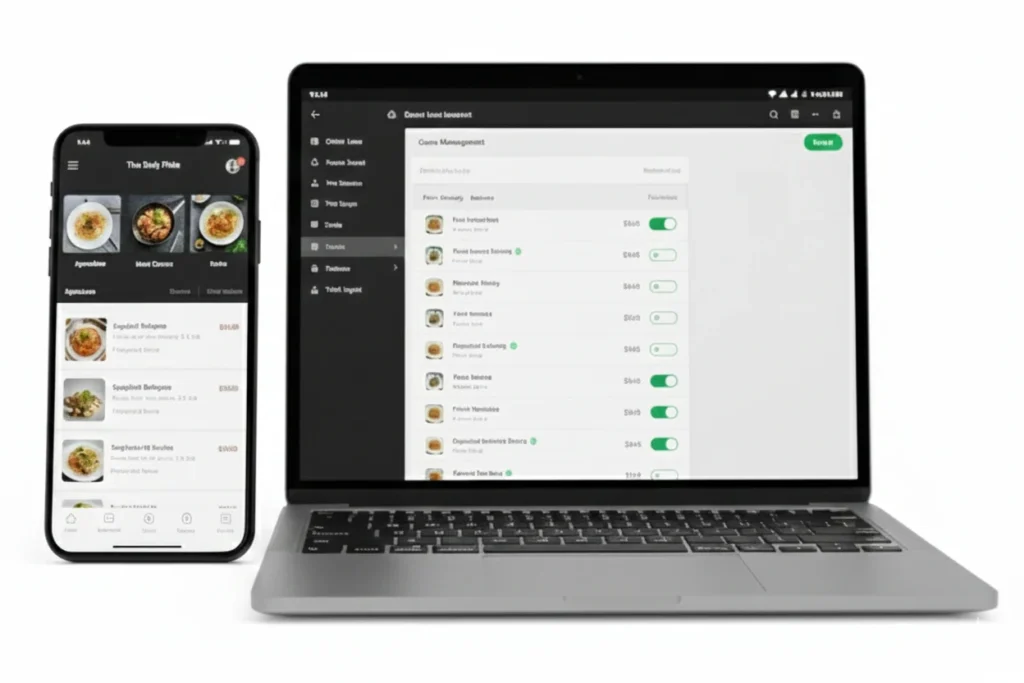
Digital Ordering Platform: Restaurant Menu Management
Why businesses choose Digital Dividend for React Native development
Businesses choose Digital Dividend for a proven cross-platform track record, fast MVP launches, and custom solutions tailored to specific business needs, backed by a delivery model led from Sweden and the USA, with an in-house development team in Pakistan.
Need to move fast? You can also hire a dedicated developer and embed them directly into your product sprint.
Future trends in React Native development
The rollout of Fabric, JSI, and TurboModules has closed most of the performance gap that once separated React Native from fully native apps. AI-native features, cloud-connected experiences, and real-time data sync are becoming standard requests in new React Native consultations.
Additional Services to Power Your Digital Transformation
Leverage Digital Dividend’s expertise in software, mobile apps, eCommerce, CMS, IoT solutions, analytics, and healthcare development.
Mobile App Development Services:
Software, Web & Design Services:
eCommerce Development Services:
Restaurant App Development:
AI Software Development Services:
ERP Software Development Services:
CMS Development Services:
IoT, Wearables & Data Services:
Healthcare Product Development for Startups:
Scale your team with React Native experts.
Digital Dividend provides seasoned React Native developers to cover staffing needs and accelerate your project.
Most MVP builds start from $15,000 and standard business apps start from $35,000, depending on feature scope and integration complexity, as shown in the timeline above.
Yes. React Native powers production apps at Shopify, Discord, and Microsoft Teams, and the modern architecture handles enterprise-scale traffic and complexity well.
Yes, when built correctly. We apply encryption at rest and in transit, secure authentication, and HIPAA or GDPR-aligned data handling where the app requires it.
Ongoing maintenance typically covers framework upgrades, dependency updates, and bug fixes, and costs scale with how many native modules and integrations the app relies on.
What our clients say
"Both the website and the apps provide a robust, satisfying experience for users. Digital Dividend's effective project management and sensible task division maximize efficiency."
"Digital Dividend helped create a high-end product for a reasonable price. They were kind and patient partners. Their advice was highly valued."
Let’s Build Your React Native App
Let’s create your app smarter with the power of React Native and AI! Schedule your free consultation today to explore how AI can enhance your app development.
From startup MVPs to enterprise mobile solutions, our React Native Development Services are built to help you launch faster, scale smarter, and create a mobile experience your users can trust.
This site is registered on wpml.org as a development site. Switch to a production site key to remove this banner.